
Wildlife encounter safety tips comprise a structured framework of defensive behaviors, situational awareness, and specialized deterrent tools used to prevent injuries during unexpected interactions with wild animals. These protocols work by removing the element of surprise, broadcasting human presence, and using physical or chemical barriers to force an animal to voluntarily disengage.
Key Facts / At a Glance
- Maintain a mandatory 100-yard distance from apex predators (bears, wolves) and 25 yards from herbivores (elk, bison, deer).
- Standard bear attack deterrent sprays utilize a 2% capsaicin concentration and deploy optimally at a 30-foot range.
- Running triggers an automatic predatory chase instinct in large carnivores; always freeze and assess the situation.
- Never play dead for black bears or cougars; this tactic is strictly reserved for physical contact with a charging grizzly or brown bear.
- Test-firing bear spray depletes internal head pressure, drastically reducing the canister’s emergency range and chemical efficacy.
What Are the Best Wildlife Encounter Safety Tips?
The best wildlife encounter safety tips rely on territorial boundary management and sensory deterrents rather than offensive actions. Most wildlife attacks stem from defensive instincts—an animal protecting its young, guarding a food source, or reacting to a sudden fright. By understanding that wild animals seek to conserve energy and avoid injury, human safety protocols are engineered to signal non-prey behavior and de-escalate perceived threats.
Effective safety requires layering proactive prevention (noise-making, scent management) with reactive defenses (bear spray, aggressive posturing). Relying solely on one method creates vulnerabilities in unpredictable wilderness environments.
Preventing Encounters Before They Happen
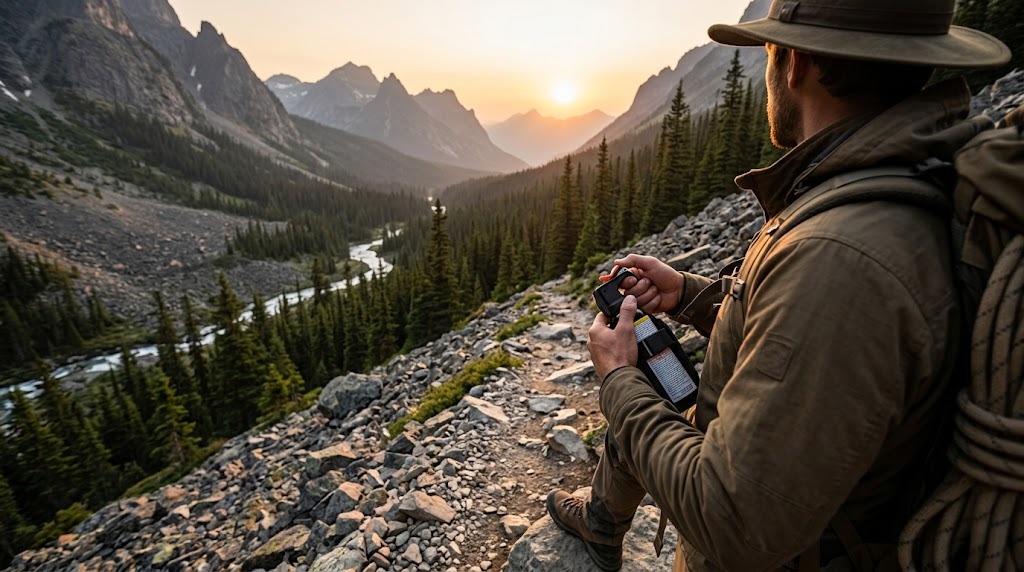
The safest wildlife encounter is the one that never occurs. Situational awareness and proactive spatial management reduce surprise interactions by up to 90%. When navigating dense brush, blind corners, or loud environments like rushing rivers, broadcast your presence using a calm, commanding human voice.
Backcountry campers must utilize the “Triangle Setup” for site management. Position your sleeping tent, cooking area, and suspended food storage canister at least 70 yards apart from one another, forming a large triangle. This ensures that any wildlife attracted to lingering cooking scents or food caches naturally bypasses your sleeping quarters. Never bring scented toiletries, lip balm, or the clothes you cooked in inside your tent.
What Are the Mandatory Safe Distances for Wildlife?
The mandatory safe distance is 100 yards (300 feet) for apex predators and 25 yards (75 feet) for all other large wildlife. Breaching these invisible perimeters triggers the animal’s fight-or-flight response, forcing an unnecessary confrontation.
If you lack a rangefinder, use the “Rule of Thumb” to calculate distance. Extend your arm perfectly straight and point your thumb toward the sky. Close one eye and align your thumb over the animal. If you cannot completely cover the animal’s entire body with your thumb, you are deep inside its critical space and must back away immediately.
Step-by-Step Emergency Response Protocol
If you come face-to-face with a large mammal or predator at close range, execute these steps immediately to neutralize the threat.
- Freeze and Assess: Stop moving instantly. Do not run. Running mimics prey behavior and triggers an involuntary chase reflex in predators. Identify the species and scan for acute stress indicators such as flattened ears, stomping, huffing, or rapid tail flicking.
- Maximize Your Size: Stand tall, open your jacket, or raise your trekking poles over your head. If traveling in a group, cluster tightly together shoulder-to-shoulder to present yourselves as one massive, formidable entity.
- Deploy Audible Deterrents: Speak in a calm, deep, commanding tone (e.g., “Hey bear,” “Back off”). Do not scream, squeal, or make high-pitched noises; to a predator, high frequencies sound identical to injured prey.
- Create a Safe Exit: Never corner an animal or block its natural escape route. Back away slowly and sideways. Moving sideways prevents you from tripping over unseen obstacles and is interpreted by the animal as a non-aggressive retreat.
- Prepare Defensive Gear: If the animal actively moves toward you or lowers its head for a charge, unholster your bear spray, flip off the safety tab, and grip the canister firmly with both hands, ready to deploy at 30 feet.
Species-Specific Safety Tactics
Different categories of wildlife possess distinct evolutionary psychologies, requiring drastically different tactical responses during an aggressive encounter.
Large Predators: Bears, Cougars, and Canines
- Grizzly / Brown Bears: If a grizzly charges and makes physical contact, play dead. Drop flat on your stomach, lace your fingers tightly behind your neck to protect your cervical spine, and spread your elbows wide. This anchors your body, making it difficult for the bear to flip you over. Keep your backpack on to shield your back.
- Black Bears: Do not play dead. Be highly aggressive. Shout, stomp, throw heavy rocks, and if attacked, fight back with everything you have, targeting the bear’s sensitive face and muzzle.
- Cougars / Mountain Lions: Never crouch down, bend over, or turn your back. Maintain unbroken eye contact, assertively throw heavy gear at them, and fight back ruthlessly if they strike. Cougars are ambush predators; they know real prey animals do not throw items.
Large Herbivores: Moose, Elk, and Bison
- Moose and Elk: These ungulates are highly volatile during spring calving and autumn rutting seasons. If a moose charges, do not stand your ground—run immediately. Put a massive boulder, thick tree trunk, or vehicle between you and the animal. If knocked down, curl into a tight ball and cover your head.
- Bison: Maintain strict visual distance. If a bison shakes its head, raises its tail, or paws the dirt, it is preparing a high-speed charge. Retreat backward immediately and seek sturdy cover.
Venomous and Small Hazards
- Venomous Snakes: If you hear a rattle or visually spot a snake, freeze instantly. Do not take another step until you locate its exact position in the brush. Step backward slowly, granting the snake a minimum 5-to-10-foot wide berth.
- Ticks and Insects: Treat your hiking boots, socks, and pants with Permethrin spray, and apply a DEET or Picaridin-based repellent to exposed skin. This layering prevents vector-borne pathogens like Lyme disease.
Which Defensive Gear Is Most Effective?
EPA-approved bear spray is the most effective defensive tool against charging mammals, boasting a 90–98% success rate in stopping attacks without causing lethal harm. While firearms offer longer range, they suffer from extremely low accuracy during the chaos of a high-speed charge and risk escalating an attack if the shot is non-fatal.
| Gear Item | Price Range (USD) | Effective Lifespan | Care & Maintenance Notes |
| EPA-Approved Bear Spray | $40 – $60 | 3 – 4 Years | Check expiration dates annually. Canisters lose ~1g of propellant per year. Never store in a hot car. |
| Hard-Sided Bear Canister | $70 – $110 | Lifetime | Wash out all food residue after trips. Store 70 paces downwind from your tent. |
| Permethrin Fabric Treatment | $15 – $25 | 6 Washes / 6 Weeks | Spray outdoors onto gear only. Let dry completely before wearing. Highly toxic to cats when wet. |
| Safety Whistle (120+ dB) | $5 – $15 | Lifetime | Keep clipped directly to your backpack’s sternum strap for instant, no-look access. |
What Are the Most Common Wildlife Safety Mistakes?
The most fatal wildlife safety mistakes revolve around inaccessibility of gear and fundamentally misunderstanding animal psychology.
Storing bear spray inside a zipped backpack pocket renders it useless; bears can cover 50 feet per second, leaving you zero time to unclip your pack. Spray must live in a dedicated chest or hip holster. Similarly, test-firing a canister “just to check it” instantly vents up to 50% of the internal head pressure, permanently crippling its range for a real emergency.
Many hikers also rely on small “bear bells” tied to their shoes. These bells rarely generate enough noise to alert wildlife over the ambient sound of wind or running water. Using your regular human voice is scientifically proven to be vastly more effective at broadcasting your presence.
Troubleshooting Emergency Scenarios
When standard preventative measures fail, knowing how to troubleshoot a deteriorating situation is critical to survival.
- The Bear Spray Accidentally Sprayed You: Flush your eyes immediately with copious amounts of clean water. Do not rub your skin, as friction embeds the capsaicin oils deeper into your pores. Use non-oil-based soaps or standard dish soap to break down the chemical compound.
- A Predator is Stalking You: If a cougar or wolf is actively following you, walk forward 100 to 300 yards, execute a sharp 90-degree turn, and repeat the pattern to confirm you are being tracked. Turn to face the animal confidently, scream aggressively, and throw heavy items to prove you are a hazard, not easy prey.
- A Snake Bites You: Do not attempt wilderness first-aid myths. Do not apply a tourniquet, do not cut the skin, and do not try to suck out the venom. Keep the bitten limb completely immobilized, position it below heart level to slow venom spread, control your breathing to lower your heart rate, and activate your satellite messenger or call emergency services immediately.
Frequently Asked Questions
Do bear bells actually work to deter wildlife?
No. Bear bells do not generate enough acoustic volume or distinct frequency to carry over environmental wilderness noise like wind, crunching leaves, or rushing water. Speaking clearly in a commanding human voice is the only reliable way to broadcast your presence to wildlife.
How long does a can of bear spray last during an attack?
A standard 9.2-ounce bear spray canister provides roughly 7 seconds of continuous discharge. Because this timeframe is incredibly short, you must wait to deploy the spray until a charging animal crosses the 30-foot threshold, ensuring they hit a dense, lingering chemical cloud.
Should I make eye contact with a mountain lion?
You must maintain unbroken eye contact with a mountain lion or cougar. Turning away or breaking eye contact signals submission and triggers their ambush instinct. However, when backing away from a bear, you should avoid unbroken, direct staring, which bears interpret as a dominant challenge.
What should I report to a conservation officer after an encounter?
If you survive a predatory charge or deploy bear spray, immediately report the incident to local game wardens or park rangers. Note the animal’s exact location, physical size, any distinct markings (like ear tags), the direction it fled, and whether it was protecting a fresh carcass or cubs.
Does permethrin work against ticks in the woods?
Yes, permethrin is exceptionally effective at killing ticks on contact, but it must only be applied to outdoor gear, backpacks, and clothing—never directly to human skin. A thorough application typically remains active for up to 6 washes, providing a vital shield against Lyme disease.