
A hunting weather safety guide is a comprehensive framework of protocols, risk assessments, and gear strategies required to survive volatile meteorological conditions. It integrates macro-forecasting, microclimate mapping, and specialized equipment to mitigate physiological hazards like hypothermia while adapting to animal biology and ballistic drift.
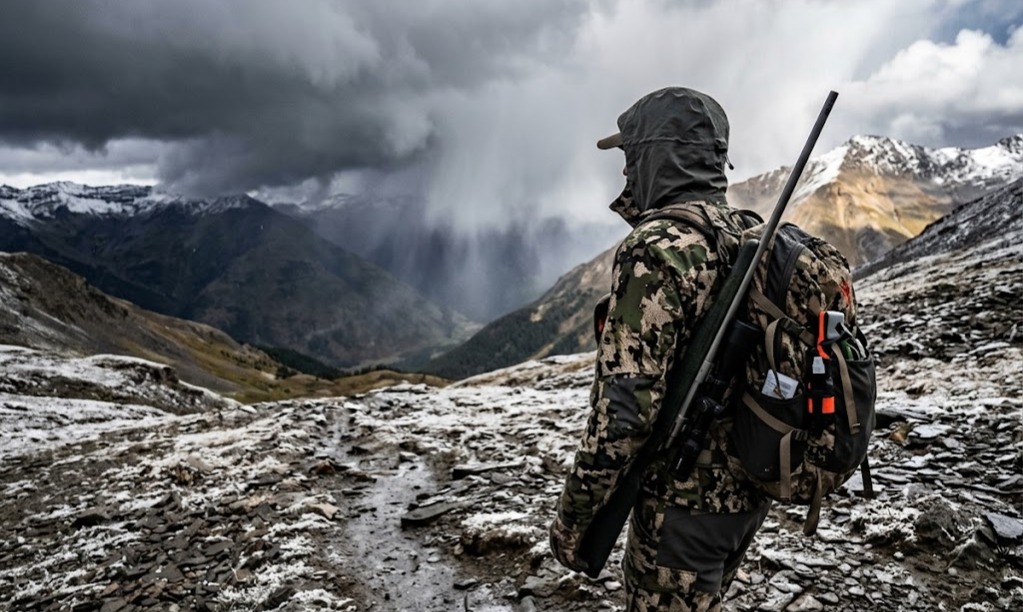
Key Facts / At a Glance:
- Hypothermia Acceleration: High humidity combined with temperatures as mild as 40°F (4°C) accelerates hypothermia faster than dry sub-zero cold.
- Lightning Proximity: The 30/30 rule dictates that hearing thunder within 30 seconds of lightning means the strike is within 6 miles; immediate shelter is required.
- Wind Limits: Bowhunting accuracy degrades sharply beyond 20 yards in sustained winds exceeding 20 mph, and dead-fall timber risks spike at 30 mph.
- Heat Spoilage: Above 80°F (27°C), harvested game meat rapidly generates bacterial growth, requiring quartering and cooling within 60 to 120 minutes.
- Cotton Lethality: Cotton retains moisture and strips body heat 25 times faster than dry air, making Merino wool or synthetic base layers mandatory.
How Does Weather Impact Hunting Safety?
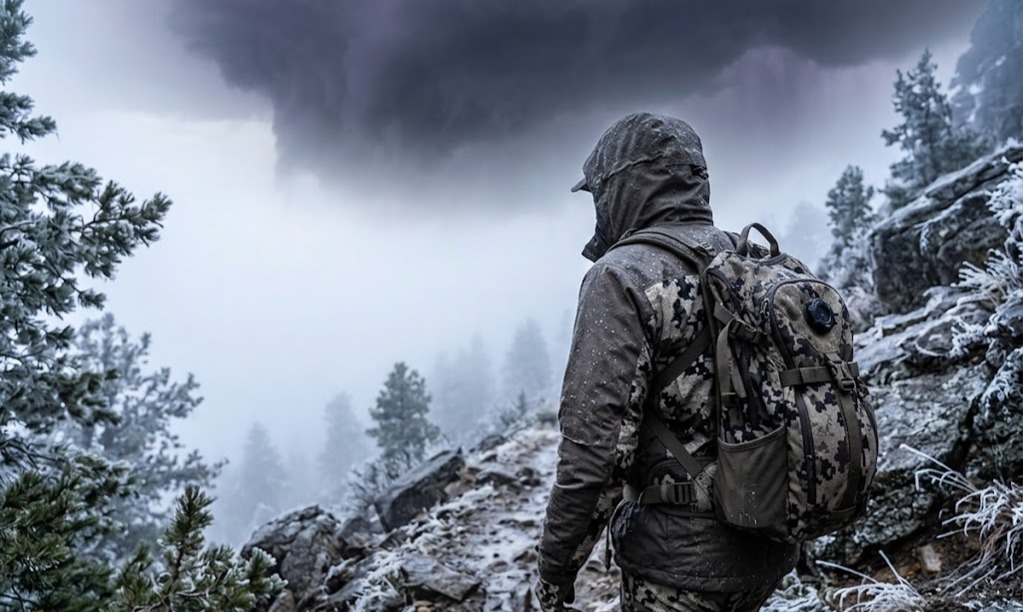
Weather dictates hunting safety by stressing human physiology, altering animal movement, and destabilizing navigation. Understanding meteorological mechanics allows a hunter to anticipate life-threatening conditions rather than merely reacting to them.
What Is the Role of Barometric Pressure?
Barometric pressure controls the movement of weather fronts and wildlife. High pressure generally brings clear, stable skies and predictable thermal patterns, leading to steady game movement. A rapidly dropping barometer—indicating an approaching low-pressure front—triggers frenzied feeding activity in big game, followed by total lockdown bedding during the storm. Navigating a steep pressure drop requires securing shelter before the frontal boundary hits, as visibility will drop to near zero.
How Do Thermal Layering and Wind Vectors Work?
Wind vectors dictate scent control and temperature regulation in vertical environments. In mountain hunting, solar radiation warms valley floors at sunrise, causing air to rise (thermal updrafts). At dusk, cooling air sinks (thermal downdrafts). Unpredictable cross-thermals occur when incoming weather fronts clash with these daily patterns. Misjudging wind vectors not only blows stalks but rapidly increases convective heat loss for a stationary hunter.
Why Does the Dew Point Matter?
The dew point determines the precise temperature at which atmospheric moisture condenses into fog, frost, or rain. When the ambient temperature drops to match the dew point, visibility plummets and environmental moisture saturates clothing. High humidity combined with near-freezing temperatures accelerates thermal drain. A 40°F morning with 95% humidity is often more dangerous than a dry 15°F morning, as the dampness neutralizes insulating loft.
How Do You Plan for Volatile Hunting Weather?
A robust hunting weather safety guide relies on a phased preparation timeline. Forecasting narrows from macro-level models to hyper-local observations as the hunt approaches.
Step 1: Macro-Forecast Analysis (7 Days Out)
Seven days before departure, monitor regional weather models using the GFS (American) or ECMWF (European) systems via specialized backcountry apps. Look for major frontal movements, sharp temperature plummets exceeding 15°F in 24 hours, or sustained high-wind alerts. This macro view determines the baseline shelter and fuel requirements for the expedition.
Step 2: Microclimate Mapping (48 Hours Out)
Two days out, transition to topographic weather mapping. Check satellite maps to identify terrain features that manipulate weather: funnels, saddle ridges, and deep bowls. Cross-reference the forecasted wind direction with your planned entry routes. Terrain features create microclimates; a forecasted 10 mph west wind can accelerate to 30 mph as it forces its way through a narrow canyon bottleneck.
Step 3: Layering and Gear Adjustments (24 Hours Out)
Finalize your clothing system based on the lowest predicted wind-chill factor, never the average daily temperature. Pack a dedicated emergency shelter, such as an ultralight sil-nylon bivy, even for day trips. Verify that digital maps are cached for offline use, as heavy cloud cover and precipitation will sever weak cellular signals and degrade GPS lock speeds.
Step 4: Real-Time Field Monitoring (In-Field)
Once deployed, actively monitor real-time indicators. Track barometric trends every two hours using a digital ABC (Altimeter, Barometer, Compass) watch or satellite messenger. Read structural cloud changes: high-altitude cirrus “mares’ tails” indicate a front arriving in 24 hours, while rapidly building cumulonimbus towers require immediate descent below the timberline to avoid lightning.
At What Thresholds Do Weather Hazards Become Lethal?
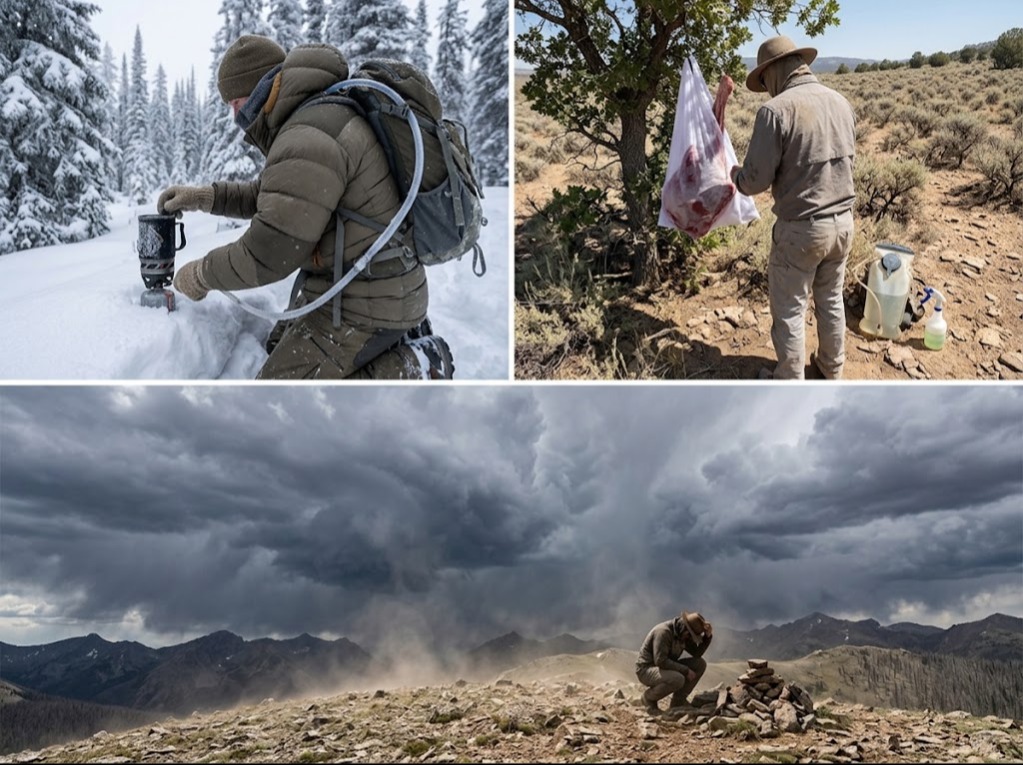
Hunters operate in specialized sub-environments, each possessing distinct biological and physiological failure points.
How Do You Manage Extreme Cold and Sub-Freezing Conditions?
Extreme cold causes frostbite, catastrophic hypothermia, and equipment failure. At 32°F (0°C), water freezes, requiring insulated boots, moisture-wicking base layers, and the immediate draining of inline hydration hoses. Between 0°F and -20°F (-18°C to -29°C), exposed skin suffers frostbite within 15 to 30 minutes.
To survive sub-freezing hunts, utilize a strict four-layer clothing system: a Merino wicking base, a fleece active insulator, a compressible down static insulator, and a waterproof/windproof breathable shell. Rely on multi-fuel liquid stoves rather than isobutane canisters, which depressurize and fail in deep cold.
What Are the Protocols for Severe Heat and Arid Environments?
Severe heat triggers heat exhaustion, rapid dehydration, and accelerated game meat spoilage. When temperatures exceed 80°F (27°C), a harvested animal’s core temperature will generate explosive bacterial growth (like bone sour) within 60 minutes.
Survival requires consuming a minimum of one gallon (3.8 liters) of water daily. Immediately quarter and skin harvested game to dissipate heat. Treat raw meat with a 10% food-grade citric acid spray; this antimicrobial barrier lowers the surface pH, repelling flies and halting bacterial doubling timelines during the pack-out.
What Are the Safety Protocols for High Winds and Thunderstorms?
High winds generate falling timber (“widowmakers”) and severe ballistic drift, while thunderstorms introduce fatal lightning risks above the tree line. Sustained winds exceeding 30 mph (48 km/h) make hunting in dense, dead-fall timber unacceptably dangerous.
If lightning approaches, utilize the 30/30 rule. If you see a flash and hear thunder in under 30 seconds, the strike is dangerously close. Abandon ridge lines, avoid isolated tall trees, and assume the lightning position: squatting low on a non-conductive surface (like a foam sleeping pad) with heels touching to mitigate step-voltage ground currents.
Which Weather Tracking Technology Should You Use?
Comparing digital forecasting tools ensures you deploy the right hardware for the specific isolation level of the hunt.
| Tracking Method | Primary Hardware Options | Typical Cost | Best Used For | Drawbacks |
| Satellite Messengers | Garmin inReach Mini 2, ACR Bivy Stick | $300-$400 + $15-$65/mo | Deep backcountry, alpine wilderness, off-grid | Requires active subscription; weather sync takes 10–15 mins. |
| Algorithmic Apps | OnX Hunt, HuntStand, Spartan Forge | $30-$100 / year | Whitetail hunting, private land, moderate cellular areas | Relies on historical algorithms; useless without cached maps. |
| In-Field Tools | Kestrel 3500, Suunto Core Watch | $150-$280 | Long-range precision rifle hunting, instant wind-checks | Captures micro-data only; cannot forecast long-term fronts. |
| Emergency Shelters | Ultralight Sil-nylon Tarp, Bivy Sack | $60-$150 | Emergency exposure mitigation, sudden squalls | Requires practice to pitch rapidly in high-wind conditions. |
What Are the Most Common Weather Safety Mistakes?
Experienced hunters recognize that meteorological disasters rarely stem from single events, but from a cascade of preventable errors.
- Mistake 1: Relying on Standard Airport Weather Data. Default smartphone apps pull forecasts from distant municipal airports. These stations may sit 30 miles away and 3,000 feet lower than your hunting elevation. Use hunting apps that pull from Remote Automated Weather Stations (RAWS) or calculate altitude-adjusted forecasts.
- Mistake 2: Ignoring Offline Map Caching. Navigating a whiteout storm without cached topographical data routinely leads to fatal exposure. Always set a departure alarm to download a 10-mile offline map radius around your hunting unit while on a stable Wi-Fi connection.
- Mistake 3: Wearing Cotton Underlayers. Cotton absorbs sweat, loses all insulating value, and clings to the skin. Convective heat loss accelerates rapidly when damp cotton is exposed to wind. Always utilize synthetic polyesters or Merino wool for next-to-skin layers.
How Should Different Hunting Styles Adapt?
Different terrain profiles dictate specialized safety blueprints. What saves an alpine hunter will not protect a marsh hunter.
The Backcountry Alpine Hunter (Elk, Sheep, Goat)
Alpine hunters face sudden exposure, rapid hypothermia, and navigation failure across steep, unforgiving terrain. Always carry a standalone Iridium satellite messenger with active SOS capabilities. Pack a lightweight emergency bivy sack inside your daypack, even if returning to a base camp. Never pitch a tent directly on an exposed saddle ridge or beneath dead standing timber (beetle-kill pines), as localized micro-burst winds frequently uproot them at night.
The Tree-Stand Whitetail Hunter
Tree-stand hunters must prioritize fall hazards, structural instability, and heavy rain washing away blood trails. High winds swaying the tree induce vertigo and stress the stand’s ratchet straps. Always use a full-body, TMA-approved safety harness tied off to a lifeline from the ground up. If sustained winds exceed 25 mph, immediately abandon the canopy and hunt from a ground blind. If heavy rain is imminent, pass on marginal bow shots to prevent losing the animal.
The Waterfowl Marsh Hunter
Waterfowl hunters operate in aquatic environments where cold-water immersion and high-wind capsize risks dominate. Always wear a Coast Guard-approved Personal Flotation Device (PFD) while navigating deep water in a boat. Keep a sealed dry bag containing a complete change of thermal clothes and fire-starting materials. If waders breach or flood, exit the water immediately, strip the wet layers, and re-dress in dry clothing to halt rapid-onset hypothermia.
Frequently Asked Questions
How does barometric pressure affect deer movement?
Deer sense barometric changes through their inner ears. A rapidly dropping barometer before a storm triggers heavy feeding as animals consume calories to survive the incoming weather. Once the storm hits and pressure bottoms out, deer bed down in thick cover to conserve energy until high pressure returns.
What is the best material for hunting in wet weather?
Gore-Tex or similar proprietary ePTFE breathable membranes are the gold standard for outer shells. For base layers, Merino wool is vastly superior to synthetics in wet conditions because it retains up to 80% of its insulating properties even when completely soaked.
How do I track weather without a cell signal?
Tracking weather off-grid requires a satellite communicator (like a Garmin inReach) that pings Iridium satellites to download localized marine or backcountry forecasts. Alternatively, analog tracking relies on wearing a barometric altimeter watch to monitor pressure drops and visually observing cloud formations.
At what temperature does hunting become unsafe?
Hunting becomes structurally unsafe below 0°F (-18°C) if the hunter lacks specialized 4-layer extreme cold weather gear, as frostbite occurs in minutes. Conversely, hunting in temperatures exceeding 80°F (27°C) becomes biologically unsafe for the harvest, as meat spoils rapidly without immediate, aggressive cooling interventions.
Can I use a regular weather app for my hunting weather safety guide?
No. Standard weather apps lack altitude-adjusted algorithms and pull data from urban centers. A true hunting weather safety guide requires localized topographic tools like OnX or HuntStand that overlay wind direction, thermal mapping, and barometric trends directly onto your specific GPS hunting coordinates.