
A hunting season is a legally mandated, specific time period during which hunters may lawfully pursue and harvest designated wildlife species. Regulated by state and federal wildlife agencies, these structured periods control animal population dynamics, ensure ecological balance, and dictate the legal methods of take for hunters.
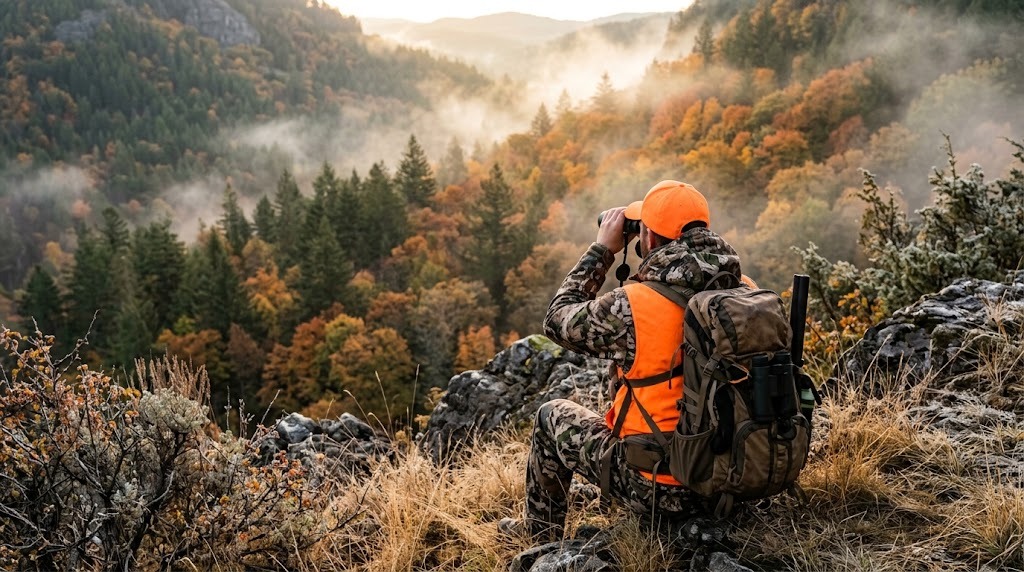
At a Glance
- Regulatory Authority: State Departments of Natural Resources (DNR) manage resident game, while the US Fish and Wildlife Service (USFWS) regulates migratory birds.
- Biological Timing: Season dates are scientifically engineered around animal mating cycles (the rut), migration routes, and vulnerable rearing periods.
- Weapon Segregation: Seasons are divided by method of take (archery, muzzleloader, modern firearm) to manage hunter success rates and field crowding.
- Tag Allocation: Game tags are distributed via Over-The-Counter (OTC) sales for abundant species, or lottery draws for premium big game zones.
- Financial Impact: Hunting licenses and tags fund over 60% of state wildlife agency budgets through the Pittman-Robertson Act.
How Do Hunting Seasons Work?
Hunting seasons operate on the North American Model of Wildlife Conservation, a framework dictating that wildlife is a public resource managed by science rather than market economics. State and federal biologists track herd sizes, monitor birth rates, assess winter mortality, and evaluate environmental carrying capacities to set dynamic annual targets.
How Do Agencies Determine Tag Quotas?
Agencies determine tag quotas by calculating the exact number of animals that must be harvested to prevent habitat overgrazing while ensuring long-term herd survival. If a population exceeds the carrying capacity of its habitat, agencies increase the number of “antlerless” or female tags to reduce the breeding base. Conversely, if a severe winter or disease outbreak—such as Chronic Wasting Disease (CWD) or Epizootic Hemorrhagic Disease (EHD)—decimates a herd, agencies will sharply reduce tag quotas or close a hunting zone entirely.
Why Does Biological Timing Dictate Season Dates?
Biological timing dictates season dates to both exploit animal behavior for harvest efficiency and protect species during vulnerable developmental stages. For example, spring turkey seasons are timed perfectly to coincide with the mating season when male gobblers are actively responding to calls. Conversely, almost no major game hunting occurs in the late spring or summer; this closure protects pregnant females and dependent young, ensuring population replenishment.
What Are the Main Types of Hunting Seasons?
Hunting seasons are primarily segmented by the specific weapon allowed. Because different weapons offer vastly different effective ranges and success rates, state agencies manipulate season lengths to balance overall harvest numbers.
Archery Seasons
Archery seasons permit the use of compound bows, traditional recurve or longbows, and in many states, crossbows. Because archery requires a hunter to get within 40 yards of an animal, the success rate is statistically the lowest.
- Timing: Typically the earliest season, running from September through October, with some late-season dates in December or January.
- Duration: 60 to 90 days.
- The Experience: Hunters operate in warmer weather with dense foliage. Animals are generally un-spooked and exhibit natural feeding patterns.
- Expert Insight: Early archery seasons require impeccable scent control and physical endurance, as heat causes meat to spoil rapidly. Hunters must be prepared to process and cool a harvested animal within hours.
Muzzleloader and Primitive Firearms Seasons
Muzzleloader seasons restrict hunters to firearms that load from the muzzle (front of the barrel), typically utilizing black powder. These firearms offer a single shot and a slow reload time.
- Timing: Generally a transitional season lasting 7 to 14 days, often sandwiched between archery and modern firearm seasons in October or November.
- Duration: 7 to 14 days.
- The Experience: Offers a middle ground. Hunters gain more range (up to 150 yards with modern inline muzzleloaders) without the extreme crowding of the general rifle season.
General Firearm (Rifle/Shotgun) Seasons
General firearm seasons allow centerfire rifles, shotguns firing slugs, or straight-walled cartridges. This season generates the highest hunter participation and the highest overall harvest volume.
- Timing: Usually scheduled in November or December to align precisely with the peak mating season (the rut) for deer and elk, when mature males are highly active and less cautious.
- Duration: 9 to 23 days.
- The Experience: Characterized by cold weather, mandatory high-visibility “hunter orange” clothing, and significant hunting pressure. Animals adapt quickly, often becoming nocturnal or retreating to thick cover.
Special Management Seasons
Wildlife agencies implement micro-seasons to achieve specific management goals or promote hunter recruitment.
- Youth and Veteran Seasons: Brief, two-to-three-day windows preceding the general season, allowing young or disabled veteran hunters first access to unpressured game.
- Depredation Seasons: Targeted cull hunts on private agricultural land where overpopulated game animals are actively destroying crops.
| Season Type | Maximum Effective Range | Typical Success Rate | Hunter Pressure | Best For |
| Archery | 40–60 Yards | 10–15% | Low | Fitness seekers, backcountry hunters |
| Muzzleloader | 100–150 Yards | 20–30% | Medium | Traditionalists wanting slightly more range |
| Firearm | 200–500+ Yards | 40–50%+ | High | Meat hunters, time-crunched professionals |
How to Participate in a Hunting Season: Step-by-Step
Navigating a hunting season requires strict adherence to legal prerequisites before stepping foot into the woods. Completing these steps out of order results in voided applications or legal citations.
Step 1: Secure Hunter Education Certification
Nearly all states mandate that hunters born after a specific date (commonly January 1, 1970) must pass a certified Hunter Safety Course. These courses cover firearm safety, wildlife identification, and field ethics. Upon completion, the state issues a permanent hunter education number required to purchase any license.
Step 2: Acquire the State Base License
Before buying species-specific tags, hunters must purchase an annual base hunting license for their state. Pricing heavily favors residents. Non-residents face steep upcharges, as wildlife management is subsidized by state taxpayers.
Step 3: Secure Species Tags (OTC vs. Draw)
A hunting tag is the physical or digital document granting permission to harvest one specific animal.
- Over-The-Counter (OTC): Purchased instantly online or at sporting goods stores. Common for abundant species like whitetail deer in the Midwest, wild turkey, and small game.
- Lottery Draws: Required for premium western big game (elk, mule deer, moose) where demand far exceeds supply. Hunters apply between January and June. Many states use a “Preference Point” system—if you fail to draw, you gain a point, increasing your odds the following year. Expert Note: Point creep is a modern reality; tags that required 2 points a decade ago now often require 8 to 10.
Step 4: Digital and Physical Scouting
Successful hunters locate game weeks before opening day. Modern scouting relies on GPS mapping applications like onX Hunt or HuntStand to identify public/private land boundaries, topographical funnels, and water sources.
Step 5: The Hunt and Legal Harvest
Hunters must execute the hunt within strictly defined legal shooting hours, universally mandated as 30 minutes before official sunrise to 30 minutes after official sunset. Discharging a weapon outside this window is poaching.
Step 6: Tagging and Reporting
Immediately upon recovering an animal, the hunter must validate and attach the tag to the carcass. Many states have transitioned to digital tagging via smartphone apps. The animal must then be legally checked or reported to the state agency within 24 to 48 hours to provide biologists with harvest data.
How Much Does Participating in a Hunting Season Cost?
Financial expectations vary drastically based on residency status and the targeted species.
| Item | Resident Cost (Typical) | Non-Resident Cost (Typical) |
| Hunter Safety Course | $20 – $40 | $20 – $40 |
| Annual Base License | $15 – $40 | $150 – $300 |
| Whitetail Deer Tag | $20 – $40 | $150 – $400 |
| Western Elk Tag | $40 – $60 | $500 – $1,200+ |
| Federal Duck Stamp | $25 | $25 |
What Are the Most Common Hunting Season Mistakes?
Even experienced hunters face citations or ruined hunts due to administrative oversights. Avoiding these failure modes is critical for legal and ethical compliance.
- Mistake: “Party Hunting” Tag Violations. Hunters often mistakenly believe a group can shoot animals until the total group tag limit is filled.
- The Fix: Unless explicitly legal in a specific state (like Iowa or Wisconsin for deer), party hunting is a federal violation. The specific individual who pulls the trigger must instantly attach their own tag to the harvested animal.
- Mistake: Electronic Tagging Failures. Relying entirely on a digital tag app without cell service in the backcountry.
- The Fix: State laws require the tag to be validated immediately upon harvest. Always download offline maps and sync the state’s digital tagging app before leaving cellular coverage, or carry paper backup tags if the state permits.
- Mistake: Ignorance of CWD Transport Laws. Harvesting a deer out of state and driving home with the entire carcass.
- The Fix: Due to Chronic Wasting Disease (CWD), crossing state lines with brain or spinal column tissue is illegal. Hunters must fully debone the meat and clean the skull cap before leaving the state where the animal was harvested.
Frequently Asked Questions
Can you hunt on private land without a license during the season?
No. State wildlife agencies hold wildlife in the public trust; animals do not belong to the landowner. You must possess a valid state hunting license and the appropriate tags to hunt any regulated game species, even on your own deeded property.
What happens if I shoot an animal just after legal light ends?
Shooting game outside of legal hours (typically 30 minutes after sunset) is a strict-liability wildlife violation. Game wardens use official naval observatory solar tables to determine exact legal minutes. Violations result in steep fines, confiscation of the animal, weapon seizure, and potential loss of hunting privileges.
Do hunting seasons apply to invasive species or pests?
Generally, no. Invasive species like feral hogs, European starlings, and coyotes are typically classified as non-game or nuisance animals. In most states, they have a continuously open season year-round with no bag limits, requiring only a basic hunting license to harvest.
How do preference points work for limited-draw seasons?
When you apply for a highly sought-after tag and are not selected in the lottery, the state awards you a preference point. The next year, applicants with the highest number of points are awarded tags first. Some western species require accumulating points for 15 to 20 years before successfully drawing a tag.
What is the difference between small game and big game seasons?
Big game seasons (deer, elk, bear) require species-specific tags, strict seasonal windows, and exact harvest reporting. Small game seasons (squirrel, rabbit, upland birds) generally require only a base license, operate over much longer date ranges, and are managed by daily bag limits rather than individual quotas.