
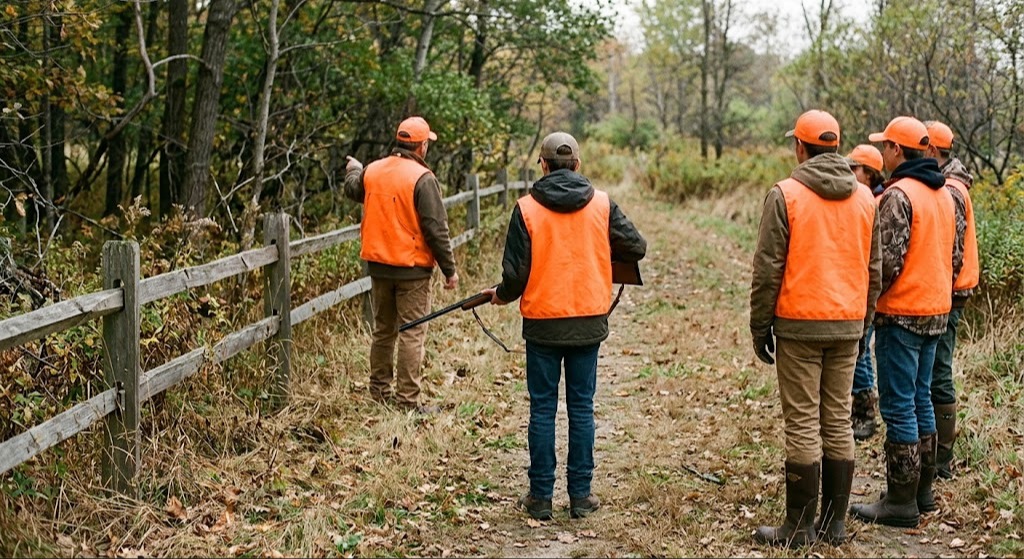
Hunter education is a standardized statutory training curriculum administered by state and provincial wildlife agencies under International Hunter Education Association (IHEA-USA) standards to teach firearm safety, wildlife conservation, ethical fair chase, and field survival. Successful completion awards a permanent certification credential required to purchase a hunting license in 49 U.S. states and all Canadian provinces.
Key Facts: Hunter Education at a Glance
- Universal Reciprocity: Certifications bearing the official IHEA-USA compliance emblem earned in any U.S. state, Canadian province, or Mexican state are legally valid across all 50 U.S. states and across North America.
- Standard Passing Threshold: Written examinations require a minimum passing score of 70% to 80%, depending on the administering state or provincial fish and wildlife department.
- Accident Reduction: Longitudinal wildlife agency data shows hunting-related shooting incidents (HRSIs) have declined by more than 80% across North America since mandatory hunter education was adopted.
- Credential Lifespan: Once issued by a state wildlife agency, a basic hunter education certificate does not expire and serves as a permanent lifetime qualification.
- Course Delivery Formats: States offer three paths: 100% online self-paced study, traditional in-person classroom instruction (8–14 hours), and blended hybrid formats pairing remote modules with an in-person field day.
- Exemption Cut-offs: Most states operate strict “grandfather” dates (commonly individuals born before dates between 1949 and 1980) or offer one-time Apprentice Hunting Licenses that temporarily defer the certification mandate.
What Is Hunter Education and Why Is It Legally Mandated?
Hunter education is a mandatory training and certification program established by state statute to qualify individuals for hunting licenses by verifying core competencies in firearm mechanics, field safety, conservation principles, and wildlife management.
State Wildlife Agency (Statutory Authority)
  └── Regulates License Issuance & Enforcement
        │
        ├── Adopts IHEA-USA Operational Standards
        │     └── Curates Firearm Safety, Ballistics, Ethics, Field Skills
        │
        └── Issues Hunter Education Certification (Lifetime Reciprocal Credential)
              └── Unlocks Valid Hunting License Purchase Nationwide
The program emerged in 1949 when New York enacted the first mandatory hunter safety law to curb firearm-related hunting casualties. Seeing immediate decreases in fatal shooting incidents, other jurisdictions replicated the model. In 1970, the U.S. Congress amended the Federal Aid in Wildlife Restoration Act (commonly known as the Pittman-Robertson Act of 1937) to allocate a portion of federal excise taxes on handguns, firearms, and archery equipment directly toward funding state-level hunter education programs and public target ranges.
Hunter safety training shifted from informal volunteer gun safety classes into a federally supported, scientifically tracked discipline. Today, the International Hunter Education Association (IHEA-USA) sets minimum curriculum standards, while sovereign state and provincial wildlife agencies (such as the Texas Parks and Wildlife Department, California Department of Fish and Wildlife, or Pennsylvania Game Commission) administer, enforce, and issue credentials.
According to consolidated data from the Association of Fish and Wildlife Agencies (AFWA), hunting ranks statistically among the safest outdoor recreational activities in North America, experiencing fewer injuries per 100,000 participants than cycling, swimming, football, or golf.
What Does the Core Hunter Education Curriculum Cover?
Certified hunter education programs teach five core disciplines: firearm manipulation, wildlife stewardship, ethical harvest practices, game anatomy and shot placement, and remote-wilderness survival.
1. Firearm Architecture, Safe Handling, and the TAB+K Protocol
Firearm safety is the foundation of every certification course. Students learn the mechanical components and operating actions of modern long guns (bolt, lever, pump, semi-automatic, and break-action), black-powder muzzleloaders, and archery gear. The curriculum emphasizes the strict physical protocol known as TAB+K:
- T — Treat every firearm as if it were loaded: Never assume a firearm is empty, even when handing it over or receiving it with an open action.
- A — Always point the muzzle in a safe direction: Maintain total muzzle control at all times so that an accidental discharge cannot cause personal injury or property damage.
- B — Be certain of your target, your line of fire, and what lies beyond: Positively identify the quarry’s species, sex, and physical background; bullets can penetrate targets and travel miles beyond them.
- K — Keep your finger outside the trigger guard until ready to fire: The index finger rests straight along the receiver frame until the target is verified and sights are aligned.
       [45° Alert Zone]
             \   /
              \ /
   [Safe Zone] O [Safe Zone]
              / \
             /   \
       [45° Primary Field]
Instruction covers the six primary field carries (two-hand/ready carry, cradle carry, elbow carry, shoulder carry, trail carry, and sling carry) alongside safe obstacle navigation, such as crossing fences, ascending steep terrain, and unloading before entering vehicles or duck blinds. Crucially, instructors drill the $45^\circ$ Zone-of-Fire Rule, teaching hunters moving abreast in upland bird fields to restrict their shooting arc strictly within their personal forward quadrant to prevent crossfire incidents.
2. Wildlife Conservation and the North American Model
The curriculum grounds hunting within professional wildlife ecology. Students study the North American Model of Wildlife Conservation, anchored by two core principles: fish and wildlife belong to all citizens and are held in trust by the government, and wildlife markets are strictly regulated to prevent commercial exploitation.
Students learn the distinction between:
- Preservation: The passive protection of natural assets without consumptive harvest.
- Conservation: The science-based, sustainable utilization and management of renewable natural resources.
Key instructional segments explain ecological carrying capacity, predator-prey dynamics, habitat destruction, and the financial lifeblood of state agencies: the “user-pay, public-benefit” framework, in which hunters fund state conservation initiatives via hunting license fees and federal excise taxes on sporting goods.
3. Hunting Ethics, Personal Responsibility, and Fair Chase
Legal compliance represents a regulatory minimum, whereas hunting ethics dictate conduct when no game warden or peer is watching. Courses focus on the Fair Chase Doctrine, formulated by the Boone and Crockett Club, which establishes that a hunter must not hold an unfair, technological, or artificial advantage over game animals.
Ethical training emphasizes:
- Securing explicit permission before entering private properties.
- Respecting non-hunting outdoor recreationists.
- Abiding by legal shooting hours (typically one-half hour before sunrise to one-half hour after sunset).
- Maximizing meat recovery while minimizing game animal stress and suffering.
4. Anatomy, Shot Placement, and Game Recovery
Clean, rapid dispatch requires an understanding of game animal anatomy. Courses provide cross-sectional diagrams of ungulate (deer, elk, pronghorn) and avian cardiovascular and respiratory systems.
Angle: Broadside
  Vital Area: Heart & Lungs (Direct Center Behind Shoulder)
  Penetration Path: Double-lung & aorta rupture
  Effectiveness: Maximum / Lowest risk of bone deflection

Angle: Quartering-Away
  Vital Area: Aim toward the off-side front shoulder
  Penetration Path: Liver, diaphragm, lungs
  Effectiveness: High / Large target window

Angle: Quartering-Toward
  Vital Area: Narrow chest pocket (bone obstruction risk)
  Penetration Path: Heavy shoulder blade barrier
  Effectiveness: Low / Higher risk of non-fatal wounding

Angle: Head-On / Straight-Away
  Vital Area: Spinal column / neck junction
  Penetration Path: Minimal target margin; high risk of paunch hit
  Effectiveness: Extremely Unethical / High failure probability
Instruction teaches:
- Broadside Shot: The gold-standard presentation providing an open corridor to heart and lungs with minimal bone interference.
- Quartering-Away Shot: An effective angle where the projectile enters the flank behind the ribs and travels forward into the thoracic cavity.
- Marginal and Unethical Angles: Straight quartering-toward, head-on, or Texas heart shots (straight away), all of which present high probabilities of wounding, gut-shooting, or ricocheting off heavy skeletal structures.
- Blood Trailing Mechanics: Differentiating bright red, frothy blood (arterial/lung hits) from dark, venous blood (liver hits) or watery green bile (gut hits), along with the appropriate waiting periods (30 minutes for lungs; 6 to 8 hours for marginal abdominal strikes) to prevent jumping wounded game.
5. Elevated Stand Safety and Wilderness Survival
Elevated platform accidents, not firearm discharges, represent the primary cause of serious injury during big game archery and rifle seasons. Modern courses mandate training on Treestand Manufacturer’s Association (TMA) safety standards. Students are taught to use a full-body Fall Arrest System (FAS) anchored to the tree from the moment their boots leave the ground until they return, using linesman belts, tether lines, and suspension relief straps to prevent suspension trauma.
Wilderness survival modules focus on preventing and treating hypothermia, packing the “Ten Essentials,” operating compasses and topographical maps independent of cellular battery reserves, and basic trauma control (tourniquet application and emergency pressure dressings).
How Do In-Person, Online, and Hybrid Courses Compare?
Aspiring hunters can earn certification through three primary paths: traditional in-person classrooms, self-paced online courses, or blended hybrid courses.
| Decision Factor | Traditional In-Person Classrooms | 100% Online Independent Courses | Blended Hybrid (Online + Field Day) |
| Primary Target Audience | Youth (under age 16), tactile learners, families, individuals seeking hands-on gun familiarity | Working adults, seasoned shooters needing a paper credential, remote rural residents | Teens, adult novices wanting digital convenience paired with practical range evaluation |
| Typical Seat Time | 8 to 14 hours (commonly split across 2–3 evenings or a full weekend) | 4 to 8 hours (self-paced, save-and-resume digital interface) | 4 to 6 hours digital coursework + 3 to 5 hours scheduled field evaluation |
| Direct Cost Range | Free to $15 (covers basic student manuals and agency admin fees) | $24.95 to $39.95 (paid directly to certified vendor platforms) | $15 to $30 (online software fee) + $0 to $15 (local agency field day fee) |
| Hands-On Firearm Training | Extensive: Dummy gun clearing, action cycling, and live-fire range drills (state-dependent) | None: Evaluated entirely via animations, visual diagrams, and simulated digital scenarios | Moderate to High: Live handling, fence crossing, zone-of-fire walking drills, and live-fire testing |
| Age Eligibility | Unrestricted; open to any candidate meeting the state’s minimum age (often age 9–10) | Restricted in multiple states: Many states restrict 100% online courses to ages 16+ or 18+ | Unrestricted; universally accepted for all age categories in hybrid-mandate states |
| Schedule Flexibility | Rigid: Fixed dates, mandatory attendance; seats fill quickly during autumn months | Maximum: Available 24/7/365; completed on smartphones, tablets, or home computers | Split: Digital modules completed anytime; field day requires advance reservation |
| Key Advantage | Face-to-face mentorship from veteran instructors and game wardens | Completable on your schedule without taking time off work or traveling | Balances digital study speed with verifiable physical firearms competence |
| Primary Drawback | Classrooms fill rapidly in peak season; long lecture hours can test youth attention spans | Lacks physical firearm manipulation; prohibited for minors in conservative states | Requires coordinating two testing milestones; field-day slots fill months ahead |
The Independent Online Platforms
State agencies contract digital course delivery to specialized private platforms vetted under IHEA-USA guidelines. The dominant providers include:
- Hunter-Ed (Kalkomey Enterprises): Features high-definition video productions, real-world case simulations, and native cross-platform progress syncing.
- ILEarnToHunt: Uses an interactive, video-game-style narrative engine targeting younger demographics with visual decision branches.
- NRA Free Hunter Education Course: Offered directly by the National Rifle Association; provides a no-cost digital alternative accepted by a select subset of state wildlife agencies (e.g., Texas, Florida, North Carolina, Oregon).
Who Is Legally Required to Take Hunter Education?
Every state operates statutory thresholds that mandate certification based on the hunter’s birth date, biological age, and licensing classification.
                 [Prospective Hunter Wants License]
                                  │
         Born Before State Grandfather Cut-off Date?
                    /                            \
                 [YES]                           [NO]
                  /                                \
      [Exempt from Course]            Has Valid Out-of-State /
  (Card Recommended for Reciprocity)     Prior IHEA Card?
                                            /           \
                                         [YES]          [NO]
                                          /               \
                                    [Buy License]   [Take Hunter Ed Course]
                                                    (Or Buy Apprentice License)
State Grandfather Cut-Off Dates
Rather than requiring every living citizen to obtain a card retroactively, state legislatures passed “grandfather clauses” when codifying hunter education laws. Anyone born before a specified statutory date is exempt from having to show proof of certification to purchase a resident hunting license.
Common state grandfather baselines include:
- Colorado: Born on or after January 1, 1949.
- Wyoming: Born on or after January 1, 1966.
- Pennsylvania: Born on or after January 1, 1969.
- Montana: Born on or after January 1, 1985 (or at least 12 years of age).
- Texas: Born on or after September 2, 1971.
- Washington: Born on or after January 1, 1972.
- New York: Applies universally; all first-time hunting license buyers must show proof of a prior hunting license or an approved certification regardless of age.
Cautionary Rule of Thumb: If you plan to hunt out-of-state-such as a non-resident booking an elk hunt in Colorado or a whitetail hunt in Wyoming-your home state’s grandfather exemption will not apply. If the destination state requires certification for your birth year, you must possess a physical or digital IHEA-USA certified safety card to purchase that tag, even if you have hunted legally at home for thirty years.
Youth Minimum Ages and Parental Supervision Mandates
Most state wildlife codes establish a minimum operational age-frequently 9, 10, or 12 years old-for a youth to participate in coursework and hold independent certification. Children younger than the baseline age can typically hunt under an Apprentice or Mentored Youth Hunting Program, which requires them to remain within arm’s reach of a fully certified adult mentor without completing the course beforehand.
Military, Law Enforcement, and Prior Experience Exemptions
A common misconception is that active military personnel or certified peace officers are universally exempt from hunter education. While active-duty personnel understand tactical weapon platforms, military drills do not cover state game laws, wildlife conservation biology, ethical shot presentations, or treestand mechanics.
While certain states (such as Texas, South Carolina, and Georgia) waive the in-person classroom requirement or offer testing exemptions for military personnel, veteran law enforcement officers, or licensed peace officers, other states (such as Pennsylvania, New York, and Montana) offer zero exceptions, requiring every military applicant born after the statutory cut-off to complete standard hunter education.
How Does North American Reciprocity Work?
Hunter education certifications operate under universal interstate and international reciprocity across the United States, all Canadian provinces, and Mexican hunting jurisdictions.
State A Hunter Ed Card (with IHEA-USA Logo)
  ├── Accepted by: All 49 Other U.S. States
  ├── Accepted by: All 10 Canadian Provinces & 3 Territories
  └── Accepted by: Mexican State Hunting Federations
Reciprocity is governed by mutual recognition agreements coordinated through the International Hunter Education Association (IHEA-USA). Under these compacts:
- Every state wildlife agency retains statutory sovereignty over its own residents’ licensing rules.
- Every state agrees to accept any certificate issued by another jurisdiction, provided that the issuing course met baseline IHEA-USA standards at the time of completion.
- The certificate is validated by the presence of the state agency crest alongside the official IHEA compliance hallmark printed directly on the credential.
The Bowhunter Education (IBEP) Caveat
Standard hunter education does not always fulfill requirements for dedicated archery seasons. Several states-most notably Idaho, Montana, Alaska, New York, Vermont, and New Hampshire-plus select national wildlife refuges and bowhunting-only wildlife management areas (WMAs), mandate completion of a specialized National Bowhunter Education Foundation (NBEF) / International Bowhunter Education Program (IBEP) course before an archery hunting tag will be issued. The basic firearms hunter education card will not satisfy an IBEP statutory mandate.
How Do You Get Certified Step-by-Step?
Earning your hunter safety card follows a predictable, six-stage workflow regardless of the state or province you reside in.
Phase 1: Determine Eligibility and Required Format
Review your home state fish and game agency’s official website. Confirm your state’s minimum age requirements and format rules. For example, if you are an adult age 25 living in Texas, you can complete a 100% online course in an afternoon; if you are 14 in Minnesota, state law mandates an in-person field day following your digital coursework.
Phase 2: Select an Authorized Vendor and Register
Navigate to your state agency’s licensing portal or visit an accredited vendor (e.g., Hunter-Ed, ILEarnToHunt). Ensure the course explicitly advertises certification valid for your state and displays the IHEA-USA accreditation logo. Create an account tied to the student’s legal name, date of birth, and Social Security Number (or State Customer Identification Number), which links your certification directly to the state’s licensing database.
Phase 3: Complete Core Learning Modules
Move through the learning chapters sequentially. Topics cover firearm actions, live ammunition components, tree stand fall-arrest systems, game biology, and field safety. Expect short chapter quizzes at the end of each module; most platforms require a 100% score on unit check-ins before unlocking the next chapter, allowing unlimited quiz retakes.
Phase 4: Pass the Comprehensive Final Examination
Complete the 50- to 100-question final examination covering the entire curriculum. State laws set passing criteria, requiring a score between 70% and 80%. In 100% online programs, the final exam is taken online within your browser. If you do not pass on your first attempt, state guidelines typically permit one immediate re-examination; failing a second time requires re-taking the study chapters.
Phase 5: Complete the Hands-On Field Day (Hybrid & In-Person Only)
If your age or state mandates a practical component, print your Field Day Qualification Voucher and attend your scheduled in-person evaluation. Conducted by certified volunteer instructors or wildlife conservation officers, this 3-to-5-hour session typically includes:
- The “Live-Fire” or Dummy Handling Evaluation: Demonstrating safe loading, chamber checking, action cycling, and clearing simulated mechanical malfunctions.
- The Obstacle Course: Safely crossing split-rail fences or navigating ditches solo and with a hunting partner while maintaining muzzle discipline.
- The Zone-of-Fire Walk: Walking abreast through a simulated game corridor and choosing whether to “shoot” or “hold fire” based on target setups and orange decoy placements.
- Treestand Fall-Arrest Demo: Properly inspecting, securing, and ascending a tree using a TMA-approved harness and tether system.
Phase 6: Validate and Archive Your Permanent Hunter Education Card
Once field-day instructors enter your passing score or you pass your final online exam, your state processing fee ($5 to $15, where applicable) will finalize your certification.
Download and save your permanent digital certificate (PDF) immediately. Store the credential number inside your smartphone’s hunting apps (e.g., onX Hunt, HuntStand) and print a hard copy to keep inside your field pack. The certification number permanently connects to your state customer ID, automatically unlocking online hunting license and tag purchases across licensing platforms nationwide.
What Are Common Hunter Education Pitfalls and How Do You Avoid Them?
Novice hunters and experienced shooters often encounter administrative and operational delays that can cost them a hunting season.
Pitfall 1: Attempting an Out-of-State Western Hunt on an Inapplicable Grandfather Exemption
- The Failure: A hunter born in 1968 hunts in their home state of Pennsylvania without a safety card because they are grandfathered under state law (exempting those born before Jan 1, 1969). They draw an out-of-state elk tag in Colorado, only to have the tag denied at the counter because Colorado requires hunter education for anyone born on or after January 1, 1949.
- The Solution: Never rely on your home state’s grandfather exemption for out-of-state hunting. If you were born after January 1, 1949, complete an accredited online course to obtain a physical IHEA-USA card before applying for tags in western states.
Pitfall 2: Waiting Until September to Book a Mandatory Hands-On Field Day
- The Failure: A youth hunter completes online study modules in mid-September, only to find that all regional in-person field days are completely booked through November, causing them to miss the fall hunting season.
- The Solution: Register for your in-person Field Day in March, April, or May. Complete your preliminary online modules leading up to that date. State wildlife agencies rarely add late-autumn field days because volunteer instructors are often hunting themselves.
Pitfall 3: Letting the Field Day Completion Voucher Expire
- The Failure: A student completes online modules in January but delays attending a field day until October. Upon arrival, the instructor rejects the qualification voucher because it has passed the state’s mandatory completion window.
- The Solution: Most states enforce a 90- to 365-day validity window on digital course vouchers. Plan your online coursework so you finish it within 30 days of your scheduled field day.
Pitfall 4: Confusing a Firearms Safety Card with an International Bowhunter Education Program (IBEP) Card
- The Failure: A hunter arrives in Idaho or Montana for a dedicated archery hunt with only a standard firearm hunter education card, only to discover local regulations require a certified National Bowhunter Education Foundation (NBEF/IBEP) credential.
- The Solution: Read specific tag regulations for archery seasons. If taking archery-only tags in Alaska, Idaho, Montana, Nebraska, New Hampshire, New York, South Dakota, or Vermont, complete the dedicated bowhunter education course alongside standard firearms hunter education.
                    [Summary of Critical Failure Modes]
┌───────────────────────────────┬───────────────────────────────┐
│ Failure Mode                  │ Immediate Corrective Action   │
├───────────────────────────────┼───────────────────────────────┤
│ Expired Field Day Voucher     │ Retake online modules; sync   │
│                               │ within 30 days of field exam. │
├───────────────────────────────┼───────────────────────────────┤
│ Rejected Grandfather Status   │ Complete adult online course; │
│ on Out-of-State Hunts         │ secure universal IHEA card.   │
├───────────────────────────────┼───────────────────────────────┤
│ Fully Booked Autumn Classes   │ Schedule during spring/summer │
│                               │ agency registration windows.  │
├───────────────────────────────┼───────────────────────────────┤
│ Missing Dedicated Archery     │ Complete independent NBEF/    │
│ Endorsement (IBEP)            │ IBEP bowhunter modules early. │
└───────────────────────────────┴───────────────────────────────┘
What Are the Real Limitations of Hunter Education?
While hunter education provides foundational safety training, hunters should recognize what the course is-and is not-designed to accomplish.
- It Does Not Produce Marksmanship Proficiency: A single course does not build consistent shooting accuracy. Earning a card confirms you understand firearm safety rules and field procedures; it does not prepare you for wind compensation, positional stability, or precise shooting under field conditions.
- It Does Not Replace Advanced Wilderness Skills: The brief survival and navigation modules cannot replace comprehensive backcountry training. Navigating remote alpine basins, managing severe trauma, or surviving unexpected blizzards requires dedicated wilderness first aid and navigation coursework.
- It Does Not Provide In-Depth Butchering Mastery: Modules demonstrate basic field-dressing incisions (eviscerating the abdominal cavity). They do not teach advanced butchery, seam-cutting muscle groups, caping for taxidermy, or the gutless quartering method commonly used on backcountry pack-outs.
- It Does Not Equal Species-Specific Hunting Skill: Hunter safety courses teach broad regulations and safety principles. They do not cover calling strategies, wind and thermals management, decoy layouts, or tracking habits for specific game species.
Frequently Asked Questions About Hunter Education
Can you replace a lost hunter education certificate?
Yes. If your certificate was issued after your state digitized its wildlife records (generally between 1980 and 1990 onwards), you can look up your credentials through your state fish and wildlife agency’s licensing portal. Once located, you can immediately download and print a duplicate card or order a replacement plastic card for a small administrative fee (typically $5 to $10). If you completed an older course that predated computerized records, you must contact your state agency’s hunter education coordinator to verify paper archives; if no record exists, you will need to re-take the course.
Does a hunter education certificate expire?
No. Once awarded by an authorized state or provincial agency, a basic hunter education certificate does not expire. It acts as a permanent, lifetime educational credential across all jurisdictions in North America. You do not need to re-test or renew the card when moving to a new state; providing your existing certification number to your new state’s wildlife agency is sufficient to purchase resident hunting licenses.
What is an apprentice hunting license, and does it bypass hunter education?
An apprentice hunting license (or deferred hunter education waiver) allows an individual to buy a hunting license without taking hunter education beforehand. The license is designed as a “try-before-you-buy” mentorship mechanism. Under state apprentice rules, the apprentice hunter must stay within arm’s reach and under direct supervision of a fully licensed, certified adult hunter. Most states limit apprentice licenses to one or two years in an individual’s lifetime; once that waiver period expires, the hunter must complete a certified course to hunt again.
Can you take hunter education online if you are under 18?
It depends on the state where you live and hunt. A significant number of states (such as Texas, Florida, and Idaho) permit students as young as 9 or 10 to complete their certification entirely online. However, states with strict practical requirements (such as New York, Pennsylvania, and Minnesota) require minors under 16 or 18 to attend an in-person class or complete a hybrid curriculum featuring a mandatory, hands-on field day.
How much does it cost to get hunter education certified?
Costs range from free to $40. Traditional in-person classroom courses taught by volunteer instructors are often free or charge a minimal administrative fee of $5 to $15 to cover supplies. Approved private online providers (such as Hunter-Ed or ILEarnToHunt) charge between $24.95 and $39.95 for access to their digital courseware, occasionally paired with a state agency processing fee. In a few states, the National Rifle Association (NRA) provides a free online course option.