
A bag limit is a legally enforced restriction set by wildlife management agencies that dictates the maximum number of a specific animal, bird, or fish an individual can harvest or possess within a defined timeframe. These regulations prevent overharvesting, ensure sustainable wildlife populations, and guarantee equitable resource distribution among all hunters and anglers.
Key Facts
- Daily Limits cap the harvest within a single 24-hour period (usually midnight to midnight).
- Possession Limits dictate the total unconsumed game you can legally hold at any given time, typically two to three times the daily limit.
- Season Limits establish an absolute ceiling on harvests for long-lived or highly sought-after species, often restricted to 1 or 2 animals per year.
- Violation Penalties range from $50 fines to $10,000+ restitution fees, gear confiscation, and license suspension across 49 states via the Interstate Wildlife Violator Compact.
- Licensing Costs range from $15–$50 for resident base licenses to over $1,000 for non-resident big game tags.
How Do Bag Limits Work in Wildlife Management?
Bag limits function as a biological thermostat, allowing state Departments of Natural Resources (DNR) and federal agencies to control annual wildlife mortality rates. Agencies determine these limits by analyzing aerial population surveys, historical harvest data, and winter survival rates. If a population exceeds the carrying capacity of its habitat, agencies increase bag limits to reduce numbers. Conversely, if a population struggles due to disease or harsh weather, agencies lower the limits or close the season entirely.
For migratory species like waterfowl, bag limits involve federal oversight. The U.S. Fish and Wildlife Service establishes the maximum allowable harvest under the Migratory Bird Treaty Act, and individual states can set stricter limits, but never more lenient ones.
What Are the Main Types of Bag Limits?
Wildlife agencies utilize several distinct limit structures to manage different species based on their reproductive rates, abundance, and vulnerability to hunting or fishing pressure.
Daily Bag Limits
A daily bag limit restricts the maximum number of a specific species a single participant can kill between midnight and midnight (or legal shooting hours). This limit type is applied to highly abundant, fast-reproducing species. For example, hunters may harvest 6 to 15 migratory waterfowl (like doves or ducks) per day, while anglers often see daily limits of 5 to 25 panfish or sportfish.
Possession Limits
A possession limit defines the absolute maximum number of a species an individual can physically possess in their vehicle, cooler, or home freezer at any given time. Possession limits prevent individuals from making continuous daily trips to hoard game. The standard possession limit is usually double or triple the daily limit. Game ceases to count toward a possession limit only when it is legally consumed or gifted to another person (with proper documentation).
Season and Lottery Limits
Season limits establish a strict hard cap on the number of animals an individual can harvest during an entire legal season. Agencies apply season limits to megafauna with slow reproductive cycles. Bull elk, moose, and grizzly bears are typically restricted to one per lifetime or one per season. White-tailed deer often carry season limits of two to three per hunter in eastern U.S. states. When demand vastly exceeds supply, agencies distribute these limited season tags through weighted lottery draws.
Aggregate and Combined Limits
An aggregate limit places a cap on a group of closely related species, featuring sub-limits for the most vulnerable populations within that group. A waterfowl hunter might have a total daily bag limit of 6 ducks. However, within that aggregate limit of 6, strict sub-limits apply: no more than 2 mallards (only 1 of which can be a hen), and no more than 1 pintail. This forces the harvester to positively identify species and sex before shooting.
Size and Slot Limits
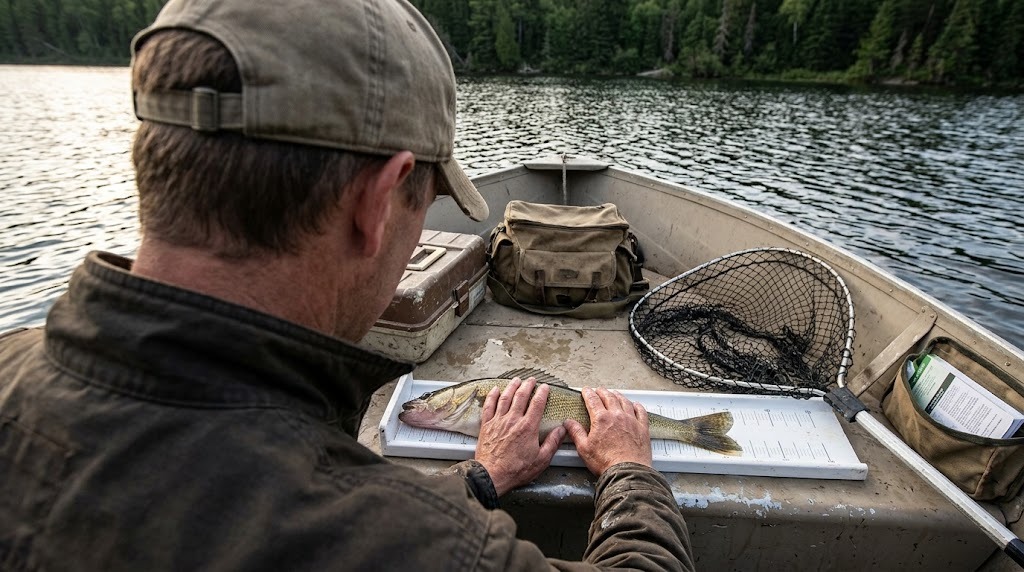
Size and slot limits control fish populations based on length to protect specific breeding age classes. A minimum size limit requires anglers to release any fish below a certain length, ensuring the fish can spawn at least once before harvest. A slot limit protects a highly fertile middle bracket of breeding-sized fish. For example, a redfish slot limit might mandate that all fish between 20 and 28 inches must be released, allowing harvest only below or above the “slot.”
Step-by-Step: How to Comply with Harvest Limits
Successfully navigating harvest limits requires proactive preparation and strict adherence to post-harvest reporting procedures. The margin for error is zero; ignorance of a regulation is never a valid legal defense.
Step 1: Secure the Correct License and Tags
Before stepping into the field, purchase a resident or non-resident hunting or fishing license, plus any species-specific permits. Waterfowl require a Federal Duck Stamp, while big game requires physical or digital carcass tags.
Step 2: Verify Wildlife Management Unit (WMU) Rules
Review the specific regulations for your exact geographical zone. Bag limits change annually and often vary drastically between adjacent counties or waterways based on micro-populations.
Step 3: Identify the Target Before Harvest
Positively identify the species, sex, and legal size of the animal. Harvesting a hen pheasant in a bucks/roosters-only zone instantly transforms a legal hunt into a poaching violation. Anglers must measure fish against a rigid board with the mouth closed and tail pinched to confirm length.
Step 4: Validate the Tag Immediately
The moment a big game animal expires, or a turkey is recovered, validate the tag. This usually involves notching the month and day on a physical paper tag or tapping “harvest” on a state-sanctioned mobile application. The tag must be attached to the carcass before moving it.
Step 5: Report the Harvest
Submit your harvest data to the wildlife agency within the mandatory window—typically 24 to 48 hours. Most states use an online portal or a telecheck phone system. This data directly dictates next year’s bag limits.
Comparison of Regulatory Frameworks
Wildlife agencies must weigh enforceability against biological precision when choosing a limit framework.
| Limit Framework | Biological Advantage | Enforcement Disadvantage | Best Applied To |
| Strict Daily Limits | Prevents single-day slaughter events. | Does not cap the total annual harvest if hunter participation is exceptionally high. | Small game, upland birds, panfish. |
| Slot / Size Limits | Protects the most fertile, prime-age breeding adults. | Mishandling during measurement causes high catch-and-release mortality. | Coastal fisheries, bass, walleye. |
| Season Tags / Lotteries | Provides absolute mathematical control over the exact number of animals removed. | High demand leads to low draw odds, locking many hunters out of the experience. | Elk, moose, bighorn sheep, bear. |
| Depredation (No Limit) | Rapidly reduces invasive or overpopulated species causing ecological damage. | Can result in wanton waste if participants do not utilize the meat. | Feral hogs, snow geese, coyotes. |
What Happens If You Exceed a Bag Limit?
Exceeding a bag limit results in immediate confiscation of the harvested game, mandatory fines ranging from $50 to over $10,000, and potential suspension of hunting or fishing privileges. Most wildlife violations fall under strict liability, meaning intent does not matter; an accidental over-harvest carries the same base penalty as an intentional one.
If you accidentally harvest over your limit (e.g., a single shotgun blast downs two ducks when you only needed one to finish your limit), do not hide or waste the animal. Safely field dress it and immediately contact the local game warden. Self-reporting an honest mistake frequently results in a warning or a minimal processing fee rather than criminal poaching charges, gear confiscation, or jail time.
Crucially, 49 states participate in the Interstate Wildlife Violator Compact. If your license is suspended for exceeding a bag limit in Colorado, that suspension is recognized and enforced in every other participating state.
Common Compliance Mistakes to Avoid
Even experienced outdoorsmen run afoul of limits through complacency. Avoid these primary failure modes:
- Party Hunting / Fishing: It is highly illegal to continue harvesting game to fill a friend’s or family member’s limit after you have reached your own. Each individual must harvest their own limit.
- Freezer Accumulation: Storing multiple years’ worth of game in a chest freezer without consuming it quickly breaches possession limits. Date and inventory your wild game to ensure you remain legally compliant.
- Interstate Limit Stacking: If you hunt ducks in State A in the morning, and drive to State B in the afternoon, you cannot shoot a full limit in both states on the same calendar day if the combined total exceeds the federal framework limit.
- High-Grading (Culling): In fishing, keeping a smaller fish on a stringer, then throwing it back dead later in the day to replace it with a larger fish is illegal. Once a fish goes in the livewell or on a stringer, it counts toward the daily limit.
Harvesting Strategies for Different Hunter Profiles
Different limit frameworks dictate entirely different outdoor experiences. Align your targets with your experience level and goals.
- For Beginners: Target high-abundance small game (squirrels, rabbits) or panfish (bluegill, crappie). These species offer generous bag limits (5 to 15 per day), low-cost over-the-counter licenses, and straightforward identification rules, making accidental violations highly unlikely.
- For Weekend Warriors: Focus on aggregate limit species like waterfowl or trout. Because sub-limits are complex, carry a waterproof identification guide or a cached offline regulation app to verify species and sex before pulling a trigger or setting a hook.
- For Trophy Hunters: Apply for low-yield, lottery-based tag systems in units with strict antler-point restrictions. While these tags are difficult to draw, the restrictive bag limits ensure males survive to maturity, yielding higher-quality trophies and a more pristine, low-pressure hunting environment.
Frequently Asked Questions About Bag Limits
Do catch-and-release fish count toward a daily bag limit?
No. If a fish is immediately returned to the water alive and unharmed, it does not count toward your daily bag limit. However, if a fish is placed in a livewell, bucket, or stringer—even temporarily—it counts as a harvested fish in most jurisdictions.
Are invasive species subject to bag limits?
Rarely. Invasive species that damage native ecosystems, such as feral hogs, nutria, or snakeheads, typically have no daily, possession, or season limits. Wildlife agencies encourage hunters and anglers to harvest as many of these species as possible to mitigate ecological damage.
How do game wardens enforce possession limits at a private residence?
Game wardens generally cannot enter a private home to check a freezer without probable cause and a search warrant. However, if an individual is caught repeatedly taking daily limits without proof of consumption, or if an informant reports hoarding or illegal selling of wild game, wardens will secure a warrant to inspect the residence.
Can I give my harvested game to someone else?
Yes, but the game must be accompanied by a transfer document detailing the harvester’s name, license number, date of harvest, and species. Once legally gifted and documented, the game counts toward the recipient’s possession limit, freeing up space in the harvester’s possession limit.