
People hunt primarily to harvest organic, free-range meat, participate actively in ecosystem conservation, and engage in a traditional, demanding outdoor discipline. Modern hunting operates as a highly regulated biological management tool that directly funds wildlife habitats through licenses and excise taxes, creating a sustainable balance that starkly contrasts with illegal poaching.
At a Glance:
- Financial Impact: Hunting generates a $29.7 billion annual industry in the United States.
- Participation: Approximately 15.2 million active hunters operate in the U.S., harvesting over 6.1 million deer annually.
- Conservation Funding: State and national wildlife agencies rely on hunting licenses, tags, and firearm excise taxes to fund the majority of ecosystem protection.
- Strict Regulation: Legal hunting is strictly regulated by quotas, seasons, and property boundaries; it is entirely distinct from poaching (the illegal taking of wildlife).
- Primary Drivers: The three main reasons individuals hunt are subsistence (meat), wildlife management (conservation), and recreation (woodsmanship).
What Are the Primary Motivations for Hunting?
Hunters enter the woods driven by three primary distinct motivations, each offering unique benefits and distinct challenges.
| Motivation / Hunting Type | Primary Goal | Pros / Advantages | Cons / Challenges |
| Subsistence (Meat Hunting) | Harvesting clean, organic, hormone-free protein. | Complete self-reliance; deep understanding of the food chain; locavore ethics. | High physical labor; significant initial processing gear and freezer space required. |
| Management (Conservation) | Population control and ecological balance. | Prevents animal overpopulation, mitigates vehicle collisions, and controls disease (like CWD). | Heavily dependent on shifting government tag lotteries, quotas, and specific zone regulations. |
| Recreational (Sport/Tradition) | Outdoor challenge and deep connection to nature. | Massive mental decompression; sharpens woodsmanship, tracking, and survival skills. | High potential for gear failure; requires navigating public misunderstanding; steep learning curve. |
Recent years have seen a surge in “adult-onset hunters” driven entirely by the locavore movement—individuals seeking an ethical, sustainable alternative to factory farming who view hunting as the ultimate extension of the farm-to-table philosophy.
How Does the Hunting Conservation Model Work?
The hunting infrastructure in the United States and Canada functions through the North American Model of Wildlife Conservation. This framework dictates that wildlife is a public trust, meaning wild animals are owned by the public, not by private landowners, and are managed by state or federal agencies for the benefit of all citizens.
This model is funded primarily through the Pittman-Robertson Act (1937), which levies an 11% federal excise tax on firearms, ammunition, and archery equipment. When combined with the revenue from hunting licenses and species-specific tags, this system generates billions of dollars annually. These funds pay for habitat acquisition, wildlife research, and the salaries of conservation officers (game wardens). Without hunter contributions, modern wildlife management agencies would lose their primary funding source.
The Fundamental Mechanics: Bypassing Animal Defenses
Hunting is fundamentally a discipline of patience, physics, and biological understanding. Every game species possesses severe evolutionary advantages—acute hearing, radar-like smell, and highly sensitive motion detection. The hunter must use specialized techniques to bypass these defenses.
- Scent Control: Most big game animals, particularly whitetail deer and elk, rely heavily on their olfactory systems. Hunters manage this by playing wind thermals (ensuring the wind blows their scent away from the animal) and utilizing enzymatic scent-eliminating sprays to neutralize human odor.
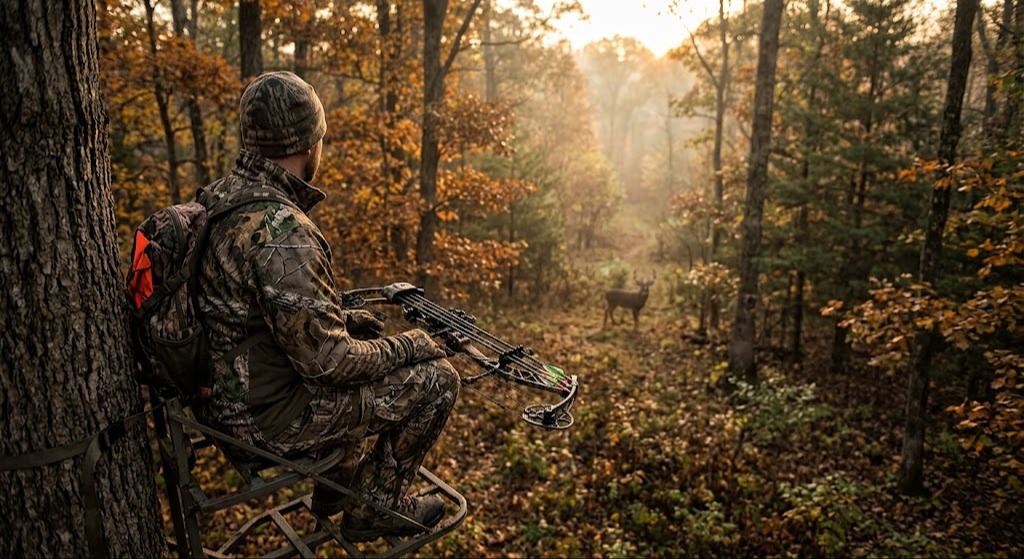
- Concealment: Prey animals detect unnatural outlines and movement instantly. Hunters utilize camouflage patterns designed for specific terrains and construct physical ground blinds or elevate themselves in tree stands to break up the human silhouette.
- Ballistics and Kinetic Energy: Ethical hunting requires a swift, humane harvest. Hunters calculate kinetic energy and bullet trajectory to ensure the projectile (bullet or broadhead arrow) cleanly strikes the dynamic vital zone—the heart and lungs—minimizing animal suffering and ensuring rapid expiration.
How Are Hunting Types Categorized?
Hunting styles are categorized either by the biological classification of the target game or by the specific weapon platform utilized.
By Game Classification
- Big Game: Tracking large ungulates and predators, including whitetail deer, elk, moose, caribou, and black bears. This requires high-powered centerfire rifles, slug shotguns, or heavy-draw archery equipment.
- Small Game & Varmint: Pursuing rabbits, squirrels, foxes, or coyotes. This is often done to remove agricultural pests, train young hunters, or gather smaller quantities of meat and fur using rimfire rifles (.22 LR) or small-gauge shotguns.
- Waterfowl & Upland Birds: Wing-shooting ducks, geese, pheasants, or turkeys using shotguns. This highly active style often utilizes trained bird dogs (like Retrievers or Pointers) and complex decoy spreads.
By Weapon Classification
- Rifle/Shotgun (Firearms): Provides a long operational range (typically 50 to 300+ yards depending on optics and caliber), utilizing scoped centerfire ammunition. It offers the highest kinetic energy and margin for error.
- Archery (Compound, Crossbow, Traditional): Demands close-range engagement (usually 10 to 40 yards). Bowhunting requires supreme movement discipline, perfect scent control, and intense anatomical knowledge.
- Muzzleloader: Utilizes primitive black-powder firearms loaded manually through the front of the barrel. This limits the hunter to a single, highly precise shot and often extends the legal hunting season.
The 5-Step Hunting Process: From Prep to Plate
For modern outdoorsmen, executing a legal and ethical hunt follows a strict, chronological five-step operational process. Skipping any step guarantees failure or legal consequences.
1. Education and Legal Compliance
Before entering the field, a prospective hunter must pass a state-mandated Hunter Safety Certification covering firearms management, survival skills, and wildlife identification. Following certification, the hunter must purchase a resident or non-resident base license and specific species tags, which provide the official legal authorization to harvest one specific animal.
2. Pre-Season Scouting
Scouting dictates the location of the hunt. Hunters utilize digital mapping platforms like the onX Hunt App to pinpoint public land boundaries, elevation changes, and water sources. Field scouting involves physically walking the terrain to locate animal tracks, bedding areas, scat, and active feeding routes, often aided by motion-activated trail cameras.
3. Execution of the Hunt
Execution requires entering the target area silently, often hours before dawn. The hunter sets up in a tactical spot (a tree stand, ground blind, or high-elevation glassing point) and waits. When the animal appears, the hunter must verify the target’s legality (e.g., antler restrictions), determine the exact distance using a rangefinder, and wait for a broadside shot opportunity within their reliable lethal range.
4. Recovery (Blood Tracking)
Once a shot is taken, the hunt transitions to tracking. The hunter must patiently analyze the ground for disturbed foliage, tracks, and a blood trail to locate the expired animal. Pushing an animal too quickly after a shot can cause it to run for miles, so hunters routinely wait 30 to 60 minutes before tracking.
5. Field Dressing and Processing
Immediate field dressing (removing the internal organs) is required to cool the meat rapidly and prevent bacterial spoilage. The animal is then transported out of the field. Processing involves skinning, butchering, and vacuum-sealing the venison or game meat into edible, freezer-ready portions.
The True Cost of Hunting: Financial and Time Investments
Hunting requires significant upfront capital for gear, alongside recurring seasonal costs for licenses and logistics.
Typical Financial Requirements
| Category | Item / Activity | Average Cost Range | Frequency |
| Legal | Hunter Safety Course | $30 – $60 | One-time |
| Legal | Resident Base Hunting License | $15 – $65 | Annual |
| Legal | Non-Resident Species Tag (e.g., Elk) | $350 – $1,800+ | Per Tag |
| Gear | Entry-Level Rifle / Bow Package | $400 – $900 | Initial Investment |
| Gear | Camouflage Clothing & Boots | $150 – $500 | Every 3–5 Years |
| Logistics | Ammunition & Fuel | $100 – $300 | Per Season |
| Service | Professional Meat Processing | $100 – $250 | Per Deer |
Typical Timeframes
Hunters invest 10 to 40 hours of preparation time over the summer months scouting terrain and practicing at target ranges. Once the season opens, daily field operations require 4 to 12 hours of sitting in wait or navigating rugged terrain.
Demographics and Industrial Scale
The economic and structural footprint of hunting remains massive across North America. Texas leads the United States with roughly 1.1 million paid license holders, heavily driven by its vast private-land lease infrastructure. Pennsylvania follows closely with roughly 930,000 hunters, and Michigan with 750,000. These participants form the backbone of rural economies during the fall, injecting funds into local motels, gas stations, and diners.
Common Mistakes and Troubleshooting
Even experienced outdoorsmen ruin hunts through simple lapses in basic technique. Understanding failure modes is critical for success.
Common Mistakes:
- Disregarding Wind Direction: Walking with the breeze at your back pushes your scent directly into the habitat, clearing out all game animals long before you arrive.
- Improper Shot Placement: Rushing a shot when the animal is angled toward the hunter severely degrades projectile penetration, risking wounding the animal rather than achieving a clean harvest.
- Inadequate Digital Mapping: Venturing onto land without GPS boundary maps routinely results in accidental trespassing on private property or navigating into barren terrain.
Troubleshooting Guide:
- If you aren’t seeing any wildlife: Slow your physical pace immediately. Move to thick brush borders (edge habitats) rather than open fields, and restrict your movement to the first and last two hours of daylight when animal movement peaks.
- If your trail cameras are blank: Move them away from large open fields and place them on natural terrain bottlenecks, narrow trails connecting dense bedding areas to food sources, or beneath oak trees dropping fresh acorns.
Expert Recommendations for Different Users
The approach to hunting must scale with your experience level.
For Absolute Beginners
Start with small game (squirrel/rabbit) or a local resident whitetail deer hunt. Purchase a versatile, budget-friendly rifle (such as a .308 or 6.5 Creedmoor) or an entry-level compound bow package. Complete your hunter safety course online and partner with a local mentor to learn the physical mechanics of field dressing.
For Intermediate Hunters
Transition to public land DIY (Do-It-Yourself) hunts to escape hunting pressure on private leases. Branch out into archery to take advantage of significantly longer, less crowded hunting seasons. Invest your budget into premium mobile map applications and high-quality optical glass (binoculars and laser rangefinders) rather than newer firearms.
For Advanced and Backcountry Users
Enter Western state tag lottery systems to draw tags for high-altitude elk, bighorn sheep, or mule deer. Shift your gear focus entirely to ultralight pack equipment, technical moisture-wicking clothing layers, and wilderness survival logistics to withstand multi-day, freezing-weather backcountry expeditions.
Frequently Asked Questions
Is hunting cheaper than buying meat at the grocery store?
No, hunting is rarely cheaper than buying factory-farmed meat when accounting for the total cost of gear, fuel, licenses, and time. However, hunters view the expense as paying for the experience, the conservation effort, and access to ultra-premium, organic protein that would cost over $20 per pound commercially.
What is the difference between hunting and poaching?
Hunting is a strictly regulated, legal activity defined by specific seasons, weapon restrictions, and government-issued quotas designed to balance ecosystems. Poaching is the illegal, unregulated theft and killing of wildlife, often for black-market profit, which directly harms animal populations.
What happens if deer are not hunted?
Without natural predators in many modern ecosystems, unhunted deer populations rapidly exceed the carrying capacity of their habitat. This leads to mass starvation during winter, the rapid spread of diseases like Chronic Wasting Disease (CWD), and severe spikes in fatal deer-vehicle collisions.
Do I have to wear camouflage to hunt?
While camouflage helps break up the human outline, it is not strictly mandatory for all hunting. Movement discipline is far more important. However, most states legally require hunters to wear a specific minimum amount of “Blaze Orange” during firearm seasons to ensure they are visible to other humans.