
Hunting terminology encompasses the specialized legal, biological, ballistic, and tactical vocabulary used to locate, pursue, and ethically harvest game animals. Mastering these terms allows hunters to interpret animal behavior, select compliant equipment, navigate hunting regulations, and execute field-processing techniques safely and efficiently.
Key Facts / At a Glance
- Methodologies: Hunting tactics divide into active pursuit (spot-and-stalk, still hunting) and stationary concealment (treestands, ground blinds, saddles).
- Ammunition Measurement: Rifle and handgun ammunition is measured by caliber (internal barrel diameter in inches or millimeters), whereas shotgun ammunition is measured by gauge (the number of lead spheres equal to one pound fitting the bore diameter).
- Seasonal Physiology: The rut refers to the annual ungulate mating season driven by photoperiod changes, resulting in elevated testosterone, increased movement, and vocal communication.
- Meat Preservation: Field dressing removes internal viscera immediately to initiate carcass cooling, while the gutless method quarters game without puncturing the abdominal cavity.
- Ethical Target Area: The primary target on big game is the vital zone (heart and lungs located directly behind the front shoulder), offering the highest margin for a quick, lethal harvest.
What Are the Primary Hunting Methods and Tactical Terms?
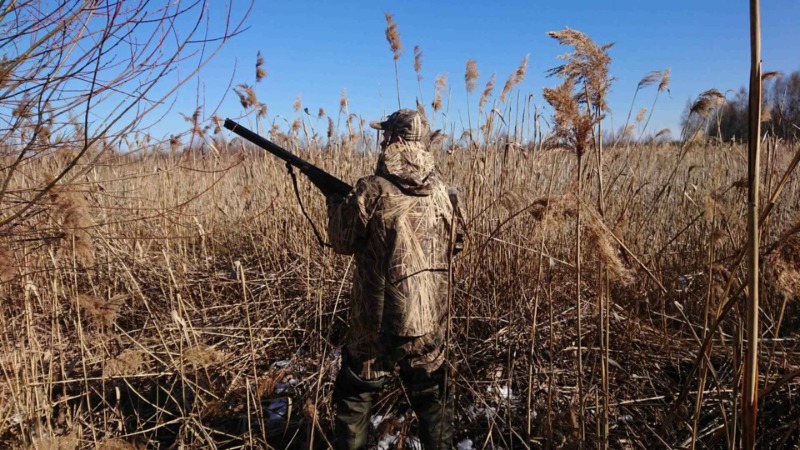
Hunting tactics fall into two functional categories: mobile pursuit and stationary interception. Choosing between them depends on terrain density, wind patterns, and target species.
Spot-and-Stalk
Spot-and-stalk is a two-phase hunting strategy where a hunter locates game from a distance using high-magnification optics before executing a concealed approach.
- Glassing: Systematically scanning terrain using tripod-mounted binoculars or spotting scopes. Hunters divide hillsides into grid quadrants, searching for horizontal body lines, ear twitches, or antler glints rather than whole animals.
- Mapping the Approach: Identifying terrain features (coulees, ridgelines, washouts) that block the animal’s line of sight while calculating wind direction.
- Closing the Distance: Moving downwind or crosswind toward the target, dropping to a low crawl or removing boots during the final 100 yards to eliminate acoustic noise.
Still Hunting
Still hunting is the technique of moving at an extraordinarily slow pace through game habitat, taking a few stealthy steps followed by extended observation pauses.
- Cadence: Take 2 to 4 deliberate steps, then pause for 30 to 90 seconds. A skilled still hunter rarely covers more than 100 to 200 yards per hour.
- Visual Focus: Scan 360 degrees under the forest canopy. Focus on movement, anomalous shapes, and shadows rather than searching for an intact animal silhouette.
- Key Risk: Stepping on dry twigs, misjudging micro-winds, or moving while an animal is actively looking in your direction.
Stand and Blind Hunting
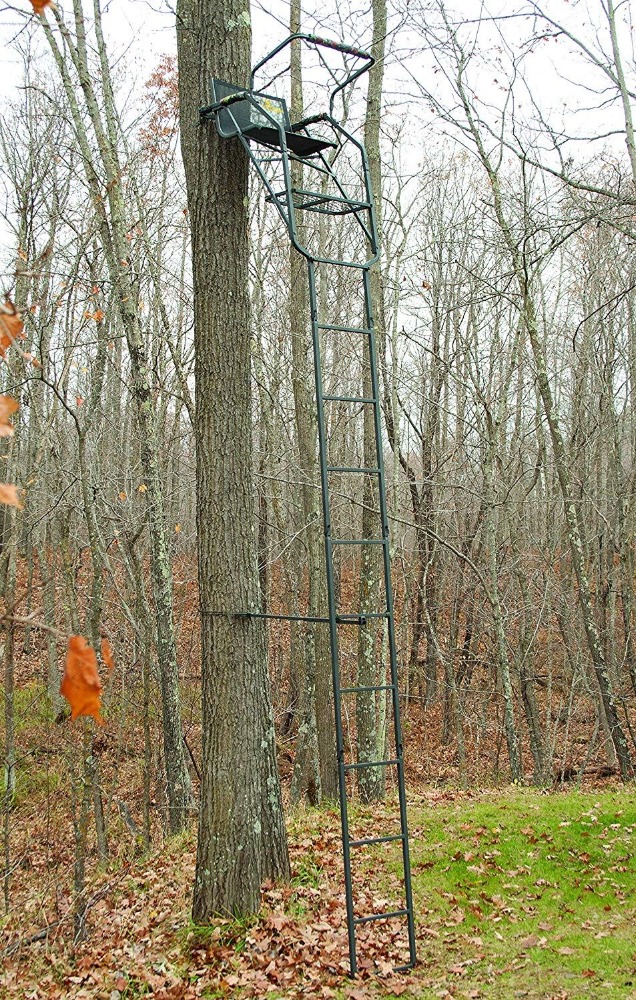
Stand and blind hunting relies on stationary concealment positioned along high-traffic game corridors, feeding areas, or water sources.
| Method Type | Mechanism & Setup | Primary Advantage | Primary Limitation |
| Ladder Stand | Rigid metal ladder attached to tree trunk with top seat platform (12–18 ft). | Maximum stability and ease of climbing; ideal for private land. | Heavy, highly visible, non-portable. |
| Hang-On (Lock-On) | Individual platform chained/strapped to tree, accessed via climbing sticks. | Modular, lightweight, adaptable to irregular trees. | Requires technical setup time and harness safety rigging. |
| Climbing Stand | Two-piece platform system that “walks” up limbless, straight trees. | Highly mobile for public land scouting on the fly. | Limited strictly to straight, branch-free tree trunks. |
| Tree Saddle | Fabric seat harness suspended by rope tether around tree trunk. | 360-degree shooting radius, ultralight (under 5 lbs). | Requires technical practice and comfort with suspension systems. |
| Ground Blind | Pop-up hub fabric tent or natural brush structure at ground level. | Hides human motion entirely; ideal for turkey and pronghorn. | Scent spreads horizontally at ground level; requires brushed-in cover. |
How Do Firearm Ammunition and Ballistics Vocabulary Differ?
Firearm terminology relies on precise dimensional, physical, and fluid dynamics measurements. Confusing caliber and gauge, or bullet construction types, compromises ballistic performance and legal compliance.
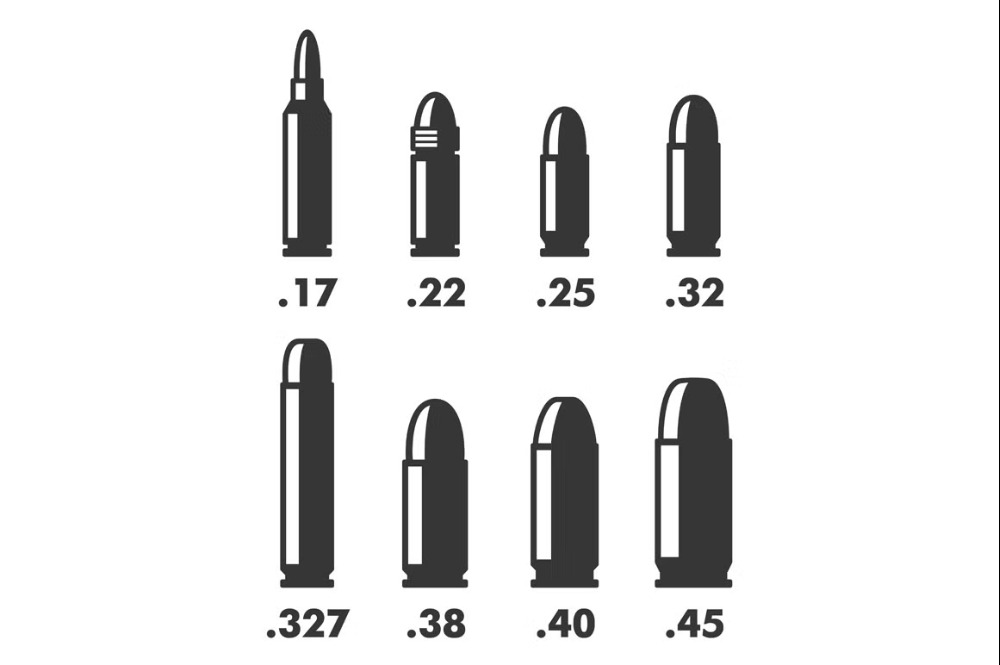
Caliber vs. Gauge
Caliber measures the internal diameter of a rifle or handgun barrel (and projectile diameter), expressed in decimal fractions of an inch (e.g., .308 Winchester = 0.308 inches) or millimeters (e.g., 6.5mm Creedmoor).
Gauge measures shotgun bore diameter based on historical lead weight calculations. Gauge equals the number of solid lead spheres matching the bore diameter required to weigh exactly one pound.
- A 12-gauge bore matches a lead ball weighing $1/12$th of a pound ($0.729\text{ inches}$).
- A 20-gauge bore matches a lead ball weighing $1/20$th of a pound ($0.615\text{ inches}$).
- Rule: Smaller gauge numbers signify larger bore diameters (with the exception of the
.410 bore, which is measured in caliber).
Bullet Construction and Terminal Ballistics
- Terminal Ballistics: The study of projectile behavior, energy transfer, and tissue destruction upon entering an animal’s body.
- Cup-and-Core (Soft Point): A traditional bullet design with a lead core enclosed in a copper jacket. Rapid expansion upon impact; higher weight loss.
- Bonded Bullets: Lead core chemically fused to the outer copper jacket. Ensures high weight retention ($80\%+$) and deep penetration through heavy bone.
- Monolithic (Copper Alloy): Solid copper or brass projectiles without a lead core. Retains nearly $100\%$ weight, expanding into uniform petals upon impact.
- Shotgun Choke: A tapered constriction at the muzzle end of a shotgun barrel that controls shot pattern dispersion (e.g., Full for tight patterns at long range; Improved Cylinder for wide patterns at close range).
What Archery Terms Must Bowhunters Master?
Archery mechanics require balancing stored mechanical energy, flight stability, and broadhead penetration dynamics.
- Draw Weight: The force (measured in pounds) required to pull a bowstring back to full draw. Big game requires 40–50 lbs minimum, while heavy game like elk or moose benefits from 60–70+ lbs.
- Draw Length: The distance (in inches) from the bow grip pivot point to the nocking point on the string at full draw.
- Let-Off: The percentage drop in holding force achieved by a compound bow’s cam system at full draw. An 80% let-off on a 70 lb bow reduces holding weight to just 14 lbs.
- Arrow Spine: The measure of an arrow shaft’s stiffness (dynamic and static deflection). Correct spine matching prevents erratic arrow flight upon release.
- Broadhead: The sharp cutting head mounted to an arrow shaft designed to cause lethal hemorrhage.
- Fixed-Blade: Rigid blades integrated directly into the ferrule. Maximum structural integrity, bone penetration, and reliability.
- Mechanical (Expandable): Blades stay folded during flight and deploy via mechanical levers or friction upon impact. Offers field-point flight dynamics but requires higher kinetic energy to open cleanly.
How Does Animal Behavior Shape Hunting Vocabulary?
Animal activity cycles dictate hunter strategy throughout the year. Understanding behavioral triggers increases detection success.
[Early Season / Velvet] ──> [Pre-Rut (Scouting/Rubbing)] ──> [Peak Rut (Breeding)] ──> [Post-Rut (Recovery)]- The Rut: The annual breeding season of wild ungulates (deer, elk, moose). Triggered by shortening daylight hours (photoperiod), male testosterone surges, causing increased movement, territorial marking, and reduced caution.
- Velvet: The vascular, blood-rich skin surrounding growing ungulate antlers during spring and summer. Hardens and sheds in early autumn as hormone levels rise.
- Rub: A tree scraped by male ungulates using their antlers to remove velvet, deposit scent from forehead glands, and exercise neck muscles.
- Scrape: An area of bare earth pawed clean by a buck or bull, sprayed with urine over an overhanging licking branch, functioning as a chemical communication site for local herd members.
- Snort-Wheeze / Blow: Vocalizations emitted by alarmed deer. A “blow” is an explosive exhalation signaling detected danger; a “snort-wheeze” is an aggressive challenge between competing males.
What Field Processing Methods Safeguard Game Meat?
Field processing must begin immediately upon harvesting an animal to prevent bacterial growth caused by body heat, moisture, and intestinal bacteria.
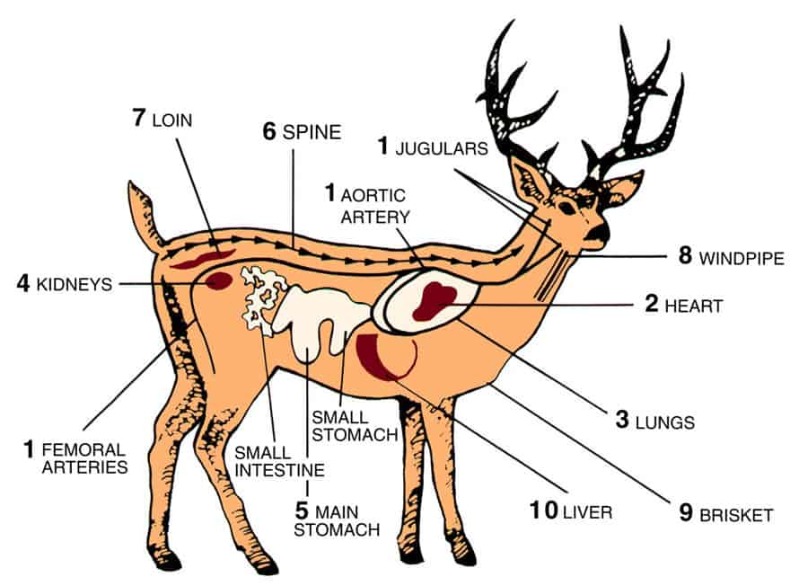
Traditional Field Dressing
Field dressing involves opening the pelvic and abdominal cavities to remove internal organs while keeping the carcass whole for transport.
- Midline Incision: Make a shallow incision through the hide along the midline from the pelvis to the sternum using a finger-guided blade to avoid puncturing the stomach or intestines.
- Pelvic & Throat Cut: Sever the pelvic bone or cut around the anus (coring) to free the lower alimentary canal; sever the trachea at the base of the throat.
- Viscera Extraction: Pull internal organs out of the body cavity, cutting connective tissue away from the spine. Wipe the internal cavity completely dry with clean cloths.
The Gutless Method
The gutless method quarters game without opening the abdominal cavity, preserving meat cleanliness and reducing weight during wilderness pack-outs.
1.Skin the Upward Side:
Position animal broadside on terrain.
Slice the hide along the spine from tail to neck and make leg incisions. Peel back the hide to expose the quarters and backstrap without puncturing the abdominal wall.
2.Harvest Top Side Quarters & Backstrap:
Maintain clean meat handling.
Remove the front leg by cutting between the shoulder blade and rib cage (no joint connection to spine). Disarticulate the rear leg at the hip ball joint. Slice out the backstrap running parallel to the spine.
3.Flip Carcass and Repeat:
Protect meat from dirt/debris.
Roll the animal onto its opposite side, placing clean game bags beneath the exposed meat, and repeat quartering procedures for the remaining side.
4.Extract Tenderloins:
Reach behind last rib safely.
Access the interior tenderloins by making a small incision behind the last rib near the spine, reaching into the abdominal cavity without cutting the guts.
What Financial and Time Commitments Are Involved in Hunting?
Entry costs for hunting depend on gear tier, resident status, and target species.
| Cost & Time Component | Entry Level (USD) | Mid-to-High Tier (USD) | Recurrence |
| Resident License & Tags | $30 – $80 | $150 – $350 | Annual |
| Non-Resident Tags | $200 – $600 | $800 – $2,500+ | Annual / Draw |
| Rifle & Optics System | $450 – $750 | $1,500 – $4,500 | One-time base investment |
| Archery System (Setup) | $500 – $800 | $1,200 – $2,200 | Multi-year |
| Safety & Processing Gear | $80 – $150 | $250 – $500 | Multi-year |
| Technical Layering Clothing | $150 – $300 | $700 – $1,800 | Multi-year |
| Scouting & Prep Time | 20 – 30 Hours | 50 – 100+ Hours | Annual requirement |
| Field Hunt Time | 1 – 3 Days | 5 – 10 Days | Per hunt expedition |
What Are the Most Common Hunting Mistakes and How Do You Fix Them?
- Ignoring Thermal Wind Currents: Wind shifts direction as temperatures change. Heating air creates updrafts (wind rises up slopes), while cooling air creates downdrafts (wind sinks into valleys).
- Fix: Check air direction continuously using powder indicators. Plan routes using downwind or crosswind trajectories relative to animal bedding sites.
- Improper Shot Placement: Target selection errors occur when hunters shoot for the head or neck rather than the primary vital area.
- Fix: Aim for the broadside vital zone (heart/lungs located 2 to 3 inches behind the front shoulder blade). Wait for a broadside or quartering-away angle to maximize vital tissue damage and avoid heavy shoulder bones.
- Moving Beyond Environmental Pace: Walking through habitat faster than animal movement leads to premature detection.
- Fix: Match speed to cover density. In thick woods, limit movement to less than 100 yards per hour while scanning for isolated animal parts (legs, ears, eyes).
Frequently Asked Questions
What does “Fair Chase” mean in modern hunting?
Fair chase is an ethical standard defining the pursuit of free-ranging wild game in a manner that does not give the hunter an improper or unfair advantage. It prohibits using illegal traps, enclosed escapes, motorized vehicle chasing, or real-time electronic communication to drive animals toward a shooter.
What is the difference between draw tags and over-the-counter (OTC) tags?
Over-the-counter (OTC) tags can be purchased directly from authorized vendors or state agency websites without allocation limits. Draw tags require hunters to enter a lottery application system where limited permits are distributed based on random selection or accumulated preference points.
What is Chronic Wasting Disease (CWD), and how does it affect processing terminology?
Chronic Wasting Disease (CWD) is a contagious neurological prion disease affecting cervids (deer, elk, moose). CWD regulations mandate that hunters harvesting in infected units cannot transport whole carcasses across state lines. Meat must be boned out, leaving the brain and spinal cord intact at the harvest location.
What is the difference between a broadside, quartering-away, and quartering-toward shot presentation?
A broadside presentation occurs when an animal stands perpendicular to the hunter, exposing the full vital area. A quartering-away presentation occurs when an animal faces away at an angle, exposing the vital organ pocket behind the rib cage. A quartering-toward angle faces the hunter, offering a high-risk shot obstructed by front shoulder bones.
What does “glassing” mean, and why is it distinct from basic scouting?
Glassing is the structured tactical practice of using optical equipment (binoculars or spotting scopes mounted to rigid tripods) from high vantage points to inspect distant terrain. Scouting refers broadly to pre-season field analysis (searching for tracks, droppings, rubs, or trail camera images).