
Hunting safety is a systematic framework of rules, gear standards, and legal regulations designed to eliminate firearms accidents, wildlife violations, and wilderness injuries. It establishes overlapping redundancies—such as positive target identification and mandatory hunter orange—ensuring that if one safety measure fails, another prevents injury.
At a Glance:
- Certification: State-approved Hunter Education Courses typically cost $15 to $40 and require 10 to 15 hours of instruction.
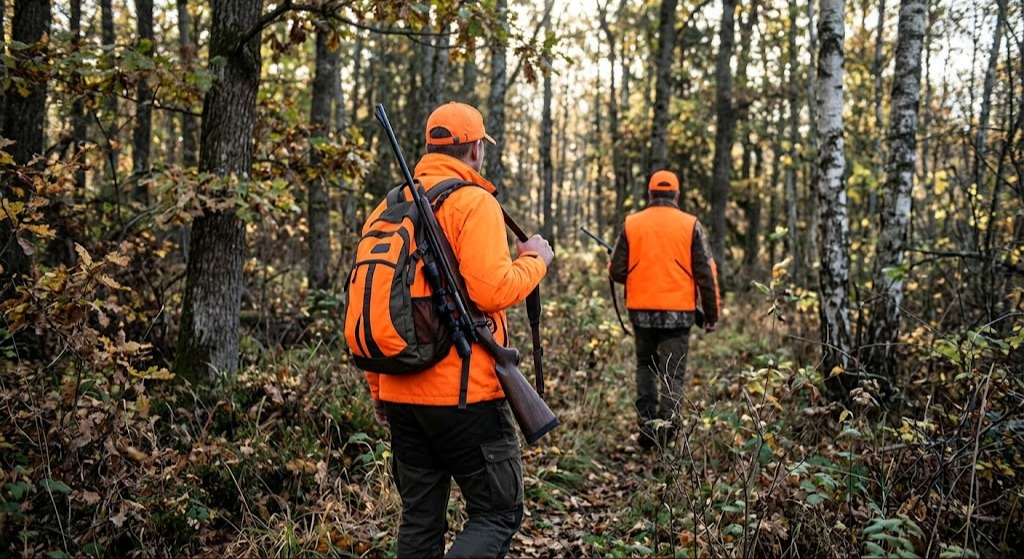
- Visibility: Most state wildlife agencies mandate 400 to 500 square inches of Blaze Orange on the chest, back, and head.
- Tree Stand Protocol: Hunters must maintain 3 points of contact while climbing and wear a certified full-body fall-arrest harness (FAS), which costs $40 to $150.
- Prime Directive: Transporting loaded firearms in vehicles is illegal in most jurisdictions and remains a leading cause of accidental discharge.
What Are the 4 Cardinal Rules of Firearm Safety?
The four cardinal rules of firearm safety form the non-negotiable foundation of all weapon handling in the field. These rules function as a redundant fail-safe system; a catastrophic accident requires the simultaneous violation of at least two of these principles.
- Treat every firearm as loaded: Never assume a gun is empty based on a mechanical safety or prior knowledge. Physically and visually check the chamber and magazine well yourself every time a weapon changes hands.
- Control the muzzle at all times: Always point the muzzle in a safe direction, ensuring it never sweeps across another person, dog, or yourself. A safe direction means a trajectory where an accidental discharge will embed in the ground without ricochet.
- Keep your finger off the trigger: Keep your index finger straight and indexed along the receiver frame outside the trigger guard. The finger only enters the guard when the sights are aligned on the target and the decision to shoot is final.
- Be sure of your target and what lies beyond it: Positively identify the game animal, check for obstructions in the flight path, and verify a safe backstop. Never shoot at skylined animals, movement in brush, or unverified sounds.
How Does the Hunting Safety Process Work?
The hunting safety process works by breaking the excursion into four chronological phases, mitigating risk through proactive planning before entering the wilderness. Attempting field execution without pre-trip planning inevitably compounds the severity of any accident.
Phase 1: Pre-Trip Planning
Check local wildlife regulations, secure necessary tags, study topographic maps, and file a detailed “hunt plan.” A proper hunt plan is left with a trusted contact and outlines exact GPS coordinates, vehicle descriptions, and a hard deadline for your return time.
Phase 2: Firearm and Gear Preparation
Inspect the firearm for barrel obstructions like mud or snow, verify optics alignment, and test the straps on your tree stand fall-arrest system. Replace tree stand ratchet straps annually, as UV exposure and weather degrade their load-bearing capacity by up to 50% per season.
Phase 3: Field Execution
Maintain 360-degree situational awareness, strictly abide by your safe zone-of-fire, and actively manage adrenaline to prevent “buck fever.” When hunting in groups, establish physical boundaries and firing lanes before anyone loads a weapon.
Phase 4: Post-Harvest Logistics
Immediately engage the firearm’s mechanical safety and unload the chamber upon recovering the animal. Utilize proper field-dressing techniques—cutting away from your body with a fixed-blade knife—and wear heavy nitrile gloves to prevent blood-borne pathogen transmission or localized bacterial infections.
What Is the Essential Hunting Safety Gear?
Essential hunting safety gear consists of high-visibility garments, elevation fail-safes, auditory protection, and traumatic injury medical supplies. This equipment mitigates the environmental and mechanical hazards inherent to wilderness environments.
High-Visibility Clothing (Blaze Orange and Pink)
Hunter orange (and increasingly, blaze pink) makes humans instantly recognizable against natural background colors. Because deer and elk lack red-sensitive cones in their eyes, they perceive blaze orange as a muted gray or yellow. Humans, however, spot it instantly, preventing misidentification incidents. Check local state agency regulations for the exact required square inch minimums during specific firearm seasons.
Tree Stand Safety and Fall-Arrest Systems (FAS)
A full-body fall-arrest system (FAS) distributes fall forces safely across the hips and chest, keeping the user upright. Hunters must remain tethered to the tree from the moment they leave the ground until they return. Single-strap waist belts are obsolete and extremely dangerous, as they can cause asphyxiation or chest crushing during a fall.
Wilderness First-Aid and Trauma Kits
Standard bandages are insufficient for hunting accidents. A dedicated field trauma kit must include a Combat Application Tourniquet (CAT) for arterial bleeding, vented chest seals for torso punctures, and compression bandages. These items must be carried on the hunter’s torso, not left in a backpack that might be dropped or hung in a tree.
How Do Hunting Safety Gear Options Compare?
Choosing the right safety equipment requires understanding the specific trade-offs between visibility, mobility, and communication reliability in austere environments.
| Safety Category | Gear Option | Primary Advantage | Honest Limitation |
| Visibility | Blaze Orange | Universally recognized; highly visible in dense, green brush. | Can fade over time from UV exposure; visible to birds (turkey/waterfowl). |
| Visibility | Blaze Pink | Breaks up human silhouettes well; highly visible in autumn foliage. | Not yet legally recognized as a substitute for orange in all 50 states. |
| Elevation | Full-Body Harness | Distributes fall force safely; prevents inverted suspension. | Can be bulky and restrictive to movement if adjusted poorly over heavy coats. |
| Communication | Satellite Messenger (e.g., Garmin) | Transmits SOS and texts globally without cellular service. | Requires clear line-of-sight to the sky and a paid monthly subscription. |
| Communication | Two-Way Radios | Instant, free communication with local hunting party members. | Range is severely limited by mountainous terrain and dense timber. |
What Are the Most Common Hunting Safety Mistakes?
The most common hunting safety mistakes stem from complacency, adrenaline mismanagement, and an over-reliance on mechanical fail-safes rather than systematic behavioral habits.
Assuming the Safety is On
Mechanical safeties are physical devices that block the trigger or sear, and they can fail or get bumped into the “fire” position by thick brush.
Fix: Visually and physically check your safety selector continuously while walking, and rely on muzzle control as the ultimate fail-safe.
Improper Fence Crossing
Crossing fences or deadfalls with a loaded firearm routinely causes slips resulting in accidental discharges.
Fix: Unload the chamber completely. If alone, slide the firearm under the fence, muzzle pointed away, before climbing over. If with a partner, hand the unloaded firearms to one person while the other crosses, then hand them back.
Rushing the Shot (Buck Fever)
Adrenaline causes peripheral tunnel vision, leading hunters to shoot at movement rather than a fully verified animal identity with a safe backstop.
Fix: Practice deliberate box-breathing techniques (inhale 4 seconds, hold 4 seconds, exhale 4 seconds) to lower heart rate, and wait until the target is clear of all obstruction.
Tree Stand Suspension Trauma
Getting stuck hanging in a harness after a fall allows blood to pool in the legs, which can cause fatal circulatory shock within 15 to 30 minutes.
Fix: Always carry a suspension relief strap. Step into this loop to relieve pressure on your femoral arteries and keep blood circulating to the brain while awaiting rescue.
How Should Different Hunter Profiles Prepare?
Different hunter profiles face distinct risk matrixes. A whitetail hunter in a Midwestern woodlot requires a different safety posture than a backcountry elk hunter in the Rockies.
Beginner and Youth Hunters
Beginner hunters must prioritize foundational education and heavily supervised field experience over harvest success. They should complete an official IHEA-approved hunter safety course before handling live ammunition. Beginners should hunt exclusively with an experienced mentor who stays within arm’s reach, use highly visible gear, and utilize a low-recoil firearm caliber to prevent developing a flinch that compromises accuracy.
Experienced and Backcountry Hunters
Experienced backcountry hunters face compounding variables like extreme weather, rugged terrain, and total cellular isolation. These hunters must prioritize self-rescue and wilderness survival. They should invest in a high-end satellite communication device to send SOS signals outside cell service, carry fire-starting redundancies to prevent hypothermia, and maintain strict physical fitness regimens to prevent cardiac events during heavy meat pack-outs.
Frequently Asked Questions
What is the safe zone of fire?
The safe zone of fire is the specific 45-degree area directly in front of a stationary hunter where it is safe to shoot. When hunting with a group, hunters must visualize and agree upon these intersecting zones to ensure no one swings their muzzle toward a partner.
Is it safe to transport a loaded firearm on an ATV?
No. Transporting a loaded firearm on an ATV, UTV, or standard vehicle is highly dangerous and illegal in almost all jurisdictions. The vibrations and sudden jolts of off-road travel can cause accidental discharges. Always empty the chamber and magazine before transport.
How does weather impact hunting safety?
Rapid temperature drops cause hypothermia, which impairs cognitive function, fine motor skills, and decision-making before the hunter feels excessively cold. Dress in non-cotton layers (merino wool or synthetics) that retain insulating properties when wet, and always carry emergency waterproof fire-starting materials.
Do I have to wear hunter orange on private land?
In most states, mandatory hunter orange laws apply equally to both public and private lands during established firearm seasons. While specific exemptions exist for certain archery or turkey seasons, wearing high-visibility colors during any rifle season is a critical survival practice regardless of property lines.