
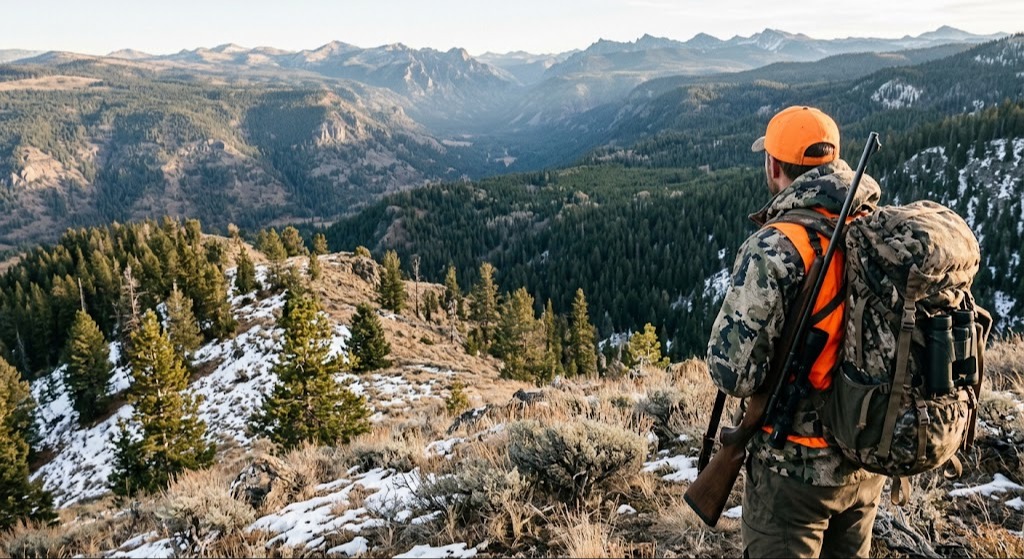
Public land hunting is the pursuit of wild game on acreage owned and managed by federal, state, or county governments that remains legally accessible to the general public. This system relies on dual jurisdiction, requiring hunters to simultaneously navigate land-use regulations set by property managers and wildlife-take laws established by state wildlife agencies.
Key Facts / At a Glance
- Dual Jurisdiction: Land managers control physical access and vehicle use, while state wildlife agencies dictate hunting seasons and bag limits.
- Federal Acreage: The Bureau of Land Management (BLM) and US Forest Service (USFS) collectively manage over 430 million huntable acres nationwide.
- Land Measurement: One square mile equals 640 acres, providing a vital baseline for estimating property size on digital mapping applications.
- Private Land Co-ops: State programs like Walk-In Access (WIA) or Block Management use hunter dollars to lease private acreage for public access.
- Access Limitations: Millions of public acres are legally “landlocked” by private property, requiring explicit landowner permission or aviation to access legally.
How Does Public Land Hunting Work?
Public land hunting functions through a framework of dual jurisdiction, meaning hunters must comply with two entirely separate sets of rules. First, the land manager (such as the US Forest Service) sets the rules for physical access. These regulations dictate where you can park, whether motorized vehicles are allowed, and camping restrictions.
Second, the State Wildlife Agency (often the Department of Natural Resources or Game and Fish) sets the rules for wildlife take. These laws govern hunting seasons, bag limits, licensing requirements, and weapon restrictions. To hunt legally, these two sets of rules must align. For example, a National Forest might remain physically open to hikers year-round, but a hunter can only harvest a deer there during the specific two-week window established by the state wildlife agency.
What Are the Main Types of Public Hunting Land?
Public hunting land is divided into three primary categories based on ownership and management objectives: federal lands, state lands, and cooperative private programs. Understanding the management objective of a parcel dictates how you are allowed to hunt it.
Federal Public Lands
Federal acreage provides the vast majority of huntable public land, particularly in the western United States. These lands are managed by distinct agencies with entirely different operational philosophies.
- National Forests (USFS): Covering over 193 million acres, these lands are highly permissive. They typically allow dispersed camping and designated off-road vehicle (OHV) use. Forest Service land features dense timber and mountainous terrain, making it the primary destination for western big game hunters targeting elk and mule deer.
- Bureau of Land Management (BLM): Spanning 245 million acres, BLM land consists primarily of vast, arid sagebrush and desert ecosystems. Access restrictions are minimal, and the open terrain favors spot-and-stalk hunting tactics for antelope and mule deer.
- National Wildlife Refuges (USFWS): With over 500 units open to hunting, refuges prioritize habitat preservation over recreation. They are highly regulated, frequently requiring refuge-specific access permits and imposing strict equipment rules, such as requiring non-toxic shot for all upland and migratory species.
- National Parks (NPS): National Parks are strictly closed to hunting. However, Congress has designated rare exceptions, such as specific National Preserves in Alaska or highly controlled, application-only elk culls in places like Grand Teton to manage overpopulation.
State Public Lands
State-managed lands are generally smaller, more fragmented, and feature higher hunter densities than federal acreage.
- Wildlife Management Areas (WMAs): State agencies purchase and manage these tracts specifically to optimize wildlife habitat and provide hunting access. WMAs are intensely managed through controlled burns, timber harvests, and agricultural food plots. They often prohibit overnight camping and permanent tree stands.
- State Forests and Parks: State forests almost universally allow hunting and operate similarly to National Forests on a smaller scale. State parks rarely permit hunting, and when they do, it is restricted to highly regulated draw hunts to control specific animal populations.
- School Trust Lands: The federal government granted these parcels to states to generate revenue for public education. Hunting access rules vary wildly. Montana permits general public hunting on its trust lands, whereas Colorado strictly leases its trust lands to private ranches, rendering them off-limits to the public.
Public-Access Programs on Private Land
State wildlife agencies utilize funds generated by license sales and the Pittman-Robertson Act to lease private agricultural and timber lands, opening them to public hunting.
These cooperative parcels go by state-specific names: Block Management in Montana, Walk-In Access (WIA) in the Midwest, PLOTS in North Dakota, and the Hunter Access Program in Pennsylvania. Hunters must respect private property boundaries on these parcels and adhere strictly to the foot-traffic-only rules that usually accompany these leases.
How Much Does Public Land Hunting Cost?
Public land hunting costs range from $25 for a local resident small-game hunt to over $1,500 for a non-resident western elk hunt. The total financial commitment depends entirely on your residency status and the species you intend to pursue.
- In-State Residents: Hunting your home state is highly affordable. A combined base hunting license and big game tag typically costs between $25 and $70.
- Out-of-State Non-Residents: State agencies use non-resident fees to fund conservation. Non-resident big game tags range from $300 to $1,500. Non-resident waterfowl or small game licenses usually cost $100 to $200.
- Federal Duck Stamp: All waterfowl hunters nationwide must purchase a $25 Federal Duck Stamp, regardless of state or land type.
Hunters must also navigate the difference between “General” (Over-The-Counter) tags, which anyone can purchase immediately, and “Limited Entry” tags, which require hunters to apply during spring lotteries (January through April) in hopes of drawing a highly coveted, low-pressure hunting unit.
Public vs. Private Land Hunting Comparison
Hunting private land offers a controlled, predictable environment, while public land demands superior physical effort, woodsmanship, and adaptability. Private land is generally superior for consistent success, but public land offers unmatched scale, adventure, and accessibility.
| Feature | Public Land Hunting | Private Land Hunting |
| Financial Cost | Low to Moderate (License, tags, and gear fees only). | High to Extreme (Outfitter fees, leases, or property taxes). |
| Land Access | High Availability (Millions of acres open across the country). | Severely Restricted (Requires ownership, gate keys, or permission). |
| Hunter Competition | High (Requires strategic avoidance of other hunters). | Low to None (Exclusive access limits external pressure). |
| Game Behavior | Highly Pressured (Animals are nocturnal, skittish, and hidden). | Predictable (Animals follow natural daylight patterns and food plots). |
| Regulatory Rules | Complex (Strict adherence to overlapping federal/state laws). | Flexible (Landowner dictates structural rules within state bag limits). |
| Physical Demand | High (Requires hiking miles to escape parking lot pressure). | Low (Hunters often drive ATVs directly to established blinds). |
Step-by-Step Guide to Public Land Hunting
Successfully harvesting an animal on public land requires a systematic approach that begins months before opening day. The factor that most determines success is the willingness to navigate terrain other hunters avoid.
Step 1: Complete Mandatory Hunter Education
Nearly every state requires hunters born after a certain date (typically 1969 or 1980) to carry a hunter education certificate. Complete this requirement first. Most states offer the coursework online, followed by an in-person firearms handling field day.
Step 2: Master Digital E-Scouting
Download a modern GPS hunting application like onX Hunt, GoHunt, or Basemap. Turn on the public land boundaries layer. Identify terrain features like ridges, saddles, and water sources located at least one mile from any road. Crucially, download offline maps for your targeted area, as cellular service rarely exists on remote federal lands.
Step 3: Secure Legal Tags and Licenses
Read the state’s official hunting regulations booklet for the current year. Identify the specific Game Management Unit (GMU) you intend to hunt. Purchase a general tag online, or if the unit is restricted, submit your application before the spring lottery deadlines.
Step 4: Conduct Boots-on-the-Ground Scouting
Digital maps cannot reveal the age of an animal track. Walk your digital waypoints before the season opens. Look for fresh animal sign, such as droppings, rubs, or tracks. Note where other hunters park their vehicles to establish a baseline of where pressure will originate.
Step 5: Execute and Adapt
Pack your gear, verify your weapon is sighted in, and monitor wind direction. If your primary area is flooded with hunters, immediately deploy your backup plan. Success on public ground requires remaining mobile and adapting to the pressure generated by other humans.
What Are the Most Common Public Land Mistakes?
Failing to adapt to human pressure and misunderstanding legal property boundaries account for the majority of ruined hunts and wildlife citations on public ground.
- Hunting the Fringe: The vast majority of hunters walk less than 500 yards from their vehicles. Setting up near main access points ensures you will only see other humans, as game animals abandon these areas immediately after opening morning. Fix: Walk further into steep terrain, or find isolated micro-parcels of public land that lack designated parking lots.
- Relying on Physical Fences for Boundaries: Assuming a barbed-wire fence represents the legal property line between public and private land will result in a trespassing citation. Fences are frequently constructed for livestock convenience, not legal accuracy. Fix: Trust the satellite GPS chip in your phone or mapping device to confirm your exact location.
- Ignoring Specific Land Constraints: Hunters often assume a tactic legal on a National Forest is legal on a state WMA. For example, leaving a tree stand overnight is permitted on much federal land but strictly prohibited and heavily fined on many state WMAs. Fix: Always read the specific management plan or site supplement for the exact parcel you are standing on.
Expert Insight regarding Limitations: Public land hunting carries significant legal limitations regarding retrieval. If you shoot an animal on public land and it crosses a boundary onto private property before dying, you cannot legally cross the fence to retrieve it. You must contact the landowner for explicit permission. If they deny access, even state game wardens frequently cannot force them to allow you on the property.
How Should Different Hunters Approach Public Land?
Your strategy and location must match your specific goals, physical fitness, and weapon choice.
- The Absolute Beginner: Focus on small game (squirrels, rabbits) or upland birds on local WMAs. The barrier to entry is low, tags are cheap, and the stakes are minimized. This environment teaches map reading, woodsmanship, and safe weapon handling without the intense pressure of a big game season.
- The Meat Hunter: Focus on antlerless (doe or cow) tags using archery equipment in Midwestern or Eastern state forests. Archery seasons feature a fraction of the hunter density found during rifle seasons. Antlerless tags are easily acquired over-the-counter and provide the highest statistical probability of filling a freezer.
- The Adventure Seeker: Target western Do-It-Yourself (DIY) backpack hunts on BLM or USFS lands for elk or mule deer. This requires applying for tags years in advance, packing a camp on your back, and carrying harvested meat out in a frame pack. It demands peak physical fitness but offers the ultimate wilderness experience.
Frequently Asked Questions
Can you camp anywhere on public hunting land?
On most federal USFS and BLM lands, dispersed camping is legal almost anywhere for up to 14 days, provided you do not block roads or water access. Conversely, state WMAs and Refuges usually prohibit overnight camping entirely or restrict it to specific, gravel-pad campsites.
Are tree stands and trail cameras allowed on public land?
Regulations vary heavily by state and agency. Federal lands generally allow them, provided you do not screw hardware into the tree. Many state WMAs require hunters to pack out all tree stands daily and increasingly ban cellular trail cameras to enforce fair chase ethics.
What is corner crossing and is it legal?
Corner crossing involves stepping diagonally from one public parcel to another over the corner of two intersecting private parcels without touching private soil. It remains legally ambiguous; several western states treat it as criminal trespass, while recent federal civil rulings have protected hunters.
Can I use an ATV or UTV to retrieve downed game on public land?
You may only use motorized vehicles on explicitly designated, open motorized trails. Driving an ATV off-trail across public land to retrieve a harvested animal is strictly illegal on almost all federal and state lands and carries severe fines and habitat destruction charges.
Do I need to wear blaze orange on federal land?
Blaze orange requirements are dictated by the state wildlife agency, not the federal land manager. If the state requires 400 square inches of solid blaze orange during a rifle deer season, that law applies equally whether you are on a National Forest, a WMA, or private property.