
Scent control for hunting is a systematic chemical and behavioral discipline designed to eliminate, adsorb, or neutralize human volatile organic compounds (VOCs) before they reach big game olfactory receptors. While whitetail deer and elk can detect human odor from up to 0.5 miles (880 yards) away, combining a strict five-phase hygiene regimen with active wind management reduces your scent cone enough to harvest mature animals within 20 yards.
Key Facts: Scent Control at a Glance
- Olfactory Disparity: Whitetail deer (Odocoileus virginianus) possess up to 297 million olfactory receptors compared to a human’s 5 million, while black bears exceed 300 million.
- Odor Genesis: Human sweat from eccrine glands is odorless water and salt; noticeable body odor occurs when skin bacteria (Corynebacterium and Staphylococcus) metabolize apocrine gland lipids into volatile fatty acids like isovaleric acid.
- The UV Double-Threat: Standard household laundry detergents contain stilbene-based optical brighteners that reflect blue light at 400–450 nanometers, causing camouflage to glow vividly to dichromatic ungulate eyes while emitting heavy floral esters.
- Three Pillars of Mitigation: Chemical scent control operates by preventing bacterial gas formation (silver ions, triclosan-free antimicrobials), destroying odor molecules via oxidation or catalysis (ozone $O_3$, enzymes, copper ions), or temporarily blocking animal olfactory receptors (chemosensory inhibitors).
- The Golden Rule: No chemical spray or ozone generator creates an invisible barrier; scent control only reduces the concentration and travel distance of your odor plume, meaning wind and thermal management remain mandatory.
Why Can Big Game Smell Hunters From Half a Mile Away?
Big game animals detect hunters from up to half a mile away because their nasal cavities allocate roughly 50% of their internal surface area to olfactory epithelium, supported by an olfactory bulb four times larger proportionally than a human’s. A whitetail deer houses approximately 297 million olfactory receptor neurons (compared to 5 million in humans and 220 million in German Shepherds), allowing it to isolate up to six distinct odor signatures simultaneously in a single breath.
Ungulates maximize this neural hardware through two anatomical mechanisms:
- The Wet Rhinarium: The moist, hairless pad of a deer or elk’s nose secretes a thin mucus layer that traps airborne volatile organic compounds (VOCs) and dissolves them before transporting the molecules across receptor cilia. Humidity between 50% and 80% combined with light winds (3 to 7 mph) creates peak scenting conditions by preventing rapid evaporation while keeping scent plumes cohesive.
- The Vomeronasal (Jacobson’s) Organ: Located at the base of the nasal cavity and accessed via the incisive duct in the roof of the mouth (frequently triggered during the “lip curl” or Flehmen response), this secondary organ analyzes heavy, non-volatile moisture molecules, pheromones, and hormones.
When a hunter enters the woods, they emit a continuous thermal plume rather than a static smell. The human body sheds approximately 30,000 to 40,000 dead skin cells (squames) per minute. Heated by a 98.6°F core body temperature, these microscopic skin rafts rise out of garment collars and cuffs, carrying colonies of Corynebacterium that emit volatile short-chain fatty acids alongside pulmonary breath gases (carbon dioxide, acetone, and isoprene). Scent control for hunting targets this entire biological chain—stripping away the lipid food source on skin, trapping airborne VOCs inside fabrics, and oxidizing foreign contamination on gear.
How Does the 5-Phase Scent Control Protocol Work?
Executing a complete scent control regimen requires a five-phase operational chain spanning 24 hours before the hunt through tree stand arrival, costing roughly $30 to $50 per season in consumables. Skipping a single phase—such as wearing washed base layers inside a contaminated truck cab—invalidates the previous steps through contact transfer.
Before You Start: Protocol Requirements
- Total Prep Time: 2.5 hours (laundering and storage prep) + 25 minutes on hunt morning.
- Difficulty: Moderate (requires strict environmental separation).
- Estimated Cost: $35–$60 basic chemical setup; $250–$400 with ozone automation.
- Required Materials:
- 1 bottle UV-free hunting laundry detergent (e.g., Atsko Sport-Wash or Wildlife Research Center Scent Killer Gold)
- 1 lb plain sodium bicarbonate (baking soda) for washer drum purging
- 1 bottle free-rinsing body and hair soap + 1 dedicated unscented washcloth and towel
- 1 stick aluminum-free, unscented hunting antiperspirant/deodorant
- 2 gasket-sealed polycarbonate storage totes (e.g., Plano Sportsman’s Trunk with weatherproofing foam seal) or 1 ozone duffle bag
- 1 pair 16-inch knee-high vulcanized rubber or neoprene hunting boots
- 32 oz odor-neutralizing field spray (enzyme, copper ion, or molecular blocker)
- 1 wind-detection powder bottle (unscented micro-silica)
Step 1: Execute the Laundering & Drum Purge Phase
Wash all base layers, mid-layers, outerwear, socks, and washcloths in an ultra-concentrated, UV-brightener-free hunting detergent after purging your washing machine drum. Standard household detergents deposit optical brighteners and synthetic fragrances onto the outer tub of your washing machine, which cross-contaminate hunting gear during a single wash cycle.
- Inspect the detergent dispenser drawer and rubber front-load gasket for residual blue liquid detergent or fabric softener slime; wipe clean with white vinegar.
- Run one empty “Clean Washer” or hot-water heavy cycle using 1 cup of baking soda or 2 ounces of hunting detergent to strip residual optical brighteners and perfumes from the drum.
- Load your hunting garments inside-out (respecting garment care tags: wash merino wool and carbon suits on cold/gentle; wash synthetic polyester on warm) using 1 to 2 ounces of hunting detergent.
- Line-dry garments outdoors away from woodsmoke, grills, or vehicle exhaust, or dry in a machine wiped down with an unscented wet towel using zero dryer sheets.
- Success Checkpoint: You’ll know it worked when garments have zero detectable floral, citrus, or “clean linen” smell when buried against your nose, and do not fluoresce blue-white under a 365nm or 395nm blacklight flashlight in a dark room.
- Common Mistake: Washing waterproof membrane outerwear (Gore-Tex) in heavy enzyme detergents that strip Durable Water Repellent (DWR) coatings, causing the outer face fabric to wet out and trap internal sweat.
Step 2: Complete the Personal Hygiene Phase
Shower within 60 minutes of departing for your hunt using a free-rinsing, oil-free hunting soap and shampoo to strip skin lipids and reduce Corynebacterium populations by over 90%. Standard commercial body washes contain emollients, aloe, coconut oil, and synthetic musks engineered to bind to epidermal proteins for 12 to 24 hours.
- Scrub hair, beard, ears, underarms, groin, and feet thoroughly with a dedicated unscented washcloth and free-rinsing cleanser like Atsko Zero Sport Wash Hair and Body Soap.
- Dry off exclusively with a towel that was washed in Step 1 alongside your hunting clothes—never use the hanging bathroom towel shared with household members.
- Apply an aluminum-free, unscented hunting deodorant to the axillae, and brush your teeth plus tongue using baking soda or an unscented chlorophyll toothpaste (avoiding heavy menthol/spearmint oils).
- Dress in a dedicated set of “travel clothes” (washed in scent-free detergent) rather than putting on your hunting base layers or outerwear inside the house.
- Success Checkpoint: Skin feels slightly taut (“squeaky clean”) immediately after rinsing because zero moisturizing oils or silicone conditioners remain on the epidermis.
- Common Mistake: Putting hunting socks and base layers on inside a kitchen where bacon, coffee, or frying oils are airborne; synthetic fleece and merino wool absorb aerosolized cooking lipids within three minutes.
Step 3: Manage the Storage & Transport Phase
Store dried hunting garments inside gasket-sealed polypropylene totes or active ozone bags, and never wear hunting clothes or boots while driving, fueling your vehicle, or entering convenience stores. Vehicle cloth seats, steering wheels, and floor mats harbor concentrated petroleum distillates, fast-food grease, and months of bacterial sweat.
- Pack garments into your sealed tote in reverse dressing order: outer jacket and bib overalls on the bottom, mid-layers in the middle, base layers and socks on top.
- Store hunting boots in a separate sealed boot bag or plastic bin so soil bacteria and ground odors from prior hunts do not transfer to upper body garments.
- Drive to your hunting parcel wearing slip-on travel shoes and travel clothes; set your vehicle HVAC to fresh outside air rather than cabin recirculation if you drink coffee on the drive.
- Step out of the vehicle at the trailhead, stand on an unscented rubber mat or clean tailgate pad, and dress in your hunting layers outdoors on the downwind side of the truck.
- Success Checkpoint: Your hunting boots only touch natural dirt and vegetation at the hunting site, never touching gas station concrete or truck floor mats.
- Common Mistake: Tossing pine needles, cedar branches, or aromatic earth wafers inside the same storage bin as your base layers; while masking scents help outer shells, saturating next-to-skin base layers with heavy terpenes irritates skin and creates an unnaturally intense odor spike as body heat warms the garment.
Step 4: Perform the Field Application Phase
Spray your boots, lower pant legs, backpack straps, safety harness, and bow grip generously with an odor-neutralizing field spray immediately before leaving the vehicle. Focus 60% of your spray volume from the knees down, as vegetation contact transfers ground-level scent onto every grass blade and brush stem at the exact nose height of trailing deer.
- Hold the atomizer bottle 6 to 8 inches from the fabric and apply an even mist until the outer surface of your boots, gaiters, and lower trousers is visibly damp.
- Mist high-touch accessory zones that cannot go into a washing machine: binocular harnesses, rangefinder tethers, leather release aids, rifle slings, and tree stand climbing sticks.
- Regulate your walking pace to the stand at 1.0 to 1.5 mph—shedding your outer insulated jacket and strapping it to your pack—so your core temperature stays low and you do not break a sweat during the hike.
- Put on your insulated outer layers only after climbing into the stand and allowing your skin moisture to evaporate for 10 minutes.
- Success Checkpoint: You reach full hunting height in your tree stand or settle into your ground blind with a dry back and dry forehead.
- Common Mistake: Wearing full late-season insulation during a 600-yard uphill hike, soaking your merino base layer with a pint of sweat before sunrise, which both overwhelms your scent control gear and causes conductive hypothermia two hours later.
Step 5: Execute the Active Wind & Access Strategy
Plan your entry route, tree stand placement, and exit path so the prevailing wind and diurnal thermal currents blow your scent cone into unoccupied buffer zones rather than bedding or feeding areas. Even a 95% reduction in human odor leaves roughly 5% of your VOC plume active, which is still sufficient to spook a mature whitetail within 30 to 40 yards downwind.
- Check localized hourly wind direction and speed (MPH) plus barometric pressure before picking which stand to hunt; never force a hunt on a stand when the wind blows toward known bedding cover.
- Approach the stand via low-lying ditches, creek beds (which channel cool air downward), or field edges rather than walking directly down game trails that deer will cross later.
- Puff your micro-silica wind checker bottle every 30 minutes on stand to map real-time air eddy currents caused by canopy topography, logging roads, or water bodies.
- Climb higher (20 to 25 feet where safe and legal) when winds are steady above 6 mph to project your scent plume farther downrange before it hits ground level.
- Success Checkpoint: Wind indicator powder consistently drifts away from primary deer travel corridors and bedding thickets throughout your sit.
- Common Mistake: Trusting a smartphone weather app’s macro wind forecast without checking on-site wind powder; localized terrain features like river bluffs and hardwood ridges routinely bend wind direction by 90 to 180 degrees.
Which Scent Control Technologies & Products Work Best?
The commercial scent control market divides into three primary product categories—field sprays, specialized cleansers, and ozone generators—each utilizing distinct chemical pathways to neutralize odor. Selecting matching chemistry across all three stages prevents product conflict (such as using a heavy pine-scented spray over an activated carbon suit).
Odor-Neutralizing Field Sprays
Field sprays serve as the frontline barrier applied directly to outerwear, boots, and non-washable gear immediately prior to entering the timber.
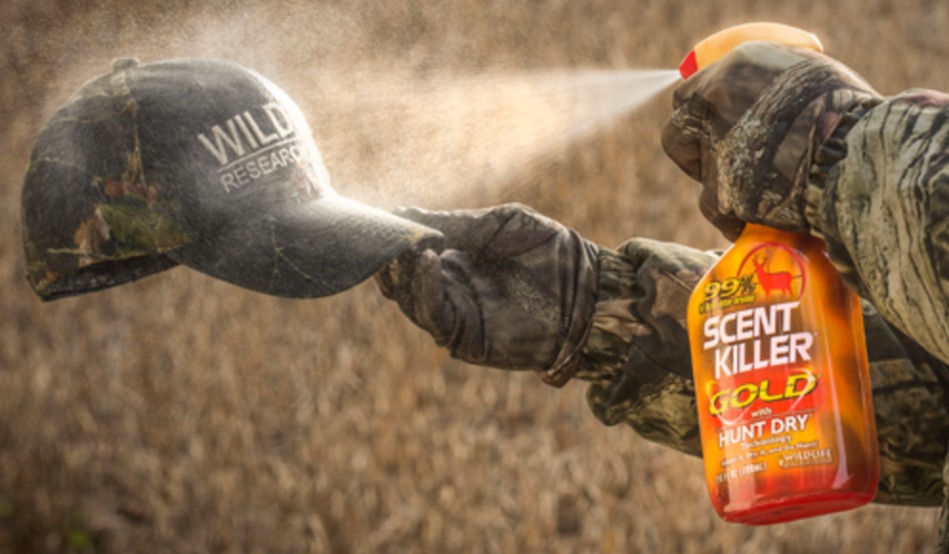
- Wildlife Research Center Scent Killer Super Charged Spray ($7.98–$10.00 | 4.8 ★ across 232+ reviews): Formulated with an odorless molecular complex that prevents bacterial gas formation on contact. Engineered with Hunt Dry technology, the active antimicrobial matrix binds to fabric fibers and remains 99% effective at stopping odor weeks after drying, allowing hunters to pre-treat jackets, backpacks, and tree stand seats days in advance without spraying down wet gear in sub-freezing temperatures.
- Scent Thief Field Spray ($9.99 | 4.7 ★ across 82+ reviews): Uses a patented, all-natural compound formula (utilizing specific volatile aromatic derivatives) rather than a bactericide or oxidizer. Its mechanics temporarily relax the olfactory epithelium in an animal’s nasal passage—functioning as a chemosensory inhibitor that blocks the neural signal of danger while the animal smells the compound. Safe for skin and clothing, it requires reapplication into wind currents every 60 to 90 minutes via spray bottle or hanging wafer.
- Dead Down Wind Evolve Field Spray ($9.99 | 4.6 ★ across 258+ reviews): Powered by broad-spectrum enzyme technology that acts as a biological catalyst, cleaving complex organic odor proteins (sweat, blood, food grease, bacteria) into odorless water, carbon dioxide, and benign amino fragments. Formulated with skin-positive ingredients free of harsh chemical biocides, the Evolve series includes an optional natural woods profile to blend with forest floor humus.
- Pure Whitetail Scent Eliminator Spray ($14.99): Built around healthcare-grade charged copper ion ($Cu^{2+}$) oxidation technology. Copper ions bind to sulfur- and nitrogen-bearing odor compounds, accelerating continuous oxidation reactions that permanently destroy human, fuel, and smoke odors on contact. Because ionic copper does not degrade thermally or biologically inside the bottle, it offers an unlimited operational shelf life.
Hunting Laundry Detergents & Body Cleansers
Stripping garments and skin to a chemically neutral baseline prevents residual household surfactants from sabotaging expensive outerwear.
- Wildlife Research Center Scent Killer Gold Laundry Detergent ($7.69 | 4.6 ★ across 99+ reviews): An ultra-concentrated multi-surfactant blend featuring the Power Boost Plus odor-fighting matrix. It contains zero UV optical brighteners, ensuring camo patterns absorb rather than reflect short-wave light, and rinses cleanly in both standard top-loaders and low-water High-Efficiency (HE) machines.
- Dead Down Wind Black Premium Laundry Detergent ($10.78 | 4.8 ★ across 14+ reviews): Uses proprietary NidorX technology engineered to encapsulate, attach to, and break down deep-set organic molecules, mildew, and petroleum fumes. While safe for activated-carbon garments, merino wool, and synthetic fleece, its aggressive oil-stripping surfactants are not recommended for waterproof DWR-coated outer shells unless followed by a spray-on DWR restoration cycle.
- Atsko Zero Sport Wash Hair and Body Soap ($13.99–$28.00 | 4.8 ★ across 4+ reviews): A clear, hypoallergenic, free-rinsing surfactant formula containing zero aromatic proteins, aloe, lanolin, or moisturizing oils. Because it strips skin and hair completely clean without leaving a microscopic soap film (which clogs pores and feeds skin flora), it delays odor-causing bacterial recolonization for hours while remaining gentle enough for daily use on sensitive scalps.
Ozone Storage & Treatment Systems
Ozone ($O_3$) is an allotrope of oxygen containing three oxygen atoms instead of two. Generated via electrical corona discharge plates, that third oxygen atom is highly unstable; when it collides with bacteria, mold spores, or volatile odor molecules, it detaches and oxidizes the target compound’s cell wall or chemical bond, reverting harmlessly to diatomic oxygen ($O_2$) while neutralizing the odor without liquid immersion.
- ScentLok OZ Chamber 5K Combo Kit ($219.99 | 4.2 ★ across 11+ reviews): Combines a rugged 600D PVC-backed polyester duffle bag with an internal Radial IQ ozone generator. Internal structured piping prevents clothing from collapsing onto the ozone vent, and a one-button automated 30-minute cycle sanitizes boots, heavy bibs, and packs using either a 110V household wall outlet or a 12V vehicle DC adapter during the drive to the lease.
- Ozonics DriWash Bag ($127.99 — requires compatible Ozonics unit): Designed specifically to turn an existing in-field Ozonics generator (like the HR230, HR300, or HR500) into an enclosed dry-cleaning chamber. It utilizes a patented dual-compartment interior airflow baffles layout that pulls ozone from a top dock inlet through hanging garments to a bottom vent. Built from oxidation-resistant ripstop fabrics with heavy-duty hanging straps, it folds flat for backcountry camp transport.
How Do Scent Control Technologies Compare?
No single scent control technology solves every hunting scenario: liquid sprays excel at treating ground-contact boots, garment technologies manage continuous body sweat during 6-hour sits, and ozone excels at dry-sanitizing bulky gear that cannot survive frequent washing machine agitation.
| Technology Type | Primary Mechanism | Key Advantages | Critical Trade-Offs & Failure Modes | Reactivation / Reapplication | Typical Cost Range |
| Odorless Molecular Sprays (e.g., WRC Scent Killer) | Antimicrobial film + molecular encapsulation | Can be applied days in advance (Hunt Dry); cheap; zero fabric damage. | Requires 100% surface saturation; feels freezing cold if sprayed wet in late season. | Every 1–3 hunts on outer shells; before every walk on boots. | $8 – $15 per 24–32 oz bottle |
| Enzyme & Copper Catalysts (e.g., Dead Down Wind, Pure Whitetail) | Biological protein cleavage or $Cu^{2+}$ ionic oxidation | Permanently breaks down stubborn fuel, smoke, grease, and bacterial gases; non-toxic. | Enzymes denature if stored above 120°F in truck beds; must physically contact the odor source. | Before each hunt entry; unlimited shelf life for copper ions. | $10 – $16 per bottle |
| Chemosensory Receptor Blockers (e.g., Scent Thief) | Volatile organic compounds that relax nasal epithelium | Works actively in swirling winds; calms animal flight response upon inhalation. | Does not destroy bacteria on gear; has a distinct aromatic smell; requires strict reapplication. | Every 60 to 90 minutes via spray or hanging wind wafer. | $10 – $20 per bottle / wafer pack |
| Ozone Duffle & Closet Systems (e.g., ScentLok OZ, Ozonics DriWash) | Corona discharge generates $O_3$ for gas-phase oxidation | Dry-sanitizes boots, packs, and heavy bibs in 30 mins; prevents washer wear and UV fading. | Degrades natural rubber, neoprene, and spandex elastic over time; unsafe to inhale inside closed vehicles. | 15–30 minute cycle before and after each hunt. | $120 – $275 per system |
| In-Field Active Ozone Units (e.g., Ozonics HR300 / HR500) | Continuous overhead $O_3$ curtain projected into wind stream | Oxidizes breath and sweat VOCs after they leave your body in the tree stand. | Requires charged batteries (4–8 hr runtime); audible fan hum in dead calm; dangerous in sealed ground blinds. | Continuous operation while on stand; battery swap every 5–8 hrs. | $400 – $600 per unit |
| Activated Carbon & Silver-Ion Suits (e.g., ScentLok, Sitka Polygiene) | Microporous carbon adsorption (Van der Waals forces) or $Ag^+$ antimicrobial | Passively traps skin VOCs before they escape clothing; requires zero batteries or liquids in field. | Carbon pores saturate with ambient odors if left unpacked; heavy household dryer heat ruins membranes. | Carbon: 40-min household dryer cycle on Medium/High. Silver: Wash every 3–5 wears. | $150 – $450 for jacket + pant system |
How Do Thermals and Wind Currents Override Scent Control?
Thermals and topographic wind currents override chemical scent control because air density shifts move your remaining 5% to 15% odor signature in vertical and rotational patterns that surface wind forecasts ignore. Understanding micro-meteorology prevents placing your reduced scent cone directly into a deer’s nose during the first and last 45 minutes of legal shooting light.
The Diurnal Thermal Inversion Cycle
Air temperature dictates air density, creating predictable vertical air currents known as thermals that overpower light prevailing winds (under 4 mph):
- Morning Rising Thermals (30–60 Minutes After Sunrise): As solar radiation warms valleys, fields, and south/east-facing slopes, air at ground level heats up, expands, becomes less dense than the cold canopy air above, and rises uphill like a hot air balloon. Hunting an upper ridge stand in the morning carries your scent up and over the ridgetop away from deer rising from lower feeding areas.
- Evening Falling Thermals (45 Minutes Before Sunset): Once sunlight drops below the tree line, radiational cooling chills the ground surface rapidly. Cool, dense air sinks down hillsides, pooling into creek bottoms, ravines, and agricultural fields like water pouring down a drain. Sitting in a high ridge stand during an evening thermal drop flushes your entire scent plume straight down into the valley floor where deer stage before dark.
- Water Body Exceptions: Large lakes, marshes, and unfrozen rivers retain heat longer than soil after dark. Consequently, air directly over water stays warmer than surrounding timber late into the evening, creating a localized rising thermal stack over the water edge that pulls scent from the bank toward the center of the waterway.
The Leeward Ridge “Military Crest” Vortex
When a steady prevailing wind (7 to 15 mph) blows over a steep ridge, it does not flow smoothly down the leeward (downwind) slope. As fast-moving air crosses the topographical peak, it detaches from the terrain, creating a low-pressure vacuum zone roughly one-third of the way down the leeward hillside—known to mountain hunters and ballistics experts as the military crest or thermal tunnel.
- How Buck Bedding Exploits This: Mature bucks bed along this exact leeward line with their backs to the steep uphill slope, looking downhill. Prevailing wind coming over the top of the ridge carries danger scent from behind them, while rising morning thermals pulling up the leeward slope bring danger scent from below them.
- The Hunter’s Trap: If you hang a tree stand on the very top of the ridge, the leeward vacuum eddy pulls your scent downward into the buck’s back. If you walk in from the bottom of the valley, rising thermals carry your scent up into his face. To kill a leeward-bedded buck, you must set up at the exact elevation of the thermal tunnel—just off to the crosswind flank—where the two opposing air currents collide and spill sideways.
Common Scent Control Blunders and How to Fix Them
Even disciplined hunters ruin multi-hour preparation routines through six subtle contamination vectors that reintroduce concentrated human or synthetic odors at the final moment.
- The Travel Trap (Footwear Cross-Contamination): Wearing hunting boots while pumping gas, stepping into convenience stores, or pressing truck pedals coats boot treads in benzene, diesel exhaust, and human bacteria from thousands of shoes.
- The Fix: Wear dedicated slip-on camp shoes during transit. Keep your 16-inch vulcanized rubber boots in a sealed bin in the truck bed, and step directly onto a clean rubber doormat at the trailhead when changing into your hunting footwear.
- Container Off-Gassing & Dryer Sheet Residue: Placing freshly laundered hunting garments inside a brand-new PVC gym bag or cheap polyethylene tote that off-gasses volatile plasticizers, or storing them in a bin previously used to hold scented seasonal laundry.
- The Fix: Buy gasket-sealed, food-grade polypropylene totes (marked with recycling symbol
#5 PP), scrub the interior with baking soda and Atsko Sport-Wash, let them air out in direct sunlight for 48 hours, or run a 20-minute ozone cycle inside the empty bin before loading clothes.
- The Fix: Buy gasket-sealed, food-grade polypropylene totes (marked with recycling symbol
- Ozone Elastomer Degradation (Ruined Gear): Running high-output ozone generators continuously in small closets or bags packed with rubber boots, waterproof Gore-Tex rain shells, bowstrings, and elastic-waistband base layers. Ozone ($O_3$) aggressively attacks carbon-carbon double bonds in natural polyisoprene rubber and polyurethane spandex (elastane), causing rubber boots to crack (“ozonolysis”) and base layer waistbands to lose all elasticity and crumble.
- The Fix: Limit ozone bag cycles to 15–30 minutes for synthetic outerwear. Never put natural rubber boots, binocular eyecups, latex grunt call tubes, or elastic harnesses in direct contact with the ozone discharge port; treat rubber and elastic exclusively with liquid enzyme or molecular sprays.
- Washing Machine Biofilm Contamination: Pouring $15 UV-free hunting detergent into a household washing machine that has 3 years of accumulated Tide and Downy fabric softener sludge coating the outer steel drum and drain pump. Your hunting clothes emerge smelling faintly of lavender and glowing under 400nm UV light.
- The Fix: Run a hot cleaning cycle with 2 cups of white vinegar or a commercial citric-acid washer cleaner (unscented) followed by a plain hot rinse before washing hunting clothes. For ultimate isolation, wash base layers by hand in a dedicated 5-gallon food-grade bucket fitted with a plunger agitator.
- The Forgotten Tree Stand Harness & Backpack: Washing jackets and pants religiously every week while wearing the same nylon tree stand safety harness, binocular bino-pack, baseball cap sweatband, and wrist release for five consecutive seasons without cleaning. These heavy nylon webbing straps sit directly over your neck, chest, and shoulders, absorbing gallons of summer scouting and early-season sweat.
- The Fix: Soak your safety harness, bino harness, and hat in a sink filled with warm water, 1 ounce of enzyme detergent, and 1/2 cup of baking soda for 60 minutes twice a season, rinse thoroughly, air dry, and saturate with copper-ion or enzyme spray before every sit.
- Pulmonary Breath & Dietary VOC Spikes: Focusing 100% on skin sweat while breathing heavy plumes of allyl methyl sulfide (from garlic/onions), coffee oils, tobacco smoke, or periodontal sulfur compounds directly into the wind stream. Roughly 30% to 40% of a warm-blooded hunter’s airborne scent cone originates from exhaled lung vapor and oral bacteria.
- The Fix: Avoid garlic, onions, curries, alcohol, and cured meats 24 hours before a close-range bowhunt. Brush your tongue, floss, use an unscented zinc or chlorine dioxide mouthwash before walking in, chew chlorophyll tablets or eat a crisp apple on stand (pectin and malic acid scrub oral sulfur gases), and wear a lightweight merino or carbon neck gaiter over your mouth and nose to trap warm breath moisture droplets.
Honest Limitations: When Does Scent Control Fail?
Practitioners must acknowledge a hard physical boundary: total scent elimination is biologically impossible for a living, breathing mammal. As long as your heart beats and your lungs exchange gases, you produce roughly 300 to 500 milliliters of insensible perspiration per day and exhale 7 to 8 liters of air per minute saturated with metabolic VOCs.
Chemical scent control will fail to protect you in three specific field scenarios:
- Swirling Bottomland Winds at Close Range (<25 Yards): If you hang a tree stand in a flat creek bottom surrounded by ridges, unstable winds will swirl 360 degrees. When a 5-year-old doe steps directly downwind at 18 yards and inhales a sustained 10-second draft of your air stream, she will still detect human presence regardless of how much enzyme spray or ozone you use. What thorough scent control actually achieves here is distance compression and reaction delay: instead of the deer smelling a foul, concentrated wall of human body odor and laundry soap from 250 yards away and blowing out of the county unseen, she catches a faint, degraded trace at 25 yards. She assumes you are 150 yards away or passed through hours ago—pausing cautiously to investigate rather than bolting, which provides the 4-second window needed to draw a bow.
- Enclosed Ground Blinds Using Active Ozone: Running an active ozone generator inside a zipped-shut, low-ventilation hub blind exposes the hunter to ozone concentrations far exceeding the OSHA/NIOSH ceiling limit of 0.10 parts per million (ppm). Inhaling concentrated $O_3$ causes immediate bronchial irritation, metallic taste, chest pain, severe headaches, and oxidative damage to lung alveoli. Active ozone units must only be mounted outside the blind window overhang or overhead in an open tree stand where ambient wind immediately dilutes the gas away from the hunter’s face.
- High-Exertion Spot-and-Stalk Hunts in 75°F+ Heat: During early-season September archery elk or pronghorn hunts, hiking 8 miles across steep sagebrush in 80°F temperatures produces up to 1.5 liters of sweat per hour. No spray or garment can adsorb that volume of liquid moisture. In high-heat mobile hunting, wind direction is 99% of the equation, and scent sprays serve only to keep your sleeping bag and camp clothes tolerable.
What Is the Best Scent Control Blueprint for Your Hunting Style?
Different hunting environments dictate how you allocate your budget and effort across hygiene, sprays, and electronics. Match your protocol to one of the four operational blueprints below.
1. The Close-Range Whitetail Stand Bowhunter (Day-Hike)
- The Challenge: Sub-25-yard shots from stationary tree stands where deer often cross your entry trail or circle downwind of bait/food plots.
- The Blueprint: Maximize pre-hunt domestic hygiene and containment. Shower with Atsko Zero Sport Wash, dry with a sterile towel, and pack garments in gasket-sealed totes. Wear knee-high 100% waterproof vulcanized rubber/neoprene boots sprayed down with Wildlife Research Center Scent Killer Super Charged Spray. Pair a mid-weight activated carbon suit (reactivated in the dryer every 3 sits) with an overhead Ozonics unit mounted 12 inches above your head angled slightly downwind to scrub rising breath and collar plumes.
2. The Multi-Day Backcountry / Spike Camp Hunter
- The Challenge: Living in a tent for 5 to 10 days with zero running water, no washing machine, and no AC electrical grid while burning 4,000 calories a day.
- The Blueprint: Prioritize antimicrobial fiber science and portable dry-sanitation. Wear 100% ultra-fine Merino wool (17.5–18.5 micron) or Polygiene silver-ion treated synthetic base layers next to skin; merino’s keratin fibers naturally bind moisture vapor inside the fiber core rather than on the surface, starving Corynebacterium for up to 7 days without smelling. Carry two rotating sets of base layers: wear Set A on odd days while Set B airs out in direct alpine UV sunlight or cycles inside a collapsible Ozonics DriWash Bag powered by a spare rechargeable battery pack. Scrub axillae, groin, and feet nightly inside your tent using unscented enzyme field wipes before climbing into your sleeping bag so you do not contaminate your down insulation.
3. The Mobile Saddle & Run-and-Gun Public Land Hunter
- The Challenge: Hiking 1.5 to 3 miles deep into public timber carrying climbing sticks, a platform, and a saddle—generating heavy physical heat and touching rough tree bark at chest level during the climb.
- The Blueprint: Focus on thermal regulation during the hike and rapid field neutralization. Hike in wearing only a lightweight moisture-wicking base layer and boots treated with Pure Whitetail or Dead Down Wind Evolve Spray, carrying your saddle, mid-layers, and jacket strapped to the outside of your pack. Stop 100 yards short of your target tree to cool down for 10 minutes, wipe your neck and face with an unscented field wipe, put on your dry insulation layers, and hang a Scent Thief Wafer on your tether rope at head height once at hunting elevation to buffer unexpected wind swirls in unfamiliar terrain.
4. The Enclosed Hub Ground Blind Hunter (Youth, Crossbow, or Late-Season Firearm)
- The Challenge: Sitting at eye level with game where your scent plume travels horizontally at nose height instead of dispersing through the upper tree canopy.
- The Blueprint: Control airflow physics inside the blind fabric. Brush in your blind 2 weeks in advance so the synthetic polyester shell off-gasses factory glue odors. Inside the blind, keep the back (upwind) windows 100% zipped shut and open only a narrow horizontal shooting slit on the front window; this creates high barometric pressure inside the blind that prevents cross-breezes from blowing through the hub and carrying your scent out the front window. Wear black unscented fleece, spray your boots and blind chair with Scent Killer Gold, and never run an ozone machine inside the enclosed space.
Frequently Asked Questions About Scent Control for Hunting
Can you wash activated carbon hunting clothes in regular unscented household detergent?
No, you should avoid washing activated carbon garments (such as ScentLok) in standard “Free & Clear” household detergents like Tide Free & Gentle. While free of dyes and heavy perfumes, household formulas still contain optical UV brighteners and surfactant conditioning films that coat microscopic carbon pores, reducing the fabric’s ability to adsorb volatile odor molecules by up to 40%.
How do you de-scent leather hunting boots compared to rubber boots?
Rubber boots are non-porous and easily sanitized on the exterior with enzyme sprays or soapy water, though you must dry their interiors nightly on a low-heat convection boot dryer to stop foot bacteria. Leather boots are porous and trap ground odors deep in the hide; scrub leather with Atsko Sport-Wash, treat with an unscented silicone or beeswax waterproofer, and spray heavily with an enzymatic catalyst before every walk.
Do cover scents like pine needles, earth wafers, or doe urine actually mask human odor?
Cover scents do not mask or erase human odor because a whitetail deer’s 297 million olfactory receptors process odors seperately rather than blending them together like humans do. If an unwashed hunter sprays on pine or doe estrus, a deer smells both the pine and the human simultaneously—just as you can smell both burnt toast and brewed coffee in the same kitchen. Cover scents work solely as calming distractions after you have already eliminated human bacteria.
Does smoking, vaping, or dipping tobacco ruin your scent control in the deer woods?
Smoking cigarettes and vaping fruit or menthol propylene glycol clouds leave heavy, sticky tar and chemical esters on fingers, beards, and jacket cuffs that immediately alert deer to foreign intrusion. However, field experience shows that while deer instantly recognize human bacterial body odor as a predator threat, they occasionally tolerate faint woodsmoke or distant vape smells as benign environmental curiosities—provided the wind keeps your underlying human sweat plume out of their nose.
How often do you need to reactivate carbon hunting suits in the dryer?
You should reactivate carbon-lined hunting garments in a clean household clothes dryer for 40 minutes on a Medium-to-High heat setting after every 3 to 4 days of field use, and immediately before storing them in an airtight tote. Thermal energy breaks the weak Van der Waals bonds holding trapped odor molecules inside the activated carbon micropores, venting those gases out the dryer exhaust and restoring up to 85–90% of the suit’s adsorption capacity.