
Deciding what to pack for a hunting trip is a systematic engineering process that integrates regulatory documentation, lethal weapon systems, thermodynamic apparel, and meat-preservation tools. This operational life-support ecosystem sustains human performance across unpredictable wilderness conditions while ensuring the legal, ethical harvest and rapid cooling of wild game.
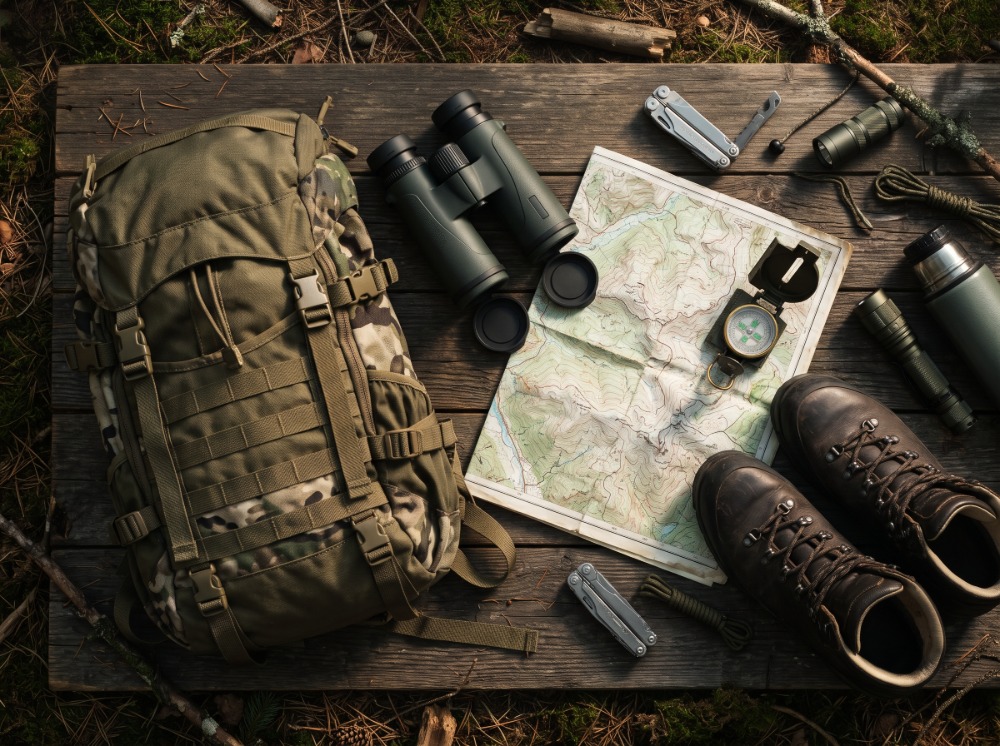
Key Facts: Hunting Pack System Benchmarks
- Base Weight Thresholds: Multi-day backcountry packs should not exceed 22% to 25% of lean body weight (typically 38 to 45 lbs before food and water) to preserve pack-out capacity.
- Hunter Orange Mandates: Over 40 U.S. states require 400 to 500 square inches of daylight fluorescent orange (595–605 nm wavelength) visible across the chest, back, and head.
- Meat Cooling Window: Harvested large game must drop below an internal core temperature of 40°F (4.4°C) within 4 to 6 hours to prevent anaerobic Clostridium bone souring.
- Caloric Density Target: Mountain hunters burn 3,500 to 4,800 kcal daily, requiring ration packs that deliver a minimum energy density of 125 kcal per ounce.
- Optics Standard: An 8×42 binocular provides a 5.25mm exit pupil for low-light timber hunting, whereas a 10×42 binocular yields a 4.2mm exit pupil suited for open western basins.
- Battery Chemistry: Lithium iron disulfide ($LiFeS_2$) cells maintain voltage down to -40°F (-40°C), while standard alkaline batteries lose up to 60% capacity at 20°F (-6.6°C).
How Does a Hunting Gear System Function?
A hunting gear system functions as a modular survival and retrieval architecture where shelter, apparel, optics, and weaponry operate interdependently to manage energy and weight. Unlike recreational backpacking equipment, hunting systems must transition immediately from low-weight stalk configurations to hauling 80 to 120 pounds of raw meat and bone over unmaintained terrain.
In practice, gear selection is governed by the 3:1 pack-out weight ratio. Every pound of non-essential camp comfort carried into a wilderness drainage adds cumulative cardiovascular fatigue when compounding against a 100-pound elk hindquarter on the return hike. Furthermore, hunting equipment must meet strict acoustic and visual requirements. While an ultralight backpacker relies on loud, high-tenacity 30-denier ripstop nylon, a bowhunter requires brushed tricot polyester or merino wool outer faces that suppress friction noise below 25 decibels within a 40-yard shooting corridor.
Every component in your pack links to a physiological or legal outcome. If your moisture-wicking base layer fails to move sweat during a 1,500-foot morning ascent, evaporative cooling drops your core temperature once you stop to glass a ridgeline, inducing shivering that ruins rifle stability and forces an early exit from the field.
What to Pack for a Hunting Trip by Functional System
Organizing what to pack for a hunting trip requires dividing equipment into eight non-negotiable functional modules rather than throwing loose items into a rucksack. Each module addresses a distinct phase of the hunt, moving from legal compliance and animal location to lethality, field butchery, and overnight survival.
1. Legal Documentation and Regulatory Compliance
Legal hunting documentation consists of state-issued carcass tags, hunting licenses, habitat stamps, and hunter education certificates carried on the hunter’s person. Game wardens from agencies like the Colorado Parks and Wildlife (CPW) or Pennsylvania Game Commission require immediate physical or verified digital presentation of these credentials in the field.
- Carcass Tags and Licenses: Sealed inside a 4-mil waterproof zip-top bag or a dedicated PVC license holder pinned inside the bino harness.
- Validation Tools: One fine-tip permanent marker (Sharpie Extreme) and a 3-inch heavy-duty steel safety pin or four 8-inch UV-resistant nylon zip-ties to notch and attach paper or Tyvek tags to the tendon of the harvested animal immediately upon recovery.
- Hunter Education & ID: State-issued driver’s license, physical hunter safety card (containing your state CID number), and signed private-land permission slips.
- Federal & Species Stamps: Signed Federal Migratory Bird Hunting and Conservation Stamp (Duck Stamp), state migratory bird HIP validation numbers, and tribal reservation trespass permits.
2. Core Weapon and Ammunition Systems
A core weapon system comprises a zeroed firearm or tuned archery rig paired with lot-matched ammunition, mechanical spares, and transport protection. Field lethality fails most often when hunters change ammunition manufacturing lots without re-confirming point-of-impact or neglect torque verification on mounting hardware after vehicle transit.
- Rifle System: Sighted in at 100 or 200 yards with a weatherproofed barrel (muzzle taped with a single layer of vinyl electrical tape to prevent snow or mud obstruction without affecting ballistic pressure).
- Archery System: Compound or traditional bow with strings waxed, peep-sight tied in with braided nylon serving thread, and broadhead flight verified against field points out to 60 yards.
- Ammunition & Arrows: Minimum 20 centerfire cartridges from the exact same production lot (10 in a silent neoprene buttstock sleeve or pocket pouch, 10 in the truck/basecamp for re-zeroing), or 6 carbon arrows tipped with fixed or mechanical broadheads (e.g., Iron Will 125-grain or Sevr Titanium) inside a hard quiver.
- Field Maintenance & Torque Kit: BoreSnake pull-through cleaning cord, 0.5 oz bottle of odorless synthetic CLP (such as Lucas Oil Extreme Duty), miniature T15/T25 Torx bits and Allen wrenches matching your scope rings and bow rest, and 3 feet of emergency bowstring serving material.
- Transport Cases: TSA-approved injection-molded polymer hard case (Pelican 1750 or Condition 1) secured with two non-TSA dual-shackle padlocks for commercial flights, plus a padded soft scabbard for ATV or truck transport.
3. Optics, Target Acquisition, and Wind Detection
An optics and target acquisition system enables hunters to locate concealed wildlife, judge antler or horn legality, and calculate ballistic drop and wind drift before closing distance. High-transmission fluorite glass reduces eye strain during multi-hour glassing sessions at dawn and dusk when ungulates are most active.
- Binoculars & Chest Harness: 8×42 (for timber under 150 yards) or 10×42 (for open country) roof-prism binoculars (e.g., Vortex Razor UHD, Maven B.1, or Swarovski EL) housed in an enclosed forward-opening chest harness that prevents dust and snow intrusion.
- Laser Rangefinder: Angle-compensating laser rangefinder (such as Sig Sauer KILO or Leica Rangemaster) tethered to the bino harness with a coiled bungee cord, offering true horizontal distance calculations on slopes exceeding 20 degrees.
- Spotting Scope & Tripod: 65mm or 85mm angled or straight spotting scope paired with a carbon-fiber tripod and fluid pan-head (weighing 4.5 to 6.5 lbs combined) for verifying legal horn curl on bighorn sheep or counting brow tines on bull elk from 1 to 3 miles away.
- Wind Checker: 1 oz plastic squeeze bottle filled with unscented micronized silica powder or talc to visualize subtle thermal air currents every 15 minutes during a stalk.
- Lens Maintenance: Retractable carbon-compound lens pen (brush on one end, chamois tip on the other), two sealed microfiber cloths, and anti-fog alcohol wipes.
4. What Technical Apparel Layers Should You Pack?
Technical hunting apparel operates on a four-layer microclimate system designed to transport moisture vapor away from the skin while trapping dead air and blocking precipitation. Avoiding cotton is mandatory because cellulose fibers absorb up to 27 times their weight in water, stripping body heat 25 times faster than dry air.
- Base Layer (Next-to-Skin): 150g to 200g merino wool (17.5 to 18.9-micron fiber diameter from brands like First Lite or Icebreaker) or hydrophobic polypropylene tops and bottoms. Merino regulates odor across 5-to-7-day hunts through natural lanolin antimicrobial properties.
- Active Mid-Layer: 200g grid-fleece hoodie (such as Sitka Ambient or KUIU Peloton 240) utilizing high-void polyester channels that breathe during uphill exertion while blocking 15 mph crosswinds.
- Static Insulation Layer: Packable 800-fill-power hydrophobic goose down or PrimaLoft Gold synthetic puffy jacket and full-side-zip puffy pants. Down offers superior warmth-to-weight ratios in dry sub-freezing alpine air, whereas synthetic insulation retains 90% of its thermal loft when wet in coastal Pacific Northwest rain.
- Outer Weather Shell: 3-layer waterproof-breathable membrane jacket and bibs (Gore-Tex Pro or Toray Dermizax) rated to a minimum 20,000mm hydrostatic head waterproof rating and 20,000 $g/m^2/24h$ Moisture Vapor Transmission Rate (MVTR).
- Blaze Orange / Daylight Fluorescent Garments: Uninsulated blaze orange vest and beanie providing at least 500 square inches of solid daylight fluorescent material to satisfy strict state statutes during rifle seasons.
- Footwear & Gaiters: Broken-in full-grain leather or Cordura mountain boots with Vibram Megagrip outsoles and Gore-Tex liners (Crispi Nevada, Kenetrek Mountain Extreme, or Schnees Beartooth). Match boot insulation to activity: uninsulated for September archery, 200g–400g Thinsulate for October rifle, and 800g–1,200g rubber/neoprene boots for November whitetail stands. Pair with knee-high 1000D Cordura gaiters to keep snow and morning dew out of boot tops.
- Extremity Protection: Three pairs of midweight merino cushion socks, one pair of polypropylene liner socks, lightweight merino shooting gloves, and waterproof insulated glassing mittens.
5. What Field Processing Equipment Prevents Meat Spoilage?
Field processing and meat preservation equipment allows a hunter to skin, quarter, debone, and cool an animal immediately upon recovery. Wild game meat begins to sour at the bone when internal muscle temperatures remain above 40°F (4.4°C) for more than 6 hours due to deep-tissue anaerobic bacteria proliferation.
- Cutting System: Two distinct knives-one fixed-blade drop-point knife with high-edge-retention steel (CPM-S30V or MagnaCut, 3.5-inch blade) for breaking hip joints and splitting sternum cartilage, plus one replaceable-blade scalpel knife (Havalon Piranta or Outdoor Edge RazorLite with 6 extra #60A stainless blades) for precision caping and skinning.
- Breathable Game Bags: Four to six reusable, high-tenacity synthetic woven game bags (Caribou Gear, Tag Bags, or Argali High Country packs weighing 8 to 14 oz total). Never use cheap cotton cheesecloth bags on backcountry hunts; they tear under 60-pound loads and fail to block blowflies (Calliphoridae) from laying eggs through stretched mesh.
- Citric Acid Spray: 2 oz travel atomizer filled with food-grade anhydrous citric acid powder (1.5 tablespoons mixed with water in the field). Spraying quartered meat lowers surface pH to create an antimicrobial rind that repels flies and retards bacterial growth for up to 48 hours.
- Hanging & Hygiene Tools: 50 feet of 550 Type III nylon paracord (or lightweight 2.5mm Dyneema cord) for hoisting quarters into shaded conifer branches, 4 pairs of 6-mil extended-cuff nitrile gloves, and a 5×7-foot ultralight Tyvek groundsheet (4 oz) to Stage clean quarters away from dirt and pine needles.
- Compact Bone Saw: 5-inch folding pull-saw (Wyoming Saw or Silky Pocketboy) for removing skull plates and splitting the pelvic symphysis when required.
6. Survival, Navigation, and Emergency Trauma Kit
A hunting survival and trauma kit mitigates the two primary fatal hazards in the field: penetrating mechanical trauma (broadhead lacerations, skinning knife slips, firearm discharges) and environmental exposure following navigation loss. Standard store-bought camping band-aid kits are inadequate for wilderness hunting.
- Redundant Navigation: Dedicated smartphone running offline satellite/property parcel layers (onX Hunt, GoHunt, or BaseMap) paired with a physical baseplate magnetic compass (Suunto MC-2 with adjustable declination) and a 1:24,000 USGS topographic map printed on waterproof paper.
- Satellite Two-Way Communicator: Iridium or Globalstar satellite messenger (Garmin inReach Mini 2 or Zoleo) clipped to the backpack shoulder strap-never buried inside the pack-allowing SOS activation if pinned under an ATV or injured in a tree-stand fall.
- Trauma & First Aid Kit (IFAK): Gen-7 CAT (Combat Application Tourniquet), one package of QuikClot Combat Gauze (kaolin-impregnated hemostatic dressing), 4-inch Israeli emergency pressure bandage, 6 square inches of Leukotape P (superior to Moleskin for heel hot-spots because its zinc-oxide adhesive survives sweat), ibuprofen, loperamide, antihistamines, and two Mylar emergency bivy sacks.
- Illumination System: Primary high-output headlamp (350 to 500 lumens, such as Fenix HM65R or Petzl Actik Core) featuring a low-lumen red or green LED mode to prevent dilating pupils or spooking bedded game during pre-dawn approaches, plus a backup 1.5-ounce coin-cell headlamp (Petzl e+LITE) and 4 spare lithium AA/AAA batteries or a 10,000mAh cold-rated power bank.
- Three-Method Fire Kit: Butane piezo-ignition torch lighter, stormproof matches in an O-ring sealed case, a 3-inch ferrocerium rod, and 6 wax-infused cotton tinder tabs or petroleum-jelly cotton balls (burn time: 4 minutes each in damp wind).
- Predator Defense (Grizzly Country): 8.1 to 10.2 oz canister of EPA-registered bear spray (2% major capsaicinoids, 30-to-40-foot range) carried in a quick-draw hip or chest holster-never inside a backpack pocket.
7. How Do Backcountry Shelter and Sleep Systems Prevent Hypothermia?
Backcountry shelter and sleep systems protect hunters from conductive heat loss to frozen ground and convective heat loss from alpine storms. The most common oversight among hunters transitioning from truck camping to wilderness hunts is packing a sleeping bag rated for survival limits rather than comfort limits, without an insulated sleeping pad underneath.
- Shelter Architecture: Ultralight 3-season freestanding tent (e.g., Big Agnes Copper Spur HV UL2, 3 lbs) for early season, or a 4-season floorless Dyneema/sil-poly pyramid tipi (Seek Outside Cimmaron, 2.5 lbs) paired with a collapsible titanium wood stove (1.8 lbs) for late-season snow hunts. Floorless shelters allow hunters to step inside wearing muddy boots and dry wet gear rapidly over open stove heat.
- Sleeping Pad (Conductive Barrier): Inflatable insulated pad tested to the ASTM F3340-18 standard. Select an R-value of 2.5 to 3.5 for early fall (above 35°F) and an R-value of 5.5 to 8.5 (such as Therm-a-Rest NeoAir XTherm NXT) for frozen ground and snow. Even a -20°F sleeping bag fails if compressed against uninsulated frozen earth.
- Sleeping Bag or Quilt: EN/ISO-rated down sleeping bag rated 10°F colder than the lowest forecasted nighttime temperature (e.g., a 15°F bag for 25°F nights, such as Western Mountaineering AlpinLite or Stone Glacier Chilkoot). Store in a waterproof compression dry sack lined with a trash compactor bag.
8. How Do You Calculate Backcountry Nutrition and Hydration Needs?
Backcountry hunting nutrition and hydration systems must replace 3,500 to 4,800 kilocalories and 3 to 5 liters of fluid expended daily across rugged elevation gains. Relying on heavy canned foods or single-method water filtration creates pack-weight penalties and gastrointestinal risk.
- Caloric Ration Formula: Pack 1.8 to 2.2 lbs (28 to 35 oz) of dry food per day targeting a minimum caloric density of 125 to 140 kcal per ounce. Combine high-fat macronutrients (macadamia nuts at 204 kcal/oz, olive oil packets at 250 kcal/oz, peanut butter sleeves) with complex carbohydrates (tortillas, rolled oats) and freeze-dried evening meals (Peak Refuel or Mountain House, yielding 800–1,100 kcal per pouch).
- Cooking System: Integrated wind-resistant canister stove (MSR WindBurner or Jetboil Stash) using an 80/20 isobutane-propane fuel blend. In temperatures below 20°F (-6°C), invert the fuel canister or switch to a liquid white-gas stove, as standard butane stops vaporizing at 31°F (-0.5°C).
- Dual-Stage Water Purification: Primary hollow-fiber membrane squeeze filter (Sawyer Squeeze or Katadyn BeFree, 0.1-micron pore size) paired with Chlorine Dioxide chemical tablets (Aquamira or Katadyn Micropur MP1) as a backup. Critical Cold-Weather Rule: If a hollow-fiber filter freezes with water inside, expanding ice crystals crack the microscopic tubes without visible external damage, rendering it useless against Giardia lamblia and Echinococcus tapeworm cysts (carried by wolves and coyotes). Always sleep with your water filter inside your sleeping bag.
- Water Carriage: Two 1-liter wide-mouth HDPE Nalgene bottles and one 3-liter collapsible TPU reservoir (HydraPak Seeker). Avoid hose-fed hydration bladders in sub-freezing weather; water inside the exposed drink tube freezes solid within 15 minutes of exposure.
How Do Packing Strategies Differ by Hunting Style?
Operational hunting environments dictate strict trade-offs between thermal insulation, acoustic stealth, waterproofness, and total pack weight. Packing a 1,000-gram insulated boot on an arduous mountain sheep hunt causes debilitating sweat buildup and frostnip, whereas wearing an ultralight breathable mountain shell in a flooded Arkansas duck blind leads to hypothermia within an hour.
| Operational Metric | Whitetail Tree-Stand (Eastern Woodlands) | Western Spot-and-Stalk (Alpine / Timber) | Waterfowl Blind / Marsh (Wetlands) | Late-Season Rifle (Sub-Zero Mountain) | Arid Desert Stalk (Southwest Basins) |
| Target Base Weight | 18–28 lbs (Daypack + climbing sticks) | 38–45 lbs (5-to-7-day backpack kit) | 25–40 lbs (Hauled via boat, sled, or ATV) | 48–55 lbs (Includes hot tent & heavy down) | 28–35 lbs (Excludes heavy water load) |
| Pack Frame Volume | 1,200–2,000 cu in ($20–32\text{ L}$) | 4,500–6,500 cu in ($75–105\text{ L}$) | 1,800–2,500 cu in ($30–40\text{ L}$ blind bag) | 6,000–7,500 cu in ($98–120\text{ L}$) | 3,000–4,500 cu in ($50–75\text{ L}$) |
| Primary Apparel Priority | Acoustic silence (brushed Berber fleece) & high-loft windproof static warmth | High MVTR breathability & rapid moisture transport across 2,000-ft climbs | 100% waterproof submersion protection (breathable or 5mm neoprene waders) | Maximum thermal retention (850-fill down) & snow shedding | UPF 50+ solar deflection, thorn abrasion resistance & evaporative cooling |
| Footwear Specification | 800g–1,600g Thinsulate 16-inch scent-free rubber/neoprene boots | Uninsulated or 200g stiff-shank leather boots (Class 3–4 torsional rigidity) | 1,000g–1,600g boot-foot chest waders with mud-shedding cleated outsoles | 400g–800g leather pac boots (Kenetrek Northern) with removable felt liners | Uninsulated leather/synthetic hybrid boots with breathable non-Gore-Tex mesh |
| Optics Configuration | 8×42 binoculars + compact 1,000-yard tree-stand rangefinder | 10×42 or 12×50 binoculars + 65mm/85mm spotting scope on carbon tripod | 8×32 compact waterproof binoculars for identifying incoming flight species | 10×42 binoculars + 85mm spotting scope + chemical lens warmers | 15×56 tripod-mounted binoculars (Swarovski SLC) + 85mm spotting scope |
| Water Carriage Capacity | 1.0–1.5 Liters (Plus 16 oz vacuum thermos of hot broth) | 3.0–4.0 Liters (Filtered daily from alpine seeps and creeks) | 1.5–2.0 Liters (Carried in blind bag alongside high-calorie thermos) | 3.0–4.0 Liters (Stored in insulated sleeves; melted from snow via stove) | 6.0–10.0 Liters (No natural water sources; cached in advance) |
| Mandatory Specialty Gear | ASTM F2123 full-body fall-arrest harness, lineman’s belt, haul rope, hand muff | Carbon trekking poles, load-shelf external frame pack, lightweight crampons | Non-toxic bismuth/steel shot shells, decoy rig, duck strap, floating gun case | Snowshoes, collapsible snow shovel, titanium tent stove, lithium power banks | Fine-tooth steel tweezers (for cholla cactus removal), snake gaiters, electrolyte packs |
How Do You Pack and Balance a Hunting Backpack?
Loading a hunting backpack properly requires positioning dense, heavy mass close to your thoracic spine while keeping immediate-access tools reachable without unbuckling the main compartment. Poor weight distribution pulls your center of gravity backward, increasing lumbar disc compression and energy expenditure by up to 20% on steep side-hills.
+-------------------------------------------------------------------+
| TOP LID / BRAIN: Headlamp, Tags, Toilet Paper, GPS, Snacks, Wind  |
+-------------------------------------------------------------------+
|                     |                                             |
|   SPINE SIDE        |   OUTER / AWAY FROM SPINE                   |
|   (Heavy / Dense)   |   (Mid-Weight / Quick Access)               |
|                     |                                             |
|   [Meat Load Shelf] |   [Upper Bag]: Rain Gear, Puffy Jacket,     |
|   - Bone-in Quarters|                First Aid Trauma Kit (IFAK)  |
|   - Water Bladders  |                                             |
|   - Food Ration Bag |   [Mid Bag]:   Kill Kit, Tent Body, Stove   |
|   - Spotting Scope  |                (Balances heavy spine load)  |
|                     |                                             |
+---------------------+---------------------------------------------+
| BOTTOM COMPARTMENT: Sleeping Bag, Sleeping Pad, Camp Clothes      |
|                     (Bulky, low-density items act as shock base)  |
+-------------------------------------------------------------------+
Follow this 5-zone structural loading protocol to stabilize a 40-to-100-pound pack:
- Bottom Zone (Base Shock Absorber): Pack bulky, lightweight items-specifically your down sleeping bag (inside a waterproof dry sack), inflatable sleeping pad, and dry sleep socks-at the very bottom of the main bag. This creates a supportive pedestal that elevates heavier items toward your mid-back.
- Core Spine Zone (Center of Gravity): Place your heaviest consumables and meat quarters directly against the carbon or aluminum frame sheet between your shoulder blades and the top of your iliac crest (hip bones). If your pack features a dedicated load shelf (common on Stone Glacier, Exo Mtn Gear, and Mystery Ranch frames), separate the main bag from the frame and strap bone-in meat quarters or water bladders directly to the frame panel so the heavy mass cannot sag to the bottom of the bag.
- Middle Outer Zone (Stabilization): Pack your shelter body, cook kit, and field-dressing kill kit outward from the spine-side heavy load. Cinema-style compression straps should then be cinched horizontally across the bag to lock the load into a rigid monolith that does not sway during side-hill traverses.
- Upper Zone (Weather & Trauma Response): Store your puffy insulation jacket, waterproof rain shell, water filter, and trauma IFAK at the top of the main compartment right beneath the storm collar. When a sudden squall hits or an injury occurs, you can access these items in under 15 seconds without exposing your sleeping gear to rain.
- Lid (Brain) and Hip-Belt Pockets: Load your headlamp, backup batteries, license pouch, toilet paper, sunscreen, and daily calorie rations in the top zippered lid and hip-belt pockets. Finally, adjust your shoulder harness height so the load-lifter straps sit at a 45-degree angle running from your clavicle to the top of the frame stay, transferring 80% of the vertical load onto your pelvis.
What Are the Financial and Temporal Metrics of Hunt Preparation?
Preparing for a hunting expedition requires synchronizing capital investment across gear lifecycles with a strict 6-month chronological conditioning and testing schedule. Buying high-end gear one week before opening day without field-testing the mechanical interfaces guarantees equipment failure under stress.
Cost Tiers and Component Depreciation Cycles
| Budget Tier | Total Investment Range | Weapon & Optics Allocation | Apparel & Pack Allocation | Expected Lifespan & Trade-Offs |
| Entry-Level / Budget | $950 – $1,600 | $550 – $900 (Synthetic-stock factory rifle like Ruger American + Vortex Crossfire II scope; 10×42 entry roof-prism binos) | $400 – $700 (Military surplus merino/fleece, RedHead or Cabela’s house-brand shell, internal-frame pack) | 3–5 Years. Reliable lethality inside 250 yards; incurs a 6-to-9 lb weight penalty and lower moisture breathability. |
| Mid-Tier Avid Hunter | $2,800 – $5,200 | $1,500 – $2,800 (Weatherby Vanguard or Tikka T3x + Leupold VX-3HD; HD binoculars + angle-compensating rangefinder) | $1,300 – $2,400 (Complete merino/synthetic technical layering kit, Gore-Tex boots, load-shelf external frame pack) | 7–12 Years. Optimal diminishing-returns sweet spot; handles multi-day backcountry weather and 100-lb meat hauls comfortably. |
| Expedition / Alpine | $6,500 – $13,500+ | $3,800 – $8,000+ (Carbon-wrapped rifle or flagship bow + alpha European glass from Swarovski, Leica, or Zeiss) | $2,700 – $5,500 (Ultralight Dyneema shelter, titanium stove, 850+ fill treated down, custom-fitted carbon pack frame) | 15+ Years to Lifetime. Optics hold 75%+ resale value; cuts total base weight by 8–12 lbs for extreme high-altitude sheep and elk hunts. |
The 7-Step Chronological Hunt Preparation Sequence
- 6 Months Prior (Regulatory & Logistics Lock): Submit non-resident controlled draw applications, verify hunter education reciprocity numbers, book bush planes or drop-camp horses, and purchase leather hunting boots immediately to begin the foot-molding process.
- 4 Months Prior (Ballistic & Archery Tuning): Select your exact hunting bullet weight or broadhead grain weight. Paper-tune compound bows, verify rifle barrel free-float clearance, and secure all scope base and ring screws using degreased threads, blue Loctite 242, and a calibrated inch-pound torque wrench (typically 18–22 in-lbs for rings, 30–45 in-lbs for bases).
- 3 Months Prior (Load-Hauling Conditioning): Begin progressive weighted rucking twice weekly. Start with 30 lbs in your actual hunting pack over 4 miles of uneven trail, increasing pack weight by 5 lbs every two weeks until you can sustain a 15-minute-per-mile pace on a 15% incline carrying 65 lbs.
- 6 Weeks Prior (Wet-Weather Overnight Shakedown): Conduct a mandatory 24-hour overnight campout in poor weather using 100% of your packed gear list. Pitch your shelter in the dark wearing only your headlamp, boil water with your field stove, and sleep on your pad to verify R-value comfort and identify missing connectors or rattling buckles.
- 2 Weeks Prior (Broadhead & Cold-Bore Verification): Shoot your firearm from a dead-cold barrel at 100, 200, and 300 yards from field positions (seated off a backpack and prone off bipods)-not a concrete shooting bench. Spin-test every hunting arrow on an arrow spinner to guarantee zero broadhead wobble, then sharpen or replace blades.
- 1 Week Prior (Digital & Hygiene Prep): Download offline topographic and property map tiles at high resolution across your primary and backup drainages. Wash all technical apparel in enzyme-free, UV-brightener-free detergent (such as Atsko Sport-Wash), re-apply DWR (Durable Water Repellent) spray to outer shells, and seal clothes in gasketed storage totes.
- 24 Hours Prior (Final Battery & Consumable Check): Install brand-new lithium batteries into headlamps, rangefinders, and GPS units. Pack carcass tags into your bino harness, tape your rifle muzzle, and perform a physical hand-touch check of the Big Four: Weapon, Ammunition/Release Aid, Boots, and Legal Tags.
Why Does Hunting Gear Fail in the Field? (Expert Troubleshooting)
Hunting equipment fails in the field primarily when hunters ignore thermodynamic physics, mechanical vibration during vehicle transport, or biological scent pathways. Below are six high-consequence field failures and the exact practitioner protocols required to prevent or resolve them.
1. Mechanical Zero Shift from Loose Scope Rings
- The Failure Mechanism: Hunters zero their rifle at a local range, toss the soft-cased rifle into the bed of a pickup truck, and drive 400 miles over washboard gravel forest roads. High-frequency vibration backs out non-torqued scope ring screws by a fraction of a turn, causing a 6-to-14-inch point-of-impact shift at 200 yards.
- The Practitioner Fix: Degrease all receiver threads and scope ring screws with isopropyl alcohol before the season, apply a micro-drop of blue threadlocker (or clear fingernail polish), torque to exact manufacturer inch-pound specifications, and draw a tiny witness mark across the screw head and ring body with a silver paint pen. A quick visual glance in camp confirms whether a screw has rotated.
2. The “Sweat-Soaked Ascent” Hypothermia Cycle
- The Failure Mechanism: A hunter leaves the trailhead at 5:00 AM in 20°F (-6°C) temperatures wearing a base layer, fleece mid-layer, and puffy jacket because they feel cold standing at the truck. Within 25 minutes of climbing a steep timbered ridge, they sweat heavily, soaking their base layers. Upon reaching the glassing knob, wind chill turns that trapped moisture into a conductive ice sheet against their torso.
- The Practitioner Fix: Follow the Alpine Rule of Starting Cold. Begin your morning hike wearing only your thin merino base layer and a light wind shirt. You should shiver slightly for the first 10 minutes at the trailhead. Only put on your fleece and puffy insulation layers after you arrive at your glassing point or tree stand and allow 3 minutes for skin moisture to evaporate.
3. Internal Sleeping Bag Wetting Out (Dew-Point Condensation)
- The Failure Mechanism: On a 5-day backpack hunt, a hunter notices their down sleeping bag losing loft each night until it feels clammy and cold by Day 4, even though it hasn’t rained. Insensible perspiration (the human body releases ~0.5 pints of moisture vapor overnight) migrates outward through the down insulation until it hits the freezing temperature boundary inside the outer shell fabric, condensing into liquid water inside the baffles.
- The Practitioner Fix: Never bury your mouth and nose inside the hood of your sleeping bag when sleeping in sub-freezing temperatures; breathing into the bag pumps a full liter of warm moisture directly into the down. Always leave a 6-inch ventilation gap at the peak of your tent fly so moisture escapes rather than raining back down as frost, and turn your sleeping bag inside-out across dry rocks for 20 minutes whenever midday sun appears.
4. Optics Internal and External Fogging
- The Failure Mechanism: A hunter steps out of a heated truck cab or warm wall tent into 15°F morning air, or raises binoculars to a sweaty face after a fast stalk, instantly blinding the ocular lenses with condensation just as a buck steps out.
- The Practitioner Fix: Acclimate optics to ambient outdoor temperatures by storing your binocular harness in an unheated mudroom, tent vestibule, or truck bed tool box overnight (removing any lithium rangefinder batteries to keep in a warm pocket). When hiking hard, exhale downward through pursed lips rather than upward onto your binocular eyepieces, and treat lenses pre-trip with a hydrophobic polymer film like Zeiss Anti-Fog spray.
5. Compound Bow Release Aid Forgotten at Camp
- The Failure Mechanism: An archer hikes 3 miles into the dark, setups on a bugling bull elk at first light, reaches down to clip onto their D-loop, and realizes their mechanical wrist-strap or thumb-button release aid is sitting on the truck console. Firing a modern high-let-off compound bow with bare fingers derails the string off the cams instantly.
- The Practitioner Fix: Never store your primary release aid in a pocket or on a table. Buckle wrist-strap releases directly around your bow’s riser grip whenever you aren’t wearing it, and clip a dedicated backup mechanical release firmly inside the zippered pocket of your binocular chest harness-where it stays permanently for the entire season.
6. What Are the Limitations of Commercial Scent Control Gear?
- The Honest Practitioner Limitation: The hunting industry markets carbon-lined suits, silver-ion sprays, and portable ozone generators as invisible shields that allow hunters to beat an ungulate’s nose. In reality, no garment or spray can eliminate human odor completely. While humans possess roughly 5 to 6 million olfactory receptors, a whitetail deer possesses 297 million (and a black bear over 1 billion), allowing them to detect volatile organic compounds emitted from your lungs and scalp in parts per trillion.
- What Actually Works: Scent-control detergents and baking-soda washes are highly effective at two things: stripping artificial UV brighteners (which make camo glow electric blue to deer eyes, as ungulates lack a UV-filtering cornea) and reducing bacterial metabolic odor on fabric so your ground trail doesn’t spook deer crossing your boot tracks hours later. However, once you are in a tree stand or stalking, playing the wind and thermal currents is absolute. Heated morning air rises up slopes (updrafts) as sun hits the valleys; cooling evening air sinks down drainages (downdrafts) as soon as shadows touch the timber. Pack a wind-checker bottle, not an ozone machine.
Master Hunting Pack Checklist by Duration
Before zipping your truck tailgate, run a line-by-line physical audit against these duration-specific loadouts.
The Day-Hunt / Tree-Stand Core Loadout (12–18 Hours)
- [ ] Validated License, Carcass Tags, Sharpie, & Zip-Ties (in waterproof pouch)
- [ ] Zeroed Weapon + 10 Rounds Ammo / 5 Broadhead-Tipped Arrows + 1 Judo Small-Game Point
- [ ] Backup Bow Release Aid (clipped inside bino harness)
- [ ] 8×42 or 10×42 Binoculars + Chest Harness + Lens Cloth
- [ ] Angle-Compensating Laser Rangefinder + Extra CR2 Lithium Battery
- [ ] Micronized Powder Wind Checker Bottle
- [ ] Layered Apparel worn/packed (Merino Base, Grid Fleece, Puffy Jacket, Rain Shell, Blaze Orange)
- [ ] ASTM F2123 Tree-Stand Harness + Lineman’s Belt + 30-ft Haul Rope (if elevated)
- [ ] Kill Kit: Fixed-Blade Knife, Scalpel Knife + 4 Blades, 4 Game Bags, 50-ft Paracord, 2 Pairs Nitrile Gloves
- [ ] Trauma IFAK (CAT Tourniquet, QuikClot Gauze, Leukotape, Ibuprofen)
- [ ] Primary Headlamp (350+ Lumens) + Backup Coin-Cell Light
- [ ] Smartphone with Downloaded Offline Maps + Compass + 10,000mAh Power Bank
- [ ] 2 Liters Water + 1,500 kcal High-Fat/Carb Trail Food
- [ ] Unscented Wet Wipes / Toilet Paper in Zip-Top Bag + Hand Sanitizer
The Multi-Day Backcountry Addition (3–10 Days)
- [ ] External-Frame Load-Hauling Pack (4,500–6,500 cu in) with Meat Shelf
- [ ] 3-Season Ultralight Tent or 4-Season Floorless Tipi + Titanium Stakes + Guy Lines
- [ ] EN/ISO-Rated Down Sleeping Bag (10°F below forecast low) in Waterproof Dry Sack
- [ ] ASTM-Rated Insulated Sleeping Pad (R-value 3.5 to 7.0+) + Patch Kit
- [ ] 65mm or 85mm Spotting Scope + Carbon-Fiber Tripod + Quick-Release Adapter Plates
- [ ] Satellite Two-Way Communicator (Garmin inReach / Zoleo) clipped to exterior strap
- [ ] Isobutane Stove + Two 4-oz Fuel Canisters + Long-Handled Titanium Spork
- [ ] Dual-Stage Water System (Sawyer Squeeze Filter + 30 Chlorine Dioxide Tablets + 4L Dirty Water Bag)
- [ ] Ration Bag (1.8–2.2 lbs/day at 125+ kcal/oz) + Bear-Hang Cord & Odor-Proof Opsak Liner
- [ ] Carbon Trekking Poles with Snow Baskets (doubles as shooting bipod and tarp poles)
- [ ] 2 oz Citric Acid Spray Bottle + 5×7-ft Tyvek Meat Staging Sheet
- [ ] Spare Merino Socks (2 pairs) + Spare Merino Base Layer Bottoms
- [ ] Toothbrush, Travel Toothpaste, Chafe Stick (BodyGlide), and Biodegradable Camp Soap
FAQ About What to Pack for a Hunting Trip
How much should a loaded hunting backpack weigh for a 5-day trip?
A fully loaded 5-day backcountry hunting pack should weigh between 42 and 52 pounds including food, 2 liters of water, and your rifle or bow. To hit this target, keep your dry base weight (pack, shelter, sleep system, optics, and spare clothes) between 28 and 32 pounds, adding roughly 10 pounds for five days of high-density rations (2 lbs per day) and 4.4 pounds for initial water.
Why is cotton dangerous to pack on a hunting trip?
Cotton is hazardous in the wilderness because its hydrophilic cellulose fibers absorb and trap up to 27 times their dry weight in moisture from sweat or rain. Once saturated, cotton loses all insulating dead-air pockets and conducts heat away from the human body 25 times faster than air, rapidly inducing hypothermia as soon as a hunter stops hiking and sits motionless in a blind or glassing spot.
Can you fly commercially with hunting rifles, ammunition, and broadheads?
Yes, you can fly commercially with hunting weapons by checking them in a TSA-approved locked hard-sided case and declaring them at the airline ticket counter. Firearms must be completely unloaded, and up to 11 pounds (5 kg) of small-arms ammunition must be packed in original factory boxes or fiber/plastic dividers. Archery broadheads, hunting knives, and bone saws are strictly prohibited in carry-on bags and must be placed in checked luggage.
How many game bags do you need for a deer versus an elk?
Packing out a field-dressed deer, pronghorn, or sheep using the gutless method requires five standard game bags (four 16×28-inch quarter bags for the shoulders and hindquarters, plus one 12×22-inch bag for the backstraps, tenderloins, neck meat, and rib trim). An adult bull or cow elk requires six heavy-duty oversized game bags (four 24×40-inch bags for bone-in quarters or two 20×32-inch bags if deboned, plus two bags for loose trim and cape).
What is the best way to keep hunting gear scent-free before a trip?
The most effective pre-trip scent protocol is washing all outer and mid-layer garments in sodium bicarbonate (baking soda) or an enzyme-free, UV-brightener-free wash, line-drying them outdoors away from kitchen or exhaust fumes, and sealing them in gasketed polypropylene storage bins. Never dress in your hunting outer layers before driving to the trailhead; gasoline fumes, coffee, and truck seat odors transfer immediately to fleece and wool fibers.
Mastering what to pack for a hunting trip transforms your backpack from a heavy collection of random camp items into a calibrated survival and meat-retrieval platform. By auditing every ounce against thermodynamic layering principles, ballistic reliability, and post-harvest cooling windows, you ensure that equipment limitations never dictate when-or how safely-you come off the mountain.